Start Your Book Printing Project
Share a few details about your book. JetPrint will review your specifications and help you identify the suitable printing, paper, binding, and finishing options for your project.


Finish changes everything.
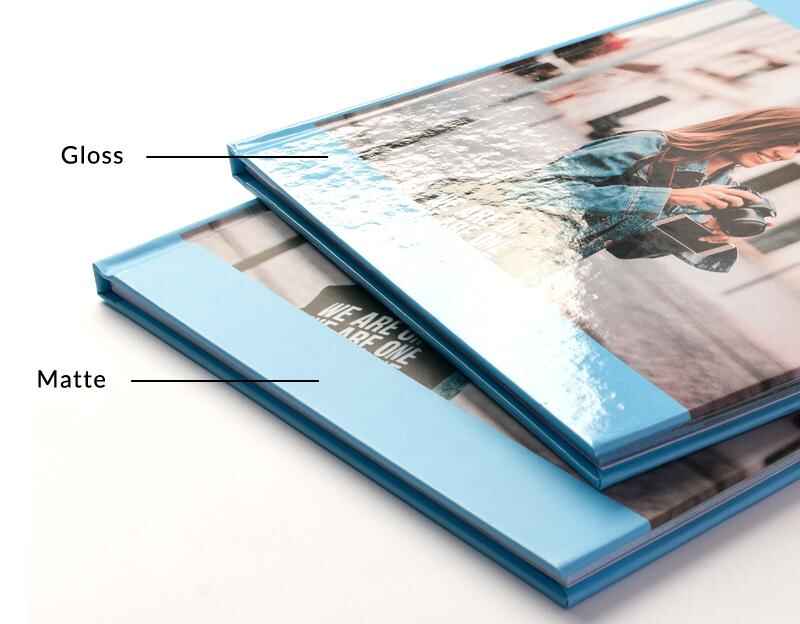
On a monitor, matte and gloss can look like minor aesthetic choices, yet on a finished book they change reflected light, apparent color saturation, fingerprint visibility, fold behavior, scuff risk, finishing compatibility, and even how expensive the product feels before a reader opens it.
So why are they still treated as two interchangeable options in a quotation form?
The direct answer is simple: matte lamination reduces glare and produces a subdued, smooth appearance, while gloss lamination reflects more light and makes printed colors appear brighter and more contrast-rich. Neither is universally better. The right finish depends on the artwork, handling conditions, binding method, sales environment, and expected product life.
I have seen buyers select matte because someone called it “premium,” only to discover that a dense black cover developed rub marks during packing. I have also seen gloss rejected as “cheap” even though it was plainly the better finish for a photograph-led children’s title.
That is the first hard truth: finish should follow function, not fashion.
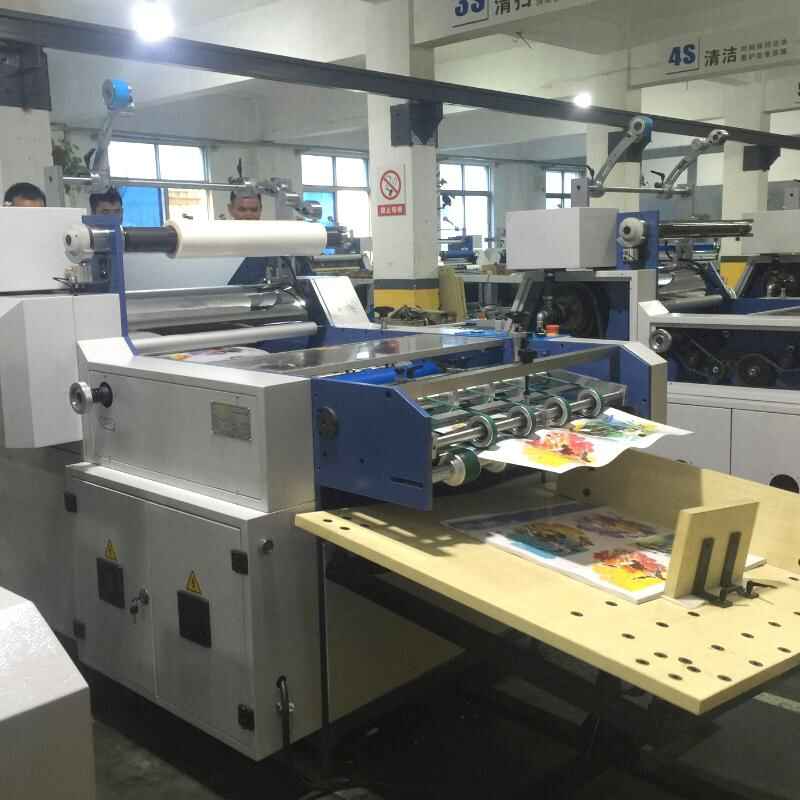
Lamination bonds a thin polymer film to printed paper or board using heat, pressure, adhesive, or a combination of the three. For commercial books, brochures, folders, and cartons, biaxially oriented polypropylene—BOPP—is one of the common film families.
The laminate is not merely decoration. It forms a protective surface over the ink and paper, improving resistance to moisture, dirt, abrasion, and repeated handling. It can also alter the stiffness, friction, folding response, and appearance of the printed sheet.
Gloss is measurable, although it cannot be reduced to one universal number. ASTM D2457-21 describes methods for measuring specular gloss on plastic films at several angles, including 20° for high-gloss materials and 45°, 60°, or 85° for other gloss ranges. ASTM also warns that results are meaningful only when the same procedure and comparable materials are used.
That warning matters. A supplier saying “10 gloss units” tells you very little unless the measurement angle, substrate, film construction, ink coverage, and testing method are also stated.
Matte film diffuses reflected light. The surface appears quieter, flatter, and less mirror-like, which can improve viewing under direct lighting.
It is often selected for:
But matte is not one product. Standard matte, anti-scuff matte, soft-touch matte, nylon matte, and digitally optimised matte films can behave very differently.
A Cosmo Films thermal matte BOPP technical data sheet, for example, lists 18, 20, 22, 27, and 33 micron constructions, a matte-side gloss value below 10 when measured at 45°, and a suggested lamination temperature range of 100–120°C. The same document warns that its 18, 20, and 22 micron versions are not suitable for folding and creasing applications. That warning is product-specific, but it exposes a larger problem: specifying only “matte lamination” is not enough.
Gloss film creates a smoother, more reflective surface. It raises visual contrast, deepens dark areas, and makes saturated colors appear more energetic.
It is often selected for:
Gloss does not increase the amount of ink on the sheet. It changes how light reflects from the surface, making existing color and contrast appear stronger.
This distinction matters because clients sometimes attempt to solve weak image reproduction by choosing gloss. A glossy film can make a good print look more vivid, but it will not repair low-resolution images, weak black generation, poor color separation, or an incorrect CMYK conversion.
Those issues belong earlier in the custom book printing workflow, not at the laminator.
| Decision Factor | Matte Lamination | Gloss Lamination |
|---|---|---|
| Overall appearance | Restrained, soft, low-reflection | Bright, reflective, high-impact |
| Color perception | Can slightly subdue saturation | Makes color and contrast appear stronger |
| Glare | Lower under direct lighting | Higher under direct lighting |
| Text-heavy covers | Usually comfortable to view | Can create distracting reflections |
| Photography | Sophisticated but less vivid | Strong detail, density, and color impact |
| Fingerprints | Oils may appear on dark or soft-touch surfaces | Smears can become visible under angled light |
| Scuff behavior | Standard matte may burnish or polish where rubbed | Fine scratches may show in reflected light |
| Dark solid colors | Elegant, but handling marks can become obvious | Rich and dense, though fingerprints may show |
| Foil and spot UV | Strong contrast when properly tested | Possible, but the contrast can be less dramatic |
| Folding and creasing | Film grade and thickness must be checked | Generally forgiving, but testing is still required |
| Retail shelf impact | Subtle and design-led | Immediate and attention-grabbing |
| Best-known applications | Novels, luxury boxes, reports, minimalist covers | Children’s books, catalogs, cookbooks, photo-led covers |
The table gives a practical direction, not a production guarantee. A high-grade anti-scuff matte film can outperform a low-cost gloss film, and a properly specified gloss film can look more expensive than a poorly selected soft-touch finish.
Material grade wins.
Aesthetic labels such as “luxury,” “standard,” and “economy” are often sales language rather than measurable performance categories, so I advise buyers to request a named film, its thickness, a technical data sheet, and a physical sample whenever surface quality affects the product’s value.
Would you approve paper based only on the word “white”?
Matte has become overprescribed.
Designers like it because it photographs well in controlled studio lighting and looks refined in digital mockups. Marketing teams like words such as “velvety,” “minimal,” and “premium.” But real books are stacked, shrink-wrapped, carton-packed, transported, unpacked, shelved, handled, and returned.
Standard matte film can show burnishing. This occurs when friction partially smooths the textured surface, creating shiny patches against an otherwise low-gloss background. Dense black, navy, burgundy, and charcoal covers tend to reveal these marks faster than pale artwork.
Soft-touch film creates another risk. Its tactile coating can feel excellent on a sample, yet some formulations show skin oils, pressure marks, scratches, or changes in surface feel after repeated handling. A luxury finish that looks tired after distribution is not luxury. It is an expensive specification error.
So when should matte be used?
Choose it when the artwork benefits from reduced reflection, the brand wants a calm visual tone, or additional embellishments need strong contrast. Then decide whether standard matte is sufficient or whether the job needs anti-scuff, scuff-resistant, or soft-touch film.
Do not assume these labels mean the same thing across suppliers.
For a black hardcover with gold foil, I would normally request:
The sample costs less than regret.
Gloss usually wins when the cover depends on photography, bright illustration, sharp product imagery, or immediate shelf visibility.
Consider a children’s activity book with cyan skies, orange characters, red titles, and yellow backgrounds. Matte can make the design feel controlled and sophisticated, but that may not be the commercial objective. Gloss gives the colors more apparent energy and creates a wipe-clean surface suited to frequent handling.
The same logic applies to cookbooks. Food photography depends on highlight detail, deep blacks, saturated ingredients, and tonal contrast. A well-executed gloss laminate often supports those qualities more effectively than standard matte.
Gloss can also be the more honest choice for budget-sensitive work. Some buyers specify inexpensive matte film to imitate a premium product, then add spot UV because the cover has become visually flat. They pay for two processes to repair a problem created by the first decision.
Why not choose gloss from the start?
For publishers comparing cover treatments across bindings, JetPrint’s printing capabilities provide a better starting point than evaluating lamination in isolation. Cover stock, board thickness, printing method, binding, grain direction, and surface finishing should be treated as one production system.
Gloss surfaces can show fine scratches, especially when books rub against one another during packing. Fingerprints may also become obvious when viewed against dark artwork under strong side lighting.
And high reflection can reduce readability. A glossy training manual placed beneath office lights may force readers to reposition the cover. A museum catalog displayed under spotlights can produce harsh glare. A menu or sales booklet used outdoors may become difficult to view in direct sunlight.
The phrase “best lamination for printed materials” therefore has no single answer. The best finish is the one that remains visually and physically appropriate in the environment where the product will actually be used.
Lamination failures are not always caused by bad film.
They can begin with wet ink, excessive spray powder, surface contamination, incompatible toner, insufficient pressure, incorrect temperature, uncontrolled speed, poor trimming, weak folds, or unsuitable adhesive.
A documented commercial printing case described a perfect-bound photography book with heavy black ink coverage and dull film lamination. The ink had not dried fully before laminating, and evaporating ink components created bubbles beneath the film. The covers were unusable and had to be removed, reprinted, relaminated, and reattached to the book blocks.
The documented production failure is valuable because the laminate was not the only variable. Drying time, ink coverage, production scheduling, trim safety, and supplier responsibility all became part of the failure.
That is how printing works. Problems travel.
Silvering appears as tiny reflective areas beneath the film, often caused by trapped air around paper texture, toner, ink particles, or insufficient bonding. It is especially visible in dark printed areas.
Possible causes include:
Delamination occurs when the film separates from the printed sheet. It may begin near a cut edge, fold, spine, hinge, or area of heavy toner coverage.
Digital printing deserves special attention because some toner systems and fuser oils reduce adhesion. A general-purpose offset lamination film may not bond reliably to every digitally printed surface. Digital-compatible films often use a modified adhesive layer designed for lower surface energy.
This is one reason our book printing resources repeatedly return to proofing and material compatibility. A visually correct PDF does not guarantee a physically stable product.
A laminated cover can crack when the paper grain, coating, film, crease depth, fold geometry, and binding method work against one another.
Perfect-bound covers require reliable scoring around the spine and hinge areas. Hardcover printed wraps must bend around board edges and corners. Packaging may require several folds, lock tabs, or tight radii.
Film thickness matters. Adhesive flexibility matters. Paper grain matters.
The answer is not simply “use thicker film.” A thicker laminate can improve body and protection but may become less cooperative around tight folds. Again, the full structure has to be tested.
Matte lamination is frequently used beneath spot UV because the contrast between a low-gloss background and a glossy raised area creates a strong visual separation.
It works well—until it does not.
Surface energy, coating chemistry, curing conditions, foil type, adhesive formulation, and treatment age all affect adhesion. A film described as foil-stampable or UV-coatable still needs testing with the actual production combination.
The Cosmo matte film data cited earlier specifically identifies spot UV coating, embossing, and hot foil stamping as possible further finishing processes. But that statement applies to that film family under suitable production conditions; it is not permission to assume every matte film accepts every foil or coating.
For complex covers, I recommend a finishing test that includes the real laminate, ink coverage, foil, die, temperature, dwell time, pressure, and artwork size.
A tiny gold logo is not the same test as a 150 mm solid foil panel.
Embossing also changes the equation. Deep embossing stretches the laminated paper structure, while fine embossing may lose definition under a thick or highly elastic film. The order of operations should be agreed before production because lamination before embossing can behave differently from lamination after embossing.
This is where a supplier’s finishing knowledge matters more than its equipment list. You can learn more about JetPrint’s production approach on the About JetPrint page, but the final process should still be proven on a job-specific sample.
Film lamination combines paper with plastic.
That does not automatically make the product unrecyclable everywhere, but it can complicate separation, pulping, sorting, and material recovery. Actual outcomes depend on the film weight, adhesive, paper composition, local mill technology, collection system, contamination level, and end-market requirements.
The scale of the issue is not theoretical. Eurostat’s packaging waste statistics report that the EU generated 79.7 million tonnes of packaging waste in 2023. Paper and cardboard accounted for 32.3 million tonnes, or 40.4%, while plastic accounted for 15.8 million tonnes, or 19.8%. The EU’s total packaging recycling rate was 67.5% that year.
Books are not identical to packaging, and regulations vary by product category. Still, publishers and brand owners should pay attention to where policy is moving.
Under Regulation (EU) 2025/40, packaging recyclability performance is scheduled to be graded A, B, or C using design-for-recycling criteria from 2030. Packaging below grade C—below a 70% recyclability performance threshold in the regulation’s framework—is to be treated as technically non-recyclable, while recycled-at-scale assessment is added from 2035.
The responsible conclusion is not “matte is bad” or “gloss is bad.” Both are commonly plastic-film finishes. The responsible approach is to ask:
And one more question: are we adding plastic because the product needs it, or because the specification has never been challenged?
Do not send a purchase order that says only “matte cover.”
A usable lamination specification should include:
For financial control, calculate every unit difference at the full order quantity. An illustrative increase of just $0.03 per copy becomes $300 on 10,000 copies and $3,000 on 100,000 copies. That does not make the more expensive option wrong. It means the performance benefit should be intentional and documented.
I would also approve the finish on a printed sample rather than a loose swatch. Film over white paper does not show how it behaves over 300% total ink coverage, metallic colors, toner, coated stock, or a dark spine.
Proof the system.
Not the component.
Matte lamination is better for low-glare, restrained, text-led, or luxury designs, while gloss lamination is better for saturated images, photography, children’s books, catalogs, and covers requiring strong shelf impact; the correct choice depends on artwork, lighting, handling, binding, additional finishing, and the product’s intended selling environment.
Neither finish is inherently higher quality. Compare printed and laminated samples using the actual cover artwork, especially when the design contains dark solids, skin tones, food photography, metallic foil, or large areas of flat color.
Standard matte lamination can develop scratches, polished rub areas, or shiny burnishing marks when books slide against one another, while anti-scuff matte films are formulated to resist this damage more effectively; performance still varies according to film grade, ink coverage, packing method, surface color, and distribution conditions.
Dark matte covers expose handling damage faster than pale covers. Request stack-rub testing or a packed carton sample when surface appearance affects retail acceptance.
Gloss lamination is not universally more durable than matte lamination, although its smooth surface may avoid the burnishing associated with standard matte films; gloss can still show fingerprints, fine scratches, edge lifting, bubbles, or scuffs depending on film quality, adhesive bonding, ink drying, storage, and physical handling.
Durability should be judged against a measurable requirement, such as rub resistance, moisture exposure, fold performance, or expected number of handling cycles.
Foil stamping and spot UV can be applied over many matte laminates when the film has suitable surface treatment and the foil, coating, curing system, temperature, pressure, and dwell time are compatible; because film formulations differ, the actual printed and laminated material should be tested before approving mass production.
Large foil areas and fine foil text may require different settings. The same applies to spot UV adhesion, edge sharpness, and curing.
Lamination can reduce or complicate recyclability because it bonds a polymer film to paper or board, but the real outcome depends on film weight, adhesive, paper content, collection rules, sorting equipment, pulping technology, product classification, contamination, and the recycling infrastructure available in the destination market.
Do not print a blanket recycling claim without market-specific evidence. Packaging placed in the EU should also be reviewed against the developing requirements under Regulation (EU) 2025/40.
A complete lamination request should identify the product, binding, paper, grammage, printing process, ink coverage, film material, finish, thickness, laminated sides, fold requirements, additional embellishments, target market, quantity, packing method, acceptance standards, and whether a physical production sample must be approved before manufacturing begins.
Including a visual reference is helpful, but it should not replace technical specifications. Two samples that both appear “matte” may use completely different films.
Matte vs gloss lamination is not a debate between sophisticated and cheap, modern and dated, or premium and ordinary.
It is a production decision.
Choose matte when controlled reflection, restrained design, tactile character, or contrast with foil and spot UV supports the product. Choose gloss when color energy, photography, wipeability, and retail visibility matter more. Upgrade the film when handling conditions justify it, and question lamination entirely when another coating can meet the same requirement with less material complexity.
Most importantly, approve the real combination: ink, paper, film, adhesive, fold, binding, embellishment, and packaging.
For a project-specific recommendation, send your cover PDF, finished size, binding type, quantity, paper specification, target market, and preferred surface effect through the JetPrint production contact page. Ask for matte and gloss comparison samples before committing the full print run.

Leave Your Comments