Start Your Book Printing Project
Share a few details about your book. JetPrint will review your specifications and help you identify the suitable printing, paper, binding, and finishing options for your project.
A printing quote is not a price pulled from a standard rate card. It is a manufacturing calculation built from dozens of connected decisions: quantity, dimensions, page count, paper, ink coverage, binding, finishing, proofing, packing, delivery, and the condition of the artwork.
Specs drive price.
Yet buyers routinely send an email saying, “Please quote 2,000 books,” attach a front-cover image, and expect three factories to return comparable figures, even though none of the suppliers knows the book’s finished size, number of pages, interior paper, binding method, shipping destination, or approval requirements.
What exactly are they supposed to calculate?
Here is the hard truth: a vague printing quote is not a bargain. It is an estimate based on assumptions that may later be revised, excluded, or quietly replaced with the cheapest workable production option.
That distinction matters even more when manufacturing costs are moving. The U.S. Bureau of Labor Statistics Producer Price Index for June 2026 reported that commercial printing prices were 3.9% higher than in June 2025. When paper, labor, freight, and finishing costs are changing, a supplier has less room to absorb specification mistakes.
The answer, then, is not to demand faster quotes. It is to submit better information.
An accurate printing quote defines what will be manufactured, what is included in the price, what still requires approval, and where the completed order must go.
Brown University’s external print vendor guidance describes a print estimate as a document that defines project scope, including timeline, materials, quantity, size, and cost. It also recommends confirming the delivery date at the beginning and sending the final artwork as a PDF. That is basic procurement discipline, but many commercial buyers still skip it.
The University of California’s description of a senior printing estimator is even more direct. It states that estimating decisions are based on paper stock, ink, typography, binding instructions, quantity, packaging, and shipping instructions. In other words, the price is the output. Specifications are the input.
I would be suspicious of any printer that gives a “final” price without asking enough questions. Either the printer is filling in the blanks with its own assumptions, or the quotation contains exclusions that the buyer has not yet noticed.
For book projects, start with a structured custom book printing specification rather than a loose description of the title. JetPrint’s project workflow connects trim size, page count, paper, binding, cover construction, finishing, proofing, files, quantity, and destination before production planning begins.
State what you are producing.
Is it a paperback novel, casebound art book, children’s picture book, board book, instruction manual, workbook, journal, catalog, booklet, card deck, or promotional publication?
The product name alone is not enough. Explain how the item will be used:
Intended use affects paper opacity, surface texture, binding strength, cover treatment, packing, and even the suitable production method. A journal intended for fountain pens is not specified like a glossy photography book. A classroom workbook is not specified like a collector’s edition.
Provide the total number of finished copies required.
Use an exact figure such as 500, 1,000, 2,500, or 10,000 copies. Do not write “one pallet,” “a few boxes,” or “approximately a container.” Printers estimate units, sheets, signatures, plates, covers, binding operations, cartons, and production waste.
Quantity can also determine whether digital or offset printing is more appropriate. There is no universal crossover point because page count, color coverage, paper, format, binding, and finishing all influence the calculation.
Also identify every version:
A request for “5,000 books” means something very different if it contains one 5,000-copy title versus ten 500-copy titles. Each version may require separate file handling, setup, cover output, approval, labeling, and carton identification.
Give the exact final trim size after cutting.
Examples include:
State whether the book is portrait, landscape, or square.
Do not describe the size only as A4, “standard,” “large,” or “similar to this sample.” Regional definitions and factory standards differ. Millimeters or inches remove the argument.
Size affects paper utilization, imposition, press selection, binding equipment, carton dimensions, finished weight, and freight volume. A seemingly minor change from 210 × 280 mm to 216 × 279 mm may change how efficiently pages fit on a production sheet.
Louisiana State University’s printing quotation guide identifies size as one of the most frequently overlooked details and distinguishes between flat size and finished size. It warns that incomplete order descriptions can cause inaccurate quotations, added costs, and production delays.
State the number of printed pages, including blank pages.
In book production, one physical leaf has two pages: a front and a back. A 112-page book contains 56 leaves.
Specify the interior page count separately from:
Do not guess the page count from a Microsoft Word manuscript. The final count should come from the designed interior file after typesetting and pagination.
Page count affects paper consumption, signature planning, book-block thickness, binding structure, spine width, weight, packing, and shipping. Changing a 224-page book to 240 pages after quotation does not merely add 16 pages. It may also change the cover spine and production layout.
Tell the printer exactly how the interior pages are printed.
Common configurations include:
“Mostly black and white” is not a specification.
Identify any Pantone spot colors, brand colors, metallic inks, fluorescent inks, or color-sensitive illustrations. A corporate manual requiring Pantone 186 C is not equivalent to a general request for “red.”
And disclose how many pages contain color. A 200-page book with eight color plates may be planned differently from a 200-page book with four-color images on every spread.
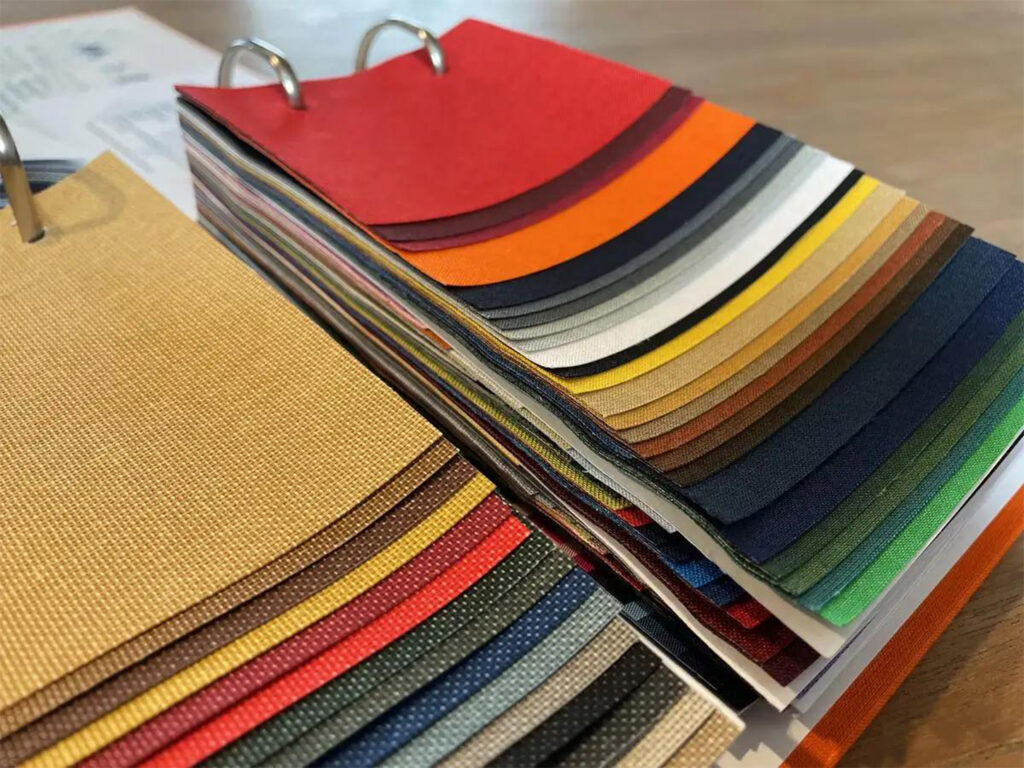
Provide the paper type, weight, color, and required performance.
A complete paper description might read:
80 gsm natural-white uncoated text paper with suitable opacity for a 320-page black-text novel.
Or:
128 gsm matte coated paper for full-color illustrations.
At minimum, state:
But do not choose paper by weight alone. Two papers rated at 100 gsm can have different thickness, stiffness, opacity, bulk, surface absorption, and folding behavior.
Paper is also a material-impact decision. The U.S. Environmental Protection Agency’s paper and paperboard data reports that 67.4 million tons of paper and paperboard entered the U.S. municipal waste stream in 2018, while approximately 46 million tons were recycled, producing a 68.2% recycling rate. Buyers requesting recycled content or documented fiber sourcing should state that requirement before the printer selects material.
Name the binding method whenever it is known.
Possible structures include:
Binding cannot be selected independently from page count, paper, trim size, opening behavior, and intended use.
A 32-page children’s book, a 400-page novel, and a frequently opened technical manual require different structural thinking. Buyers considering a rigid case, printed cover wrap, endpapers, headbands, ribbon markers, or dust jacket should review the available hardcover book printing formats before requesting a price.
My opinion is blunt: “Please quote hardcover and paperback” is not one quotation request. It is two different products with different covers, spines, materials, binding operations, weights, packing arrangements, and shipping costs.
Describe the cover separately from the interior.
For a paperback, provide:
For a hardcover, provide:
Do not write “premium cover.” That phrase has no measurable manufacturing meaning.
Write something such as:
157 gsm printed art paper wrapped over rigid greyboard, matte laminated, with white endpapers and one black ribbon marker.
Even when the final material is still open, separate confirmed requirements from preferences.
List every finish as an individual operation.
Examples include:
Include finish dimensions and placement when possible. “Gold foil logo” is less useful than “gold foil logo, approximately 60 × 20 mm, centered on the front cover.”
The finish may require a separate vector artwork layer. It may also affect production sequence, proofing, tooling, packing protection, and waste allowance.

Tell the printer whether the artwork is:
Provide separate files for the interior, cover, endpapers, inserts, and finishing layers where applicable.
A quote can often be prepared before final artwork is complete, but the printer still needs reliable page dimensions, page count, color configuration, and production requirements. Artwork status affects prepress work, proofing, scheduling, and the risk of later changes.
For print-ready files, common requirements include CMYK color, images at 300 dpi at final size, embedded fonts, and approximately 3 mm or 0.125 inch bleed. JetPrint’s guide to common artwork problems before book printing explains how RGB images, incorrect trim sizes, missing bleed, low-resolution graphics, and unembedded fonts create production problems.
Never assume the printer will “fix everything.” A silent file correction can change color, typography, image cropping, page flow, or finishing placement.
State what must be approved before production.
Possible proofing routes include:
The best proof is not automatically the most expensive one. It is the proof that answers the project’s main risk.
For a text-only novel, pagination and cover alignment may matter most. For an illustrated children’s book, color, paper appearance, and image placement may matter more. For a foil-stamped casebound title, structure and finish position may require separate checks.
Also state:
Proofing cost and time should appear in the quotation rather than being discovered after the purchase order is issued.
A product price without a destination is not a landed project cost.
Provide:
Clarify whether the quotation should use EXW, FOB, CIF, DAP, DDP, or another agreed Incoterm.
And distinguish the shipping date from the required arrival date. They are not the same.
For projects entering postal distribution, physical size and weight can materially affect cost. Current USPS mailing standards state a maximum mailpiece weight of 70 pounds and a maximum dimension of 130 inches for length plus girth; items exceeding those limits may incur a $200 fee under the rules effective July 12, 2026.
Most books will never approach those limits individually. Cartons and bundled shipments can.
| Information Required | Example of a Usable Specification | Weak Description | Why It Changes the Quote |
|---|---|---|---|
| Product type | Paperback training manual | Book | Determines construction and workflow |
| Quantity | 3,000 finished copies | A few thousand | Affects setup allocation and print route |
| Versions | Three languages, 1,000 each | Three versions | Changes setup, file handling and labeling |
| Finished size | 210 × 280 mm portrait | A4-ish | Affects sheet utilization and equipment |
| Page count | 192 interior pages plus four-page cover | About 190 pages | Changes paper, signatures and spine |
| Interior printing | 4/4 CMYK throughout | Full color | Defines presswork and ink coverage |
| Interior paper | 128 gsm matte coated paper | Good paper | Affects cost, thickness and image result |
| Binding | Thread-sewn case binding | Hardcover | Defines book-block and case construction |
| Cover | Printed paper-over-board case with matte lamination | Premium cover | Defines materials and assembly |
| Finishing | Gold foil, 60 × 20 mm, front cover | Gold logo | Determines tooling and artwork |
| Files | Interior PDF/X-4 and separate cover file | Files ready soon | Affects prepress scope |
| Proof | One bound digital proof shipped to Singapore | Need sample | Affects cost, timing and freight |
| Packing | 20 copies per export carton with SKU labels | Standard packing | Changes labor and materials |
| Delivery | DDP to named postal code | Ship overseas | Freight cannot be calculated accurately |
| Required date | Arrival required by October 15, 2026 | Urgent | Determines schedule and shipping route |
A lower quote does not always indicate a more efficient factory. It may indicate a different specification.
One supplier may calculate:
Another may calculate:
The totals are not comparable because the products are not comparable.
A difference of only $0.20 per copy becomes $1,000 across 5,000 copies. Change the paper, eliminate sewing, remove the proof, reduce carton strength, or exclude delivery, and an apparently aggressive quote suddenly becomes easy to explain.
This is why I tell buyers to fear the vague quotation more than the expensive one. An expensive quotation can be negotiated. A vague quotation cannot be audited.
Before choosing a supplier, review the questions in JetPrint’s guide on how to evaluate a book printing company in China, especially when comparing production scope, proofing, quality references, exclusions, and shipping terms.
Use one written specification for every supplier.
Do not explain one version by email, another by WhatsApp, and a third during a call. That creates three quotation records and no reliable reference.
A practical request can follow this format:
Project name:
[Title or internal project code]
Product type and intended use:
[Paperback novel, children’s book, training manual, journal, catalog, etc.]
Quantity:
[Number of copies]
Titles or versions:
[Number of titles, languages, covers, or SKUs]
Finished size:
[Width × height in mm or inches]
Orientation:
[Portrait, landscape, or square]
Interior page count:
[Number of pages, including intentional blanks]
Interior printing:
[1/1 black, 4/4 CMYK, mixed color, Pantone colors]
Interior paper:
[Type, weight, color, coating, or required performance]
Binding:
[Perfect bound, thread sewn, casebound, Wire-O, saddle stitched, etc.]
Cover construction:
[Cover stock, board, wrap material, endpapers, jacket, flaps]
Surface finishing:
[Lamination, foil, embossing, spot UV, die cutting, edge treatment]
Additional components:
[Inserts, sticker sheets, ribbon, elastic, tabs, pen loop]
Artwork status:
[Complete, in progress, previous edition available]
Proofing required:
[PDF proof, color proof, bound sample, structural dummy]
Packing requirements:
[Copies per carton, labels, pallets, retail packing]
Delivery destination:
[Full city, postal code, and country]
Required arrival date:
[Exact date]
Requested shipping term:
[EXW, FOB, CIF, DAP, DDP, or request options]
Certification or documentation requirements:
[FSC claim, material declaration, commercial documents, testing request]
Open questions:
[List any specification on which you need the printer’s recommendation]
Attach reference photographs, previous samples, dielines, PDFs, and brand-color information whenever available.
You do not need to invent technical details just to receive a quote.
Instead, divide the brief into three categories:
These requirements cannot change.
Example:
These are your current choices but may be adjusted.
Example:
These require technical or budget guidance.
Example:
This method allows the printer to quote a defined base option and list alternatives without pretending that unresolved decisions do not exist.
JetPrint’s book printing capabilities page follows the same logic by separating project basics, materials and binding, files and approval references, and delivery documentation.
A commercial printing quote should be questioned when it does not clearly identify:
Watch for phrases such as “standard paper,” “normal packing,” “usual quality,” or “shipping included.”
Included to where?
By what method?
Under which Incoterm?
With customs duties included or excluded?
The cheapest quotation often survives only because nobody asks those questions until the books are already in production.
A printing quote requires the product type, quantity, finished size, page count, color configuration, paper, binding, cover construction, finishing, artwork status, proofing requirements, packing instructions, delivery destination, and required arrival date so the printer can calculate one clearly defined product rather than relying on unrecorded assumptions.
Reference files, photographs, previous editions, and physical samples should also be supplied when they communicate appearance or construction more accurately than written descriptions.
A printing quote can be prepared before final artwork is complete when the buyer can provide dependable dimensions, page count, quantity, color configuration, paper preferences, binding, cover structure, finishing, proofing needs, and destination, although the quotation may remain subject to file review and final technical confirmation.
State which files are complete, which are being revised, and whether the page count or finishing artwork may still change.
Printing companies give different prices because they may assume different papers, press routes, waste allowances, binding structures, proofing methods, finishing processes, packing standards, freight terms, production schedules, or quality references, meaning two quotations that appear to describe the same project may actually cover substantially different products and responsibilities.
Compare the written specifications and exclusions line by line rather than comparing only the final totals.
An exact paper brand is not always necessary, but the quotation should identify the paper type, weight, surface, color, coating, opacity, bulk, recycled-content requirement, writing performance, or image-reproduction requirement closely enough that every supplier calculates a material with reasonably comparable physical and visual characteristics.
When the paper remains undecided, ask the printer to quote a named base option and clearly priced alternatives.
A printer needs at least the destination city, postal code, country, delivery type, and preferred shipping term before calculating freight because finished book weight, carton count, pallet volume, customs routing, residential surcharges, port handling, split shipments, and the difference between EXW, FOB, DAP, and DDP can materially change total landed cost.
A product-only quotation can be issued without an address, but it should never be mistaken for a delivered price.
Page count should be stated as the total number of printed and intentional blank pages in the interior, with covers, endpapers, inserts, foldouts, sticker sheets, dividers, and other separate components identified independently, because one physical leaf has two pages and the final count affects signatures, paper usage, spine width, binding, weight, and packing.
Do not base the quoted page count on an unfinished manuscript that has not yet been typeset.
An accurate printing quote comes from sending every supplier the same written specification, clearly separating confirmed requirements from preferences and unresolved choices, attaching available reference files, requesting itemized alternatives, identifying proofing and packing needs, and requiring the quotation to state materials, production scope, delivery terms, assumptions, exclusions, currency, and validity period.
The more measurable the request becomes, the easier it is to expose hidden differences between suppliers.
Proofing should be included or separately itemized in the printing quote whenever the buyer must approve content, pagination, color, paper, binding, dimensions, or finishing before production, because PDF proofs, color proofs, structural dummies, bound samples, and press proofs answer different questions and carry different costs, schedules, and shipping requirements.
The quotation should state what proof is supplied, how many revision rounds are included, and who pays for additional changes.
Before requesting prices, collect the details you already know and mark every undecided item openly. Ask suppliers to quote the same base specification, show alternatives separately, state all exclusions, and identify exactly when pricing can change.
Do that, and a printing quote becomes a useful procurement document rather than an optimistic number in an email.
Prepare your quantity, trim size, page count, paper, binding, cover, finishing, artwork status, proofing needs, packing requirements, destination, and required date. Then send your book project specifications to JetPrint for a quotation review based on the actual product you intend to manufacture.

Leave Your Comments