Start Your Book Printing Project
Share a few details about your book. JetPrint will review your specifications and help you identify the suitable printing, paper, binding, and finishing options for your project.

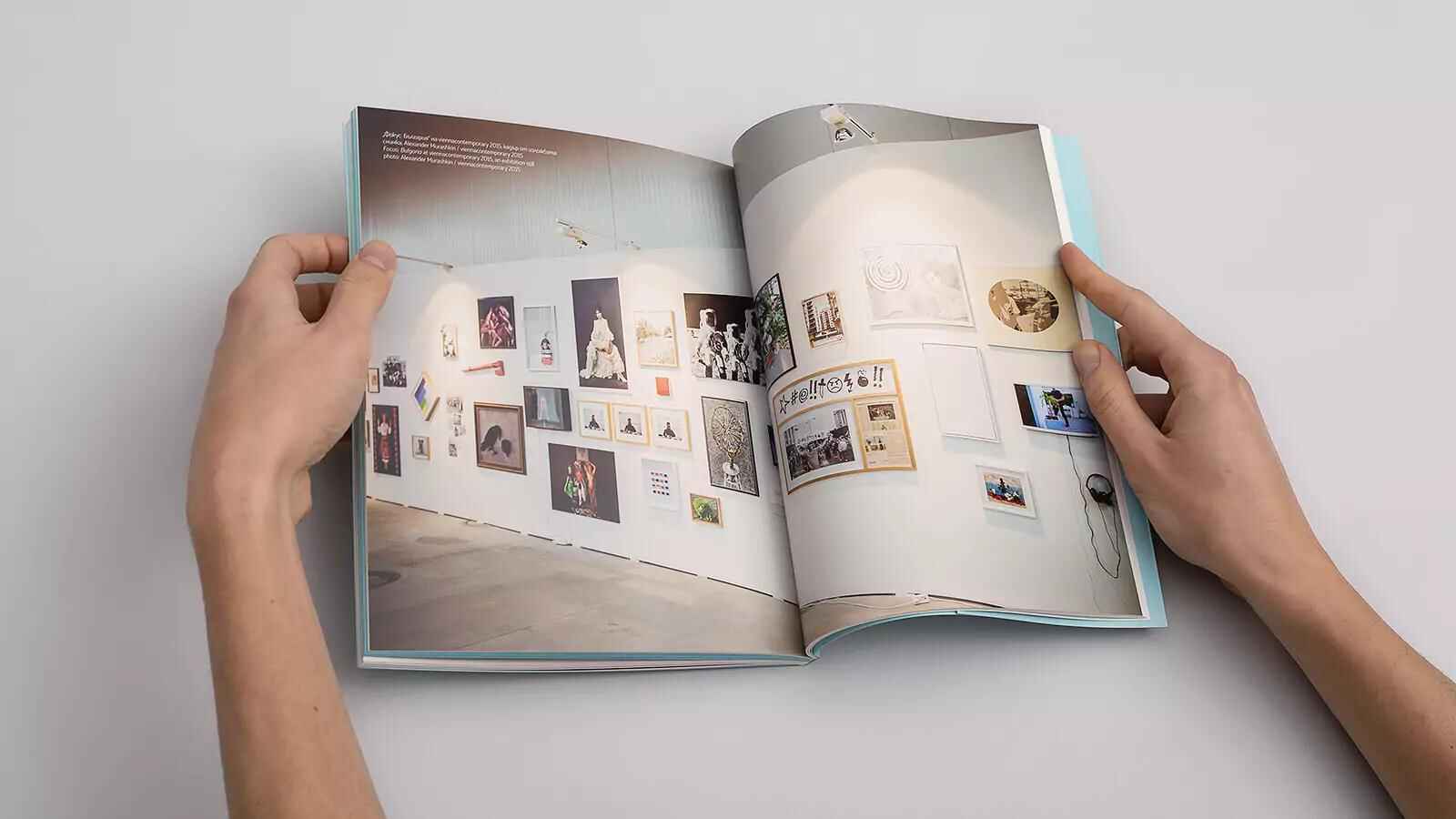
An exhibition catalog is expected to do several jobs at once. It must document scholarship, reproduce artwork with discipline, survive handling in a museum shop, satisfy lenders and rights holders, and remain credible years after the exhibition closes.
That combination makes exhibition catalog printing unusually unforgiving.
Color exposes everything.
When a publication contains paintings, textiles, ceramics, photographs, archival documents, metallic objects, and installation views in the same signature, the printer is not merely putting ink on paper; the production team is translating different capture conditions, color spaces, surface characteristics, and curatorial expectations into one physically consistent book.
So why do museums still approve suppliers mainly on the lowest unit price?
My blunt view is that many catalogue overruns begin before the printer receives a file. The tender lacks a binding dummy, the image list is still changing, captions have not cleared rights review, and nobody has defined what an acceptable color difference actually means. The press is then blamed for a management failure.
The Getty Foundation’s Museum Catalogues for the Digital Age describes scholarly catalogues as an important way museums share research about works in their collections. Its nine-institution Online Scholarly Catalogue Initiative included the J. Paul Getty Museum, Tate, the National Gallery of Art, SFMOMA, LACMA, and other major museums.
The same report gives procurement teams a sobering benchmark: printed museum collection catalogues were estimated at $100,000 to $250,000, normally excluding scholarly research and writing, for average print runs of 500 to 3,000 copies. Those figures are historical rather than a 2026 quotation, but they expose the real scale of museum publishing: the printing invoice is only one part of a much larger editorial and production system.
The Metropolitan Museum of Art currently lists 572 exhibition catalogues in its online publications database. One well-documented example, Byzantium: Faith and Power (1261–1557), ran to 680 pages, contained 17 essays, accompanied an exhibition of roughly 350 works, and was sold in both a $50 paperback and $75 hardcover edition. The catalogue won the College Art Association’s Alfred H. Barr Jr. Award.
That is the standard museums are compared against, whether the print run is 300 copies or 30,000.
A good catalogue does not merely look polished on launch night. It preserves the curatorial argument, the object data, the image sequence, and the institutional voice. The design may be contemporary; the production decisions must age well.
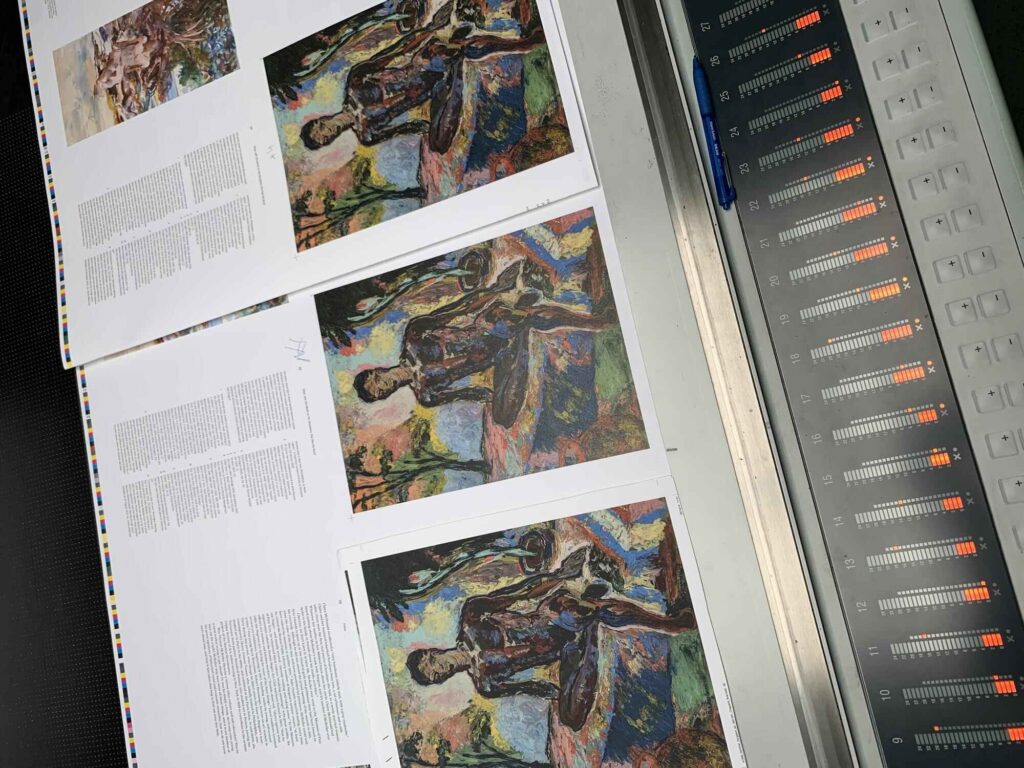
Museums often ask a printer for a price while the page count, image count, binding style, trim size, and delivery split are still moving. That produces a cheap-looking estimate, not a reliable budget.
Before requesting custom book printing, I would lock six items:
Late corrections do more than annoy the prepress operator. They can change pagination, move color plates between signatures, create blank pages, alter spine width, invalidate a cover template, and force a new imposed proof.
A museum should therefore use one controlled correction channel. Curators, editors, designers, registrars, lenders, and marketing teams should not send separate markups to the printer.
One consolidated PDF. One accountable approver. One revision number.
A 2026 case involving the Victoria and Albert Museum showed how quickly editorial control can collide with offshore production. Reporting based on freedom-of-information material said images and maps in exhibition catalogues were changed after objections raised through a Chinese printer; the museum said the edits were minor and did not alter the narrative. The dispute drew criticism from Index on Censorship and the Museums Association.
The uncomfortable lesson is not “never print in China.” That is too simplistic. The lesson is to screen sensitive maps, borders, political imagery, religious material, historical documents, and disputed terminology before committing paper, plates, freight windows, or deposit payments.
I would put editorial autonomy into the purchase order. Any requested content alteration should trigger immediate written notice, a documented reason, and the museum’s right to pause, relocate, or cancel affected production stages.
Museum teams sometimes use “accurate color” as though it were a self-explanatory specification.
It is not.
Accurate relative to what: the original object under gallery lighting, the photographer’s monitor, an approved retouched master, a contract proof, or a previous publication?
The International Color Consortium explains that ICC profiles support consistent color reproduction across input, display, and output devices. ISO 12647-2:2013 defines process parameters for four-color sheet-fed and web-fed offset lithography, while the Ghent Workgroup recommends modern commercial-print workflows based on PDF/X-4.
For museum catalog printing, I would define the approved contract proof as the production reference, not an unprofiled office print and not a curator’s laptop.
First, verify the source images. Confirm embedded profiles, resolution at placed size, retouching status, black-point handling, neutral-gray behavior, and whether the file is a master or a derivative.
Second, perform controlled soft proofing. Use a calibrated display, the intended output profile, stable viewing conditions, and named rendering intents. Soft proofing is useful for collaboration, but it does not reproduce paper texture, ink gloss, show-through, binding shadows, or every out-of-gamut color.
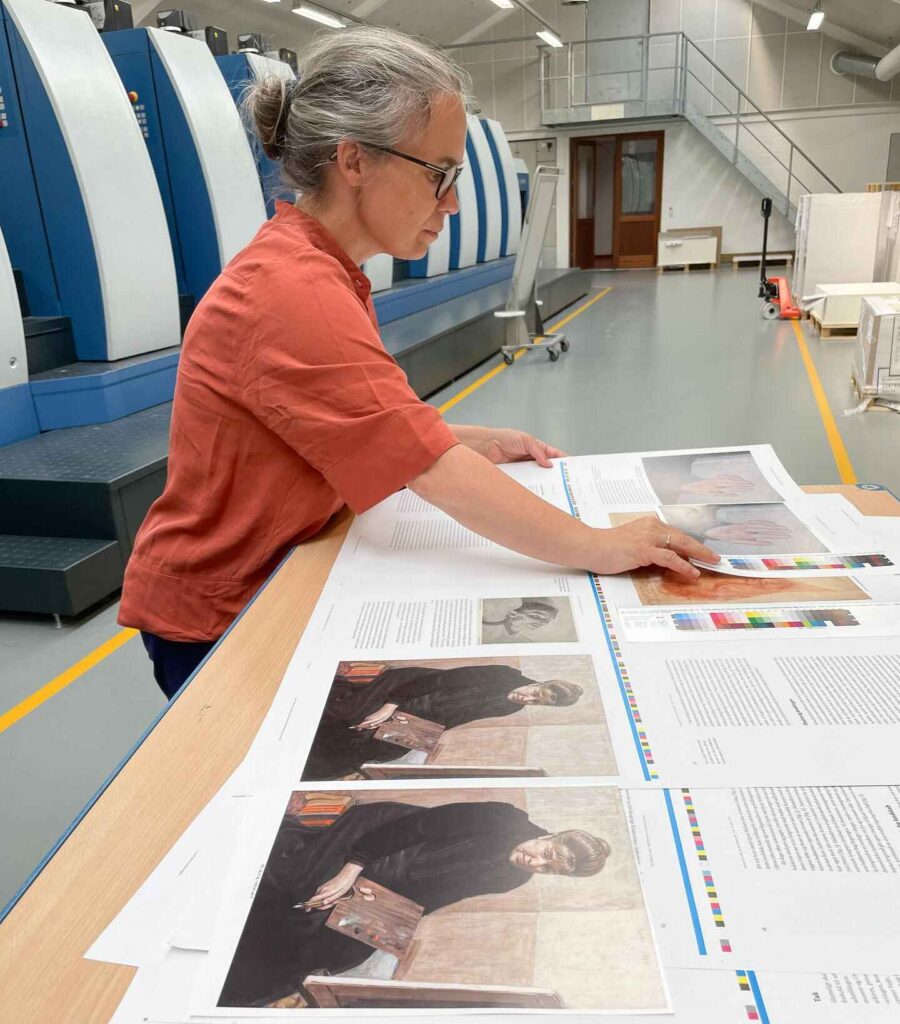
Third, approve a certified or characterized hard proof. The proof should include control information and be reviewed under standardized lighting. A museum team that signs a proof under mixed office LEDs and daylight is not running color control; it is running a mood test.
Fourth, identify critical images. A catalogue may contain 400 images, but perhaps 20 require tighter attention: a monochrome photograph, a color-field painting, a skin-tone portrait, a textile with near-neighbor reds, a ceramic glaze, or a work containing optical brighteners.
Fifth, retain approved references. The printer, museum, and press-check representative should work from the same numbered proof set.
JetPrint’s printing capabilities page can be used to align the book specification with available printing, binding, and finishing processes before files reach final preflight.
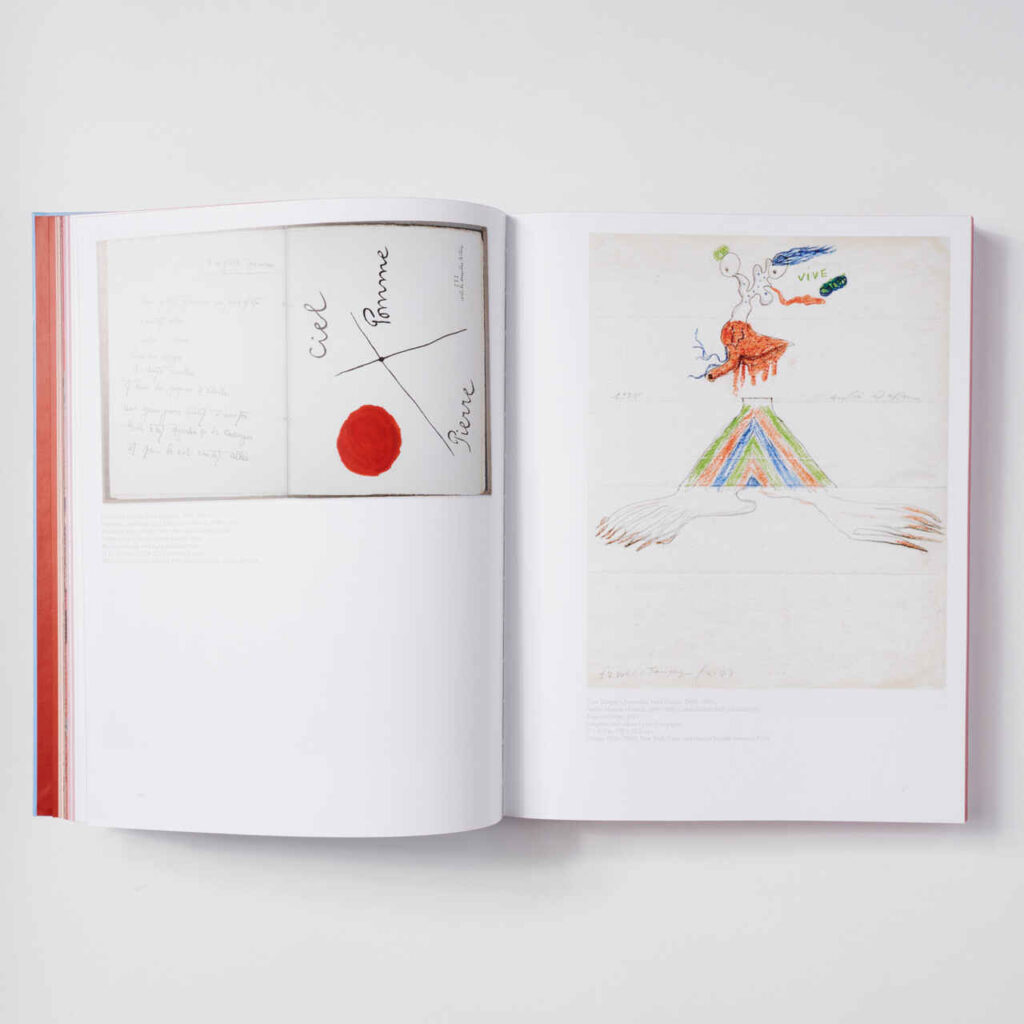
The table below is a planning framework, not a substitute for a project-specific quote.
| Control Area | Weak Brief | Museum-Grade Brief | Why It Matters |
|---|---|---|---|
| Image files | “High resolution” | Final master files, embedded ICC profiles, effective resolution checked at placed size | Prevents silent scaling, profile loss, and inconsistent conversions |
| PDF delivery | Generic PDF | Agreed PDF/X-4 workflow, fonts embedded, bleed and trim defined, transparency checked | Reduces preflight ambiguity and output surprises |
| Color approval | Screen approval | Numbered contract proof plus named approver and viewing conditions | Creates one physical reference for production |
| Paper | “Premium matte” | Named mill and grade, or approved equivalent, with grammage, opacity, shade, bulk, coating, and grain direction | Controls feel, show-through, spine width, and image contrast |
| Binding | “Hardcover” | Case material, board thickness, endpaper, sewing or adhesive method, spine style, and opening target | Prevents a beautiful book that fights the reader |
| Finishing | “Gold foil” | Foil reference, die artwork, stamping area, registration tolerance, and test requirement | Avoids vague metallic effects and damaged fine detail |
| Sustainability | “FSC paper” | Required FSC claim, chain-of-custody verification, and label-approval responsibility | Protects the integrity of environmental claims |
| Packing | “Export cartons” | Carton quantity, gross-weight limit, corner protection, moisture protection, and pallet pattern | Reduces transit damage and receiving problems |
| Schedule | “Needed by opening” | Approval gates, proof dates, press window, binding window, freight mode, and buffer days | Makes the exhibition date an operational plan |
The Ghent Workgroup’s current guidance favors PDF/X-4-based specifications for modern print production, and the Forest Stewardship Council states that a finished-product FSC label depends on chain-of-custody requirements being maintained through the supply chain.
The phrase “fine art paper” is mostly useless in a purchasing document. It does not tell a printer the shade, coating, opacity, bulk, stiffness, surface, grain direction, or press behavior.
A coated sheet generally supports sharper detail, cleaner small type reversed from color, and stronger image contrast. It is often selected for photography-heavy art catalog printing.
But gloss can fight the work. Reflections may flatten dark photographs under gallery lighting, while a bright-blue-white sheet can make warm historical works feel colder than the approved proof suggested.
Uncoated stock can suit archival material, drawings, manuscripts, conceptual art, and essay-led publications. It feels less commercial and can produce a quieter page.
But ink gain, lower apparent contrast, fiber texture, and show-through must be tested. Do not approve an uncoated paper from a swatch alone. Print representative images, including dark areas, fine lines, neutral grays, and small serif text.
A cross-spread image disappearing into the gutter is not a minor bindery issue. It changes how the work is seen.
Sewn case binding is often chosen for substantial museum book printing because it supports durability and better opening than a heavily glued book block, although the actual result still depends on signature structure, paper grain, bulk, endpapers, spine construction, and cover engineering.
Softcover catalogues can be equally serious publications when the run, distribution model, page count, and retail price support that format.
Use a blank binding dummy early. Then use a printed advance sample when the paper, ink coverage, and finishing justify it. The JetPrint company background is useful for supplier due diligence, but the project should still be judged on project-specific samples, prepress communication, and written production controls.
Museums do not have unlimited publishing budgets. Pretending otherwise is lazy advice.
The hard truth is that cost control works best when the team protects the elements readers notice and simplifies the elements they do not. A standard trim size may save more than reducing paper quality. Removing an unnecessary fifth color may be wiser than weakening the binding. Consolidating delivery may help, while air-freighting a late catalogue can erase months of careful purchasing.
The Getty report’s $100,000–$250,000 production-cost range for printed collection catalogues also noted typical runs of 500–3,000 copies and suggested that later digital-catalogue projects could reduce costs substantially after the first investment. That does not mean print is obsolete. It means museums should decide what print does best and stop forcing one edition to solve every access problem.
Singapore Art Museum offers a useful current publishing example. Its catalogue Hiroshi Sugimoto: Form Is Emptiness is listed as a 168-page softcover at S$60, with scholarly contributions connected to the exhibition. SAM also states that it publishes exhibition catalogues, research titles, and children’s books distributed through bookstores and online channels.
A sensible model may combine a carefully produced physical edition with searchable digital material, extended references, video, or updated object data. Print becomes the stable authored object; digital carries expansion and revision.
Do not ask only, “Have you printed art books?”
Ask for evidence.
I also recommend separating “factory capability” from “project control.” A factory can own impressive presses and still mishandle corrections. Another supplier can communicate beautifully and outsource the difficult work. The museum needs both production capability and traceable responsibility.
For a live specification review, send the trim size, page count, quantity, binding, paper preference, color requirements, finishing, proof expectations, packing, and delivery destinations through the JetPrint contact page. A serious quotation should identify assumptions rather than bury them.
Exhibition catalog printing for museums is the controlled production of a scholarly, image-led publication that documents an exhibition through curatorial essays, object records, captions, photography, design, color-managed reproduction, binding, and archival-quality manufacturing decisions intended to remain useful after the physical exhibition has closed.
It differs from ordinary brochure printing because image rights, academic accuracy, proof approval, object data, and long-term institutional reputation carry far greater weight.
A museum should begin production planning several months before the exhibition opening, with the exact schedule determined by editorial readiness, image permissions, translation, proofing, binding complexity, print location, freight method, and approval layers rather than by the press time alone.
The safer approach is to work backward from the in-store date, not the opening ceremony, and include buffers for corrections, paper supply, customs, and replacement copies.
Offset printing is generally better suited to longer runs and demanding color consistency, while digital printing can be appropriate for short runs, advance copies, revised editions, or budget-limited projects, provided the chosen press, paper, proofing method, and image expectations are tested before production.
There is no universal quantity crossover. Compare total cost, proof quality, binding options, rerun risk, and distribution needs.
The best paper for fine art book printing is the sheet that reproduces the project’s images convincingly while meeting requirements for opacity, shade, texture, bulk, stiffness, grain direction, binding behavior, reading comfort, durability, sustainability claims, and the museum’s approved budget.
A printed paper test is more reliable than a swatch because ink coverage and image character can change the apparent result.
Museums ensure accurate color reproduction by using controlled source files, embedded ICC profiles, calibrated displays, an agreed output condition, contract proofs, standardized viewing light, named approvers, critical-image lists, press controls, and retained reference proofs throughout printing, binding, and every documented production-approval stage.
The original artwork may exceed the printable gamut, so the goal must be a documented, approved reproduction rather than an undefined promise of “perfect” color.
An exhibition catalogue should be hardcover when durability, page extent, institutional positioning, collector appeal, and long-term use justify the added structure and cost; it should be softcover when accessibility, lower weight, retail price, shipping efficiency, or a shorter exhibition cycle matters more.
Neither format guarantees quality. Paper grain, sewing, adhesive, spine design, cover stock, and opening behavior determine whether the finished book works.
A museum catalogue can carry an FSC label when eligible materials are supplied and processed through a valid chain-of-custody system, the correct claim is maintained in transaction records, and the label artwork is approved and applied by an authorized certificate holder.
The museum should verify the supplier’s certificate scope and the exact claim before printing, rather than treating “FSC paper available” as sufficient evidence.
Museum exhibition catalog printing succeeds when scholarship, design, prepress, manufacturing, and logistics are managed as one connected system.
Do not wait for the final PDF to discover that the paper is wrong, the spine is too narrow, the cross-spreads disappear, the proof has no defined status, or a sensitive image cannot proceed. Prepare the image schedule, specification, binding dummy, proof protocol, rights review, delivery plan, and approval chain now.
Send JetPrint your working specification through the project contact form and request a production review covering paper, color workflow, binding, finishing, proofing, packing, and delivery before the catalogue enters final design.

Leave Your Comments