Start Your Book Printing Project
Share a few details about your book. JetPrint will review your specifications and help you identify the suitable printing, paper, binding, and finishing options for your project.
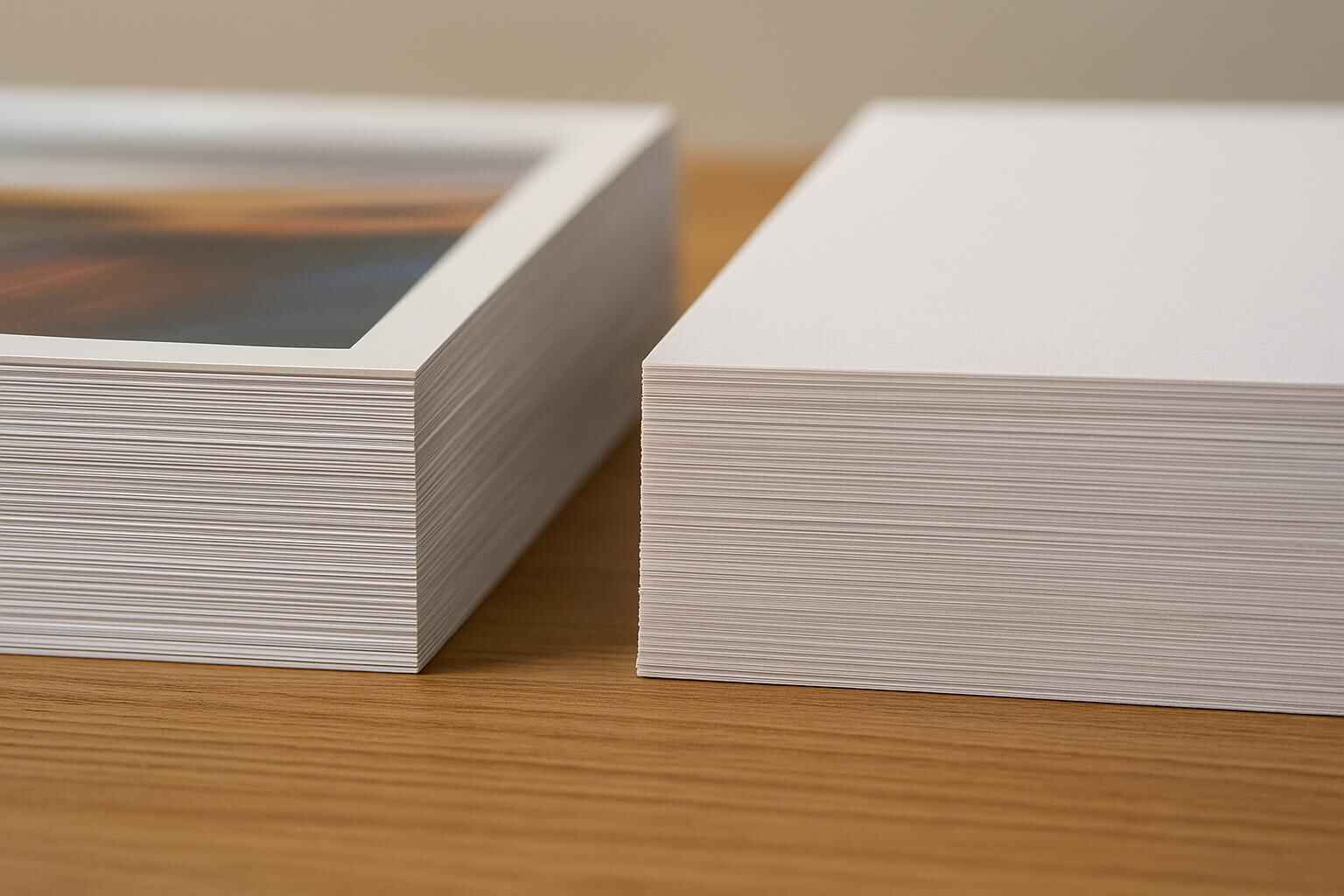
Paper changes everything.
Although publishers often treat paper selection as a late-stage purchasing decision, the surface you choose will alter color density, image detail, reading comfort, spine width, shipping weight, ink consumption, drying behavior, and even how expensive the finished book feels in a reader’s hands.
So why do so many printing quotes reduce the decision to “gloss or matte”?
The blunt answer is convenience. A printer can quote a familiar house stock quickly. A publisher, however, must live with that decision across hundreds or thousands of finished copies.
My position is simple: there is no universal best paper for book printing. There is only a paper that fits the content, printing process, binding structure, reader behavior, and commercial target of a specific title.
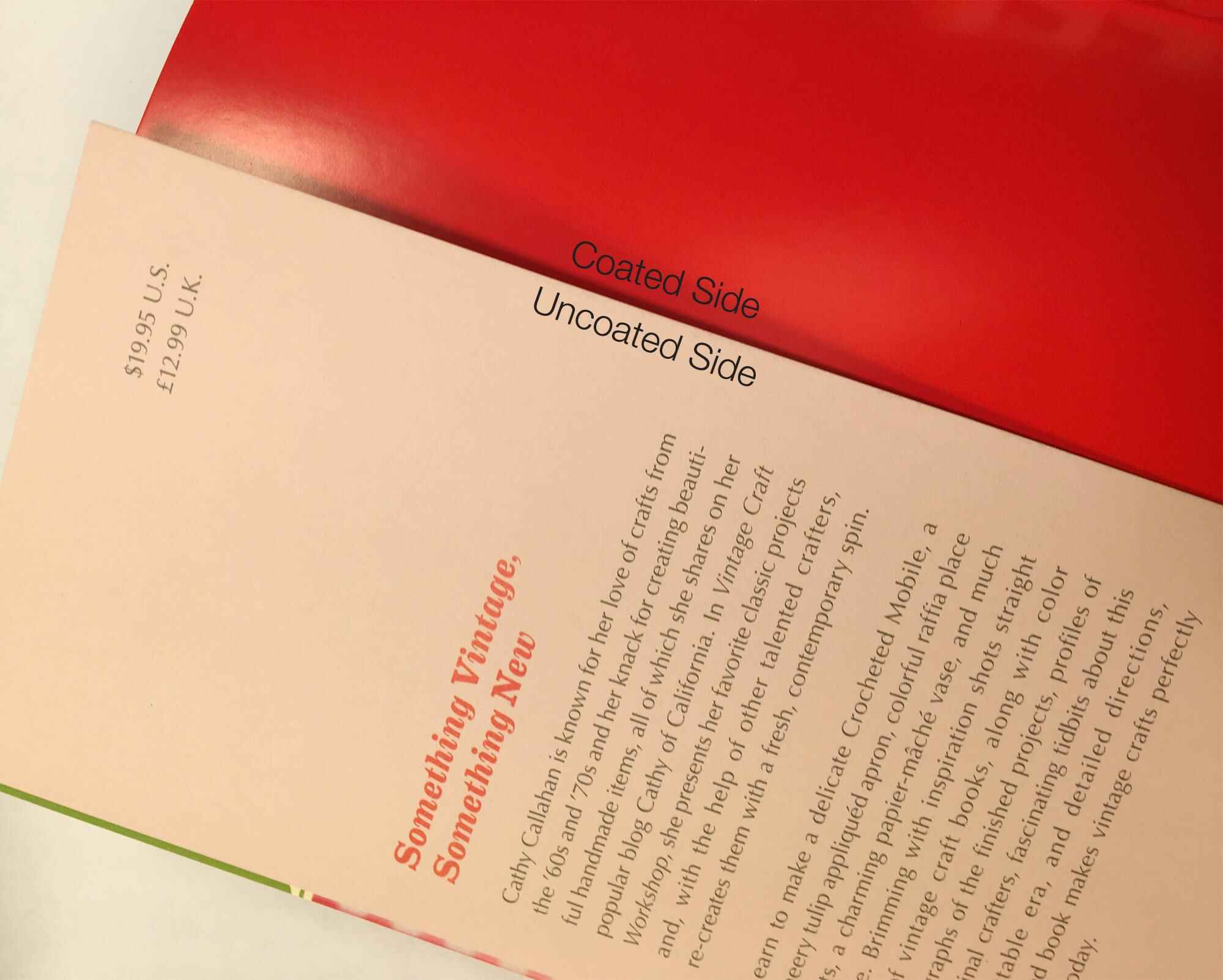
Coated paper starts as a base sheet and receives a surface layer containing pigments and binders. Depending on the mill and grade, that coating may include kaolin clay, calcium carbonate—CaCO₃—titanium dioxide—TiO₂—or combinations of other inorganic materials.
The coating fills irregularities between paper fibers, producing a smoother and less absorbent printing surface. In a formal investigation into coated printing paper, the U.S. International Trade Commission identified brightness, basis weight, finish, opacity, smoothness, and caliper as major physical characteristics. It also described brightness on a scale running from 1 to 100.
Uncoated paper has no comparable pigment coating covering the fiber surface. That does not mean it is untreated, unfinished, or low grade. It may still be sized, calendered, dyed, brightened, textured, or engineered for offset and digital printing.
This distinction matters because matte coated paper is still coated paper. Many buyers mistakenly describe every low-glare stock as uncoated, even though matte, silk, satin, dull, and gloss can all refer to different coated-paper finishes.
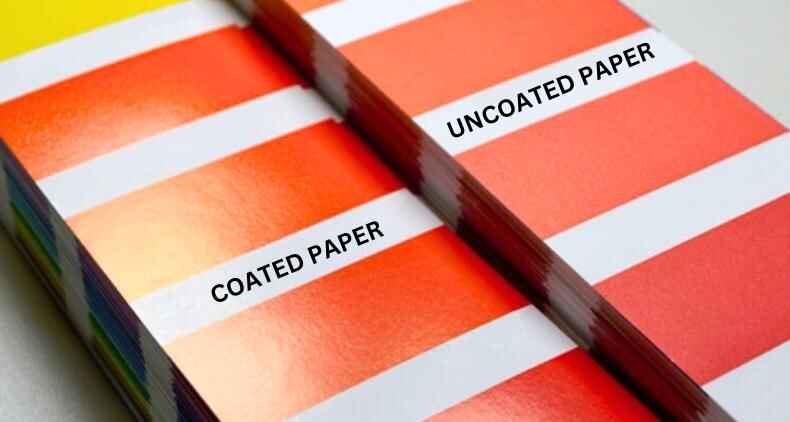
On coated paper, ink remains closer to the surface. Dots spread less, edges appear cleaner, and dense colors retain more visual intensity.
On uncoated paper, some of the ink vehicle enters the fiber structure. The result can be softer detail, lower apparent contrast, and a more subdued color range. That is not automatically a defect. For literary books, journals, workbooks, and heritage-style publications, softness may be part of the intended visual language.
Utah Valley University’s fine printing paper guide reports that hard, smooth coated sheets generally provide stronger image sharpness, color accuracy, vibrance, and saturation than soft, textured uncoated sheets. It also warns that heavy ink coverage on uncoated stocks can affect drying time and ink consumption.
That is the first hard truth: choosing uncoated paper for a heavily photographed book because it “feels premium” may create muddy shadows, weak blacks, slower production, and disappointing proofs.
| Decision Factor | Coated Paper | Uncoated Paper |
|---|---|---|
| Surface structure | Mineral-coated, smoother and less porous | Exposed fiber character, more porous |
| Image reproduction | Sharper detail and stronger color density | Softer detail and more muted color |
| Text readability | Good on matte grades; gloss can reflect light | Usually comfortable for long reading |
| Tactile character | Smooth, polished, controlled | Natural, warm, tactile |
| Ink behavior | Ink remains closer to the surface | Greater ink absorption |
| Pencil or pen use | Often difficult, especially on gloss | Generally suitable for writing |
| Fingerprints | More visible on dark gloss areas | Usually less noticeable |
| Typical interior uses | Photo books, art books, catalogs, illustrated titles | Novels, journals, manuals, workbooks |
| Common production risk | Glare, scuffing, excess weight | Dot gain, slow drying, muted images |
| Best proofing method | Contract color proof plus bound dummy | Press or production proof on exact stock |
The table makes coated paper look like the obvious technical winner. It is not.
A novel printed on glossy coated paper may reproduce its occasional photographs beautifully while making 300 pages of continuous text irritating to read. A coloring book printed on a polished coated stock may look vivid in the sales photograph but perform badly when a child tries to use crayons or colored pencils.
Specifications fail when one attractive feature is allowed to overrule the book’s actual use.
Coated stock should be the starting candidate when the book depends on image fidelity, fine detail, dense blacks, controlled brand colors, or repeated areas of heavy ink coverage.
Typical applications include:
The University of Illinois Preservation Self-Assessment Program explains, in the context of inkjet output, that untreated uncoated paper absorbs ink into the sheet, reducing image sharpness and vibrance, while image-receiving coated layers hold the image closer to the surface. The exact behavior differs between inkjet, toner, and offset lithography, but the surface principle remains commercially useful.
Gloss-coated paper produces strong contrast and apparent color depth. It works for image-heavy books viewed under controlled lighting, but glare can become tiring across long reading sessions.
Matte-coated paper reduces reflections while retaining a relatively smooth image surface. It is often the safest coated option for books combining photographs and substantial text.
Silk or satin paper sits between gloss and matte. Naming is not globally standardized, however. One mill’s silk may resemble another mill’s dull-coated grade.
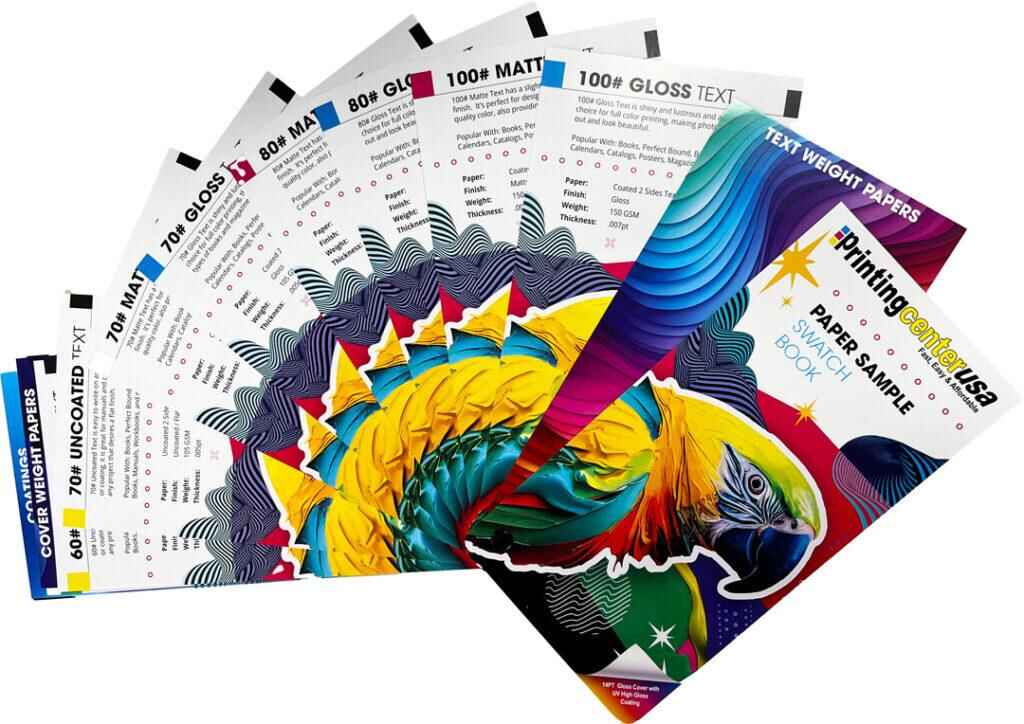
Ask for samples.
More importantly, request printed samples using comparable ink coverage. A blank paper swatch tells you about color and touch; it does not reveal black density, skin-tone reproduction, folding behavior, scuff resistance, or how the stock performs after binding.
Through JetPrint’s custom book printing service, publishers can compare paper, binding, page count, finishing, and intended use as one specification rather than selecting each item in isolation.
Here is an unpopular opinion: gloss is frequently used to imitate quality rather than create it.
A heavy glossy sheet can make a short catalog feel substantial, but it can also make an editorial book feel commercial and disposable. High-end design publications increasingly rely on restrained matte surfaces, controlled whiteness, and carefully selected uncoated inserts.
Premium is contextual. A 100 gsm cream uncoated sheet may suit a literary novel better than a 157 gsm gloss-coated sheet costing considerably more per finished book.
Uncoated stock is usually the stronger choice when the reader must spend time with the words, write on the page, turn pages frequently, or experience the book as a tactile object rather than an image display.
Common applications include:
The Library of Congress reported that most U.S. government publications in its reviewed program used uncoated JCP A60 offset book text paper. Its findings also showed that both coated and uncoated paper categories could be produced as alkaline stocks, which is a useful reminder that surface finish alone does not determine permanence.
Bright white paper increases contrast. More contrast sounds better, but prolonged reading is not a color-calibration exercise.
Cream, ivory, and natural-white uncoated papers can reduce the visual harshness of black text. This is one reason fiction publishers often choose warmer stocks rather than high-brightness blue-white paper.
But do not go too far. A very rough or highly absorbent stock can weaken small type, reverse text, thin rules, and screened graphics. For books containing diagrams, tables, or fine serif fonts, the paper still needs sufficient smoothness and opacity.
The best uncoated sheet is not necessarily the most textured one.
Any book designed for pencils, pens, crayons, markers, stamps, or handwritten notes should be tested with those exact tools.
Gloss-coated paper may resist pencil marks. Some marker inks may smear. Certain matte coatings accept ballpoint ink but still feel slippery under colored pencils.
For an activity book, workbook, or journal, uncoated paper usually provides the safer starting point. Yet a heavily illustrated children’s title may benefit from matte-coated pages, especially when the product is read rather than written in.
Purpose first. Always.
JetPrint’s printing capabilities can be reviewed alongside the book’s artwork, binding format, page count, and finishing requirements before a production paper is approved.
Paper pricing is not governed by the word “coated” alone.
Cost changes with:
A standard house stock may cost less than a special-order paper even when the special-order option has a lower nominal grade. And a sheet that appears cheaper per tonne can become more expensive after cutting waste, longer drying, added varnish, or production delays are included.
Consider a simplified 128-page book trimmed to 170 × 240 mm.
A 128-page book contains 64 leaves. Moving from 80 gsm uncoated paper to 105 gsm coated paper increases the nominal sheet mass by 31.25%.
Using the trimmed page area alone, that change adds approximately 65 grams per book:
64 leaves × 0.170 m × 0.240 m × 25 g/m² = 65.28 g
Across 1,000 copies, that is roughly 65 kilograms of additional finished-paper mass before allowing for covers, binding materials, packing cartons, production waste, or moisture variation.
That extra weight may affect:
This is why I reject paper recommendations made from appearance alone. A sheet is part of the book’s engineering.
Two papers with the same gsm can have different caliper. A bulky uncoated book paper may create a thicker spine than a denser coated sheet of equal weight.
That difference matters for hardcover cases, dust jackets, spine artwork, perfect-bound covers, slipcases, and packing dimensions.
For perfect-bound books, page count and paper caliper determine the spine width. The printer must also control grain direction, spine preparation, adhesive selection, and curing.
Heavy coated sections can create a stiff book block that resists opening. Very bulky uncoated paper can produce an unexpectedly wide spine. Neither problem is visible in a spreadsheet containing only page count and gsm.
Sewn binding can support longer-life publications and thicker sections, but paper stiffness still affects opening behavior. Image-heavy books may use matte-coated paper with sewn sections to balance reproduction quality and durability.
In saddle-stitched books, increasing paper thickness causes inner pages to push outward, creating creep. Trimming compensates for that movement, but important content must remain inside the safe area.
A bound dummy exposes these issues before mass production. A loose digital proof does not.
When evaluating a supplier, review not only machinery but also how the team handles specifications, proofing, materials, and quality control. JetPrint provides further production context on its About page.
A book does not have to use one interior stock throughout.
Mixed-paper construction can produce a better commercial result when used carefully. Examples include:
But hybrid construction introduces new risks. Different papers may fold, trim, bind, and age differently. Their thicknesses alter section geometry. Short inserted sections may require handwork or specialized gathering.
And there is another issue: color matching.
The same CMYK values will not look identical on coated and uncoated paper. ISO printing conditions, ink limits, dot gain, and ICC profiles differ. A brand color that appears dense and cool on coated stock may become softer and warmer on uncoated stock.
Do not ask a designer to “use the same file” and assume the press will solve it.
Artwork intended for coated and uncoated papers should be separated using the profile appropriate to the actual printing condition. Common offset workflows may reference profiles derived from FOGRA characterization data, such as PSO Coated v3 or PSO Uncoated v3, depending on the printer’s process.
Profiles are not magic. They cannot force uncoated paper to reproduce the same gamut as coated paper. They can, however, help the designer make controlled conversions rather than accidental ones.
The printer should confirm the required ICC profile, total ink limit, black-generation method, and proofing standard before final PDF export.
“Uncoated is sustainable.”
“Coated cannot be recycled.”
“Recycled paper always looks dull.”
All three statements are unreliable without a complete material specification and recovery context.
The U.S. Environmental Protection Agency reports that approximately 46 million tons of paper and paperboard were recycled in 2018, representing a 68.2% recycling rate. It also shows major differences between categories: corrugated boxes reached 96.5%, while paper containers and packaging excluding corrugated boxes reached 20.8%. A broad material label does not predict the recovery result of every paper product.
For a book project, ask more specific questions:
Surface is only one variable. A durable book that remains in use for decades may serve a different environmental purpose than a disposable publication printed on a paper carrying a fashionable label.
JetPrint’s sourcing information and production documentation should be reviewed project by project rather than replaced by generic environmental claims.
I use a decision sequence that begins with reader behavior, not paper catalogs.
Will the reader study, browse, write, color, display, archive, or repeatedly reference the book?
A photo book and a training manual may share the same trim size but require entirely different papers.
Estimate how many pages contain:
The more the design relies on dense color and fine photographic detail, the stronger the case for coated paper becomes.
A glossy art book viewed at a table behaves differently from a manual read under overhead factory lighting. Reflection, page angle, and reading duration matter.
Confirm page count, caliper, grain direction, spine width, opening behavior, and finished weight before approving the stock.
Do not compare a luxury uncoated sample with a bargain coated sample and conclude that uncoated paper is better. Compare stocks within an appropriate commercial grade and price range.
The dummy should use the intended trim size, approximate page count, paper weight, and binding structure. It reveals bulk, stiffness, show-through, cover fit, and handling.
For color-sensitive books, test real pages containing skin tones, shadow detail, neutral grays, solid blacks, small text, and difficult gradients.
A generic printer test sheet is not enough.
| Book Type | Recommended Starting Point | Main Reason |
|---|---|---|
| Text-heavy novel | 70–100 gsm cream or natural-white uncoated | Comfortable long-form reading |
| Academic book | 70–100 gsm opaque uncoated | Text clarity and manageable weight |
| Photography book | 128–200 gsm matte, silk, or gloss coated | Detail and color reproduction |
| Illustrated children’s book | 105–157 gsm matte or silk coated | Color plus reduced glare |
| Coloring book | 100–160 gsm uncoated, subject to tool testing | Pencil and crayon acceptance |
| Activity workbook | 80–120 gsm uncoated | Writing and erasing |
| Art catalog | 128–170 gsm coated or premium smooth uncoated | Depends on desired visual character |
| Instruction manual | 70–100 gsm uncoated or light matte coated | Readability, diagrams, and cost |
| Journal or notebook | 80–120 gsm uncoated | Pen performance |
| Premium brand book | Matte coated, smooth uncoated, or mixed stocks | Must follow content and brand position |
These gsm bands are commercial starting points, not universal standards. Final paper weight must be tested against page count, opacity, printing process, binding, target cost, and shipping requirements.
Coated paper is a base sheet covered with a mineral-and-binder layer that reduces surface porosity and creates a smoother printing face, while uncoated paper leaves the fiber structure more exposed, allowing greater ink absorption, lower glare, and a more natural tactile feel.
Coated paper normally produces sharper photographs, stronger color saturation, and cleaner fine detail. Uncoated paper is usually more comfortable for continuous reading and easier to write on with pencils and pens.
The best paper for book printing is the stock that matches the book’s image coverage, reading duration, binding structure, writing requirements, target weight, production method, and budget rather than the sheet with the highest gsm, brightest surface, or most expensive finish.
Choose coated paper for image-led books and uncoated paper for text-led or writable books. Mixed stocks may be justified when different sections serve different purposes.
Matte paper is not automatically uncoated paper because “matte” describes a low-glare visual finish, while “uncoated” describes a paper surface without a continuous pigment coating; therefore, matte-coated, dull-coated, smooth uncoated, and textured uncoated papers can all look non-glossy while behaving differently during printing.
Ask the printer for the mill, paper grade, gsm, finish, coating status, and printed sample instead of approving a stock based on the word “matte.”
Coated paper is not always more expensive than uncoated paper because the final cost depends on paper grade, mill availability, gsm, texture, recycled content, cutting yield, ink coverage, drying time, freight, and order quantity rather than coating status alone.
A standard coated house sheet may cost less than a premium textured uncoated stock. The only reliable comparison is a project-specific quotation using the same trim size, page count, quantity, binding, and delivery terms.
Uncoated paper can reproduce professional photographs, but its more absorbent and irregular surface usually produces lower apparent sharpness, softer blacks, reduced saturation, and a smaller reproducible color range than a comparable coated sheet printed under controlled conditions.
Premium smooth uncoated grades can create attractive editorial images, especially when the designer intentionally adjusts contrast, sharpening, ink limits, and color separation for the paper.
Coated paper can often be recycled because many conventional printing-paper coatings use mineral pigments such as kaolin clay and calcium carbonate, but recyclability ultimately depends on the complete product structure, local recovery system, adhesives, plastic films, laminations, foils, inks, and contamination rather than coating status alone.
Publishers should avoid claiming that a book is recyclable without checking the paper, binding adhesive, cover treatment, inserts, and destination market’s collection rules.
Book paper weight should be selected by balancing opacity, page count, image coverage, stiffness, bulk, binding method, spine width, finished book weight, mailing cost, and reader handling rather than choosing the heaviest sheet that fits the available budget.
A heavier paper may improve opacity but make the book bulky and expensive to ship. A lighter opaque sheet can sometimes produce a better reading experience and more efficient binding.
Do not send a printer a message saying, “Please quote good matte paper.”
Send the trim size, page count, color configuration, image coverage, binding type, quantity, target market, writing requirements, preferred paper tone, approximate gsm, finishing, and delivery destination.
Then ask for two or three practical paper alternatives with:
A proper paper decision is evidence-based, physical, and specific.
Contact Shenzhen JetPrint Printing Co. for a paper-led book printing quotation and submit your book specifications, artwork characteristics, binding preference, and intended reader use. The goal is not merely to find coated or uncoated paper. It is to build a book whose surface, weight, color, and structure work together.

Leave Your Comments