Start Your Book Printing Project
Share a few details about your book. JetPrint will review your specifications and help you identify the suitable printing, paper, binding, and finishing options for your project.


Offset printing is usually the stronger choice for a predictable, longer book run, while digital printing is generally better for short runs, test launches, frequently revised content, personalized editions, and emergency reprints. But quantity alone does not decide the winner. Total project cost does.
The threshold moves.
A 500-copy, 64-page monochrome paperback, a 500-copy illustrated hardcover, and a 500-copy workbook containing six language versions may share the same quantity, yet their setup costs, page-imposition efficiency, paper requirements, binding schedules, spoilage allowances, and inventory risks can be completely different.
So why do publishers keep asking for one universal crossover number?
Because “digital under 500, offset over 500” sounds reassuring. It is also lazy procurement advice.
My hard view is that selecting a book printing method solely from the quoted cost per copy is a financial mistake. Publishers should compare the cost of producing, approving, storing, distributing, revising, and potentially destroying the books—not merely the number printed on the quotation.
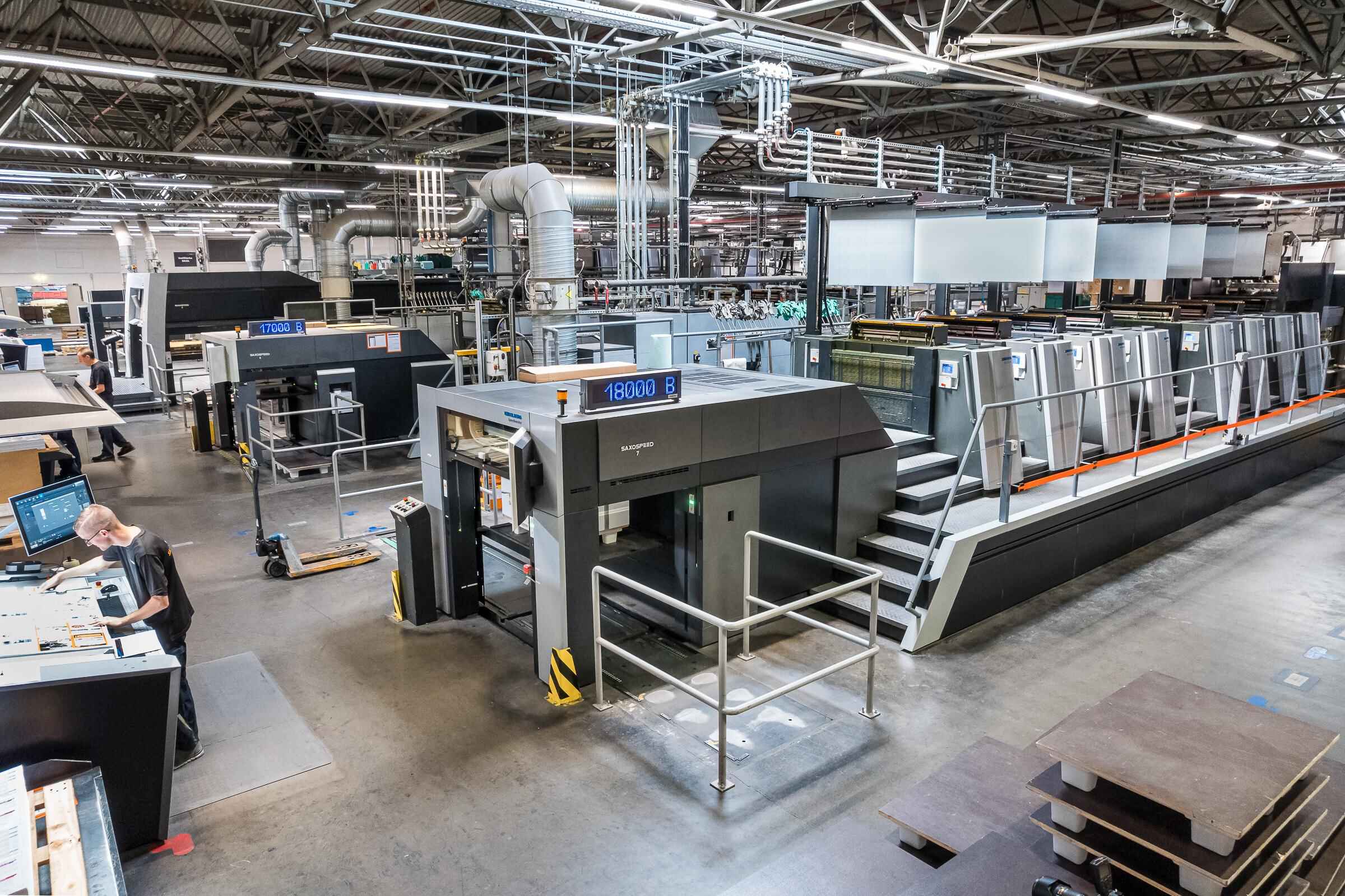
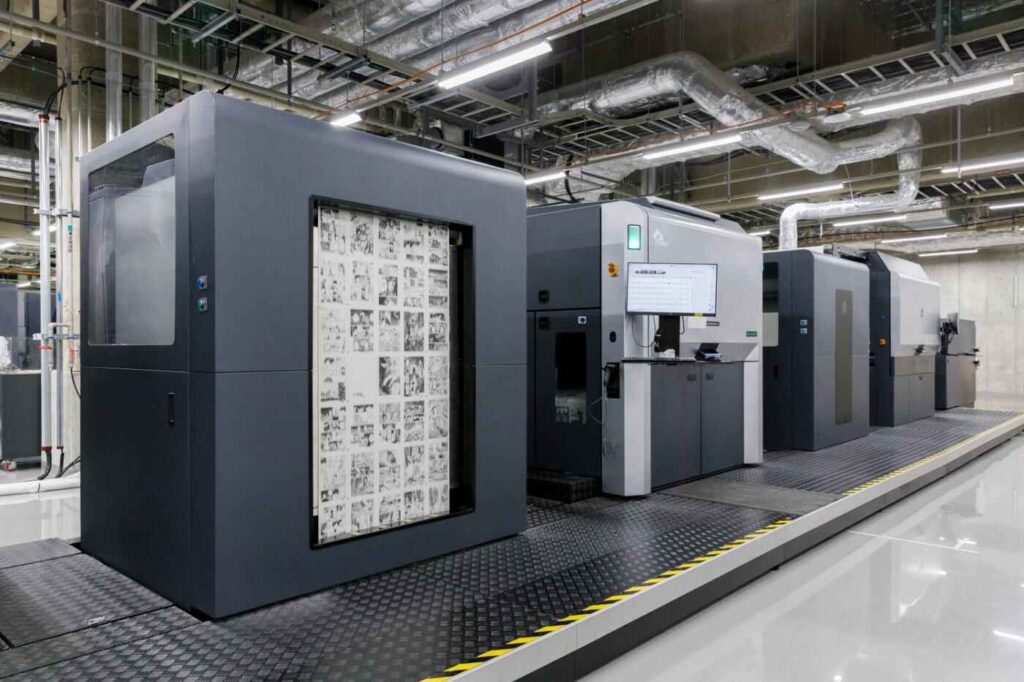
Offset lithography uses printing plates to transfer ink onto a rubber blanket and then onto the paper. Its initial preparation involves plate output, press setup, ink adjustment, registration, and makeready sheets. Once the press is running efficiently, however, the additional cost of each sheet drops sharply.
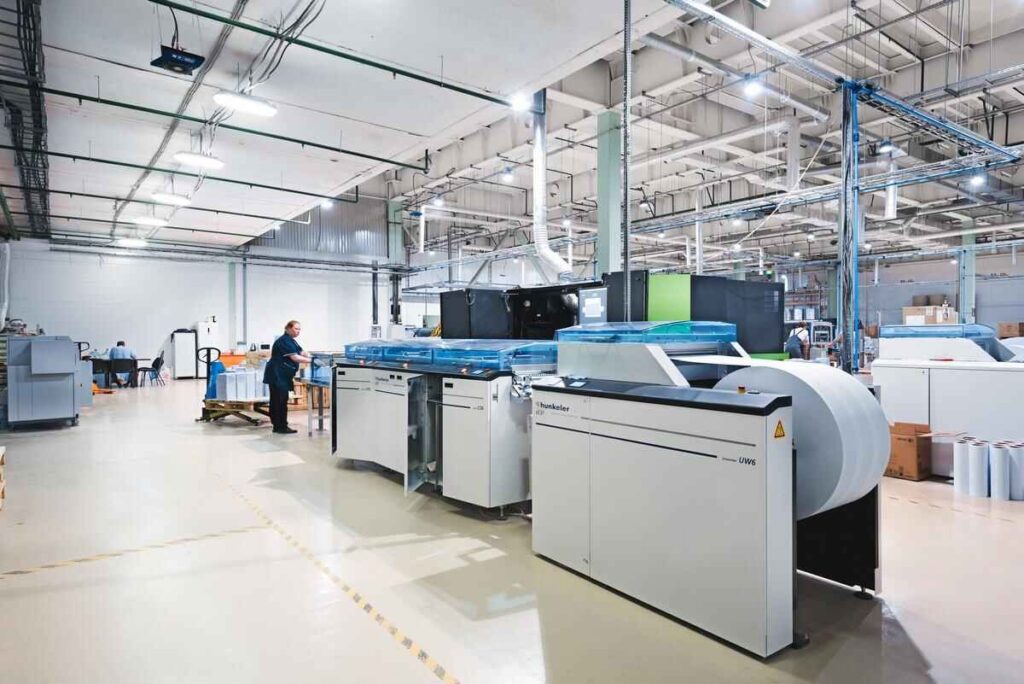
Digital printing sends the file directly to a toner-based or inkjet production press. It avoids conventional plate production, requires less press setup, and can switch between files or versions quickly. The cost per printed sheet is usually more stable rather than falling dramatically as volume increases.
That produces the basic commercial split:
This distinction is also reflected in JetPrint’s book printing capabilities, where the production route is assessed against quantity, page format, paper, color coverage, version count, binding, finishing, and approval requirements rather than quantity alone.
| Decision Factor | Digital Printing | Offset Printing |
|---|---|---|
| Initial setup | Low; no conventional plates | Higher; plates and press makeready required |
| Cost per copy | Relatively stable | Falls as the print run increases |
| Typical use | Proofs, test runs, short runs, gap inventory | Planned launches, established titles, larger runs |
| First-copy speed | Usually faster | More preparation before production |
| Variable content | Strong; each copy can change | Not practical in a normal production run |
| Version management | Efficient for multiple small editions | Efficient when each version has enough volume |
| Paper selection | Limited by the qualified stocks and press format | Often broader across coated and uncoated stocks |
| Color behavior | Depends heavily on toner or inkjet system, profile, and stock | Strong control for repeated high-volume CMYK production |
| Large-format sheets | Equipment-dependent | Well suited to imposed book signatures |
| Inventory exposure | Low because fewer copies can be produced | Higher if demand forecasts are wrong |
| Reprint flexibility | Fast, with minimal restart preparation | New plates or setup may be required |
| Best commercial fit | Uncertain demand or frequently changing files | Stable demand and specifications |
Neither method is automatically superior. Offset is not “premium” by definition, and digital is not automatically cheap-looking. A badly controlled offset run can fail. A well-profiled digital press on an appropriate paper can produce excellent commercial books.
The best printing method for books is the method that controls the project’s biggest risk.
A basic comparison starts with this equation:
Total production cost = setup cost + variable printing cost + binding and finishing + proofing + freight + inventory cost + expected returns or obsolescence
Most simplified online comparisons include only the first two items. Publishers live with everything after them.
Consider a hypothetical comparison—not a JetPrint quotation:
The theoretical production crossover would be:
($2,000 − $100) ÷ ($4.00 − $1.50) = 760 copies
At approximately 760 copies, the two production totals would be similar under those assumptions. But change the page count, paper, trim size, color configuration, binding, or finishing, and the result changes immediately.
An RIT study discussing production digital-print adoption cited a generalized crossover near 1,500 impressions, while one application model placed digital’s lowest-cost range below roughly 700 prints and offset’s advantage beyond 3,500 sheets. Those figures came from a 2015-era model, not a permanent industry law, but they show how widely the crossover can move between jobs. The RIT research also noted that digital avoids plate costs and supports shorter runs, faster changes, personalization, and print-on-demand.
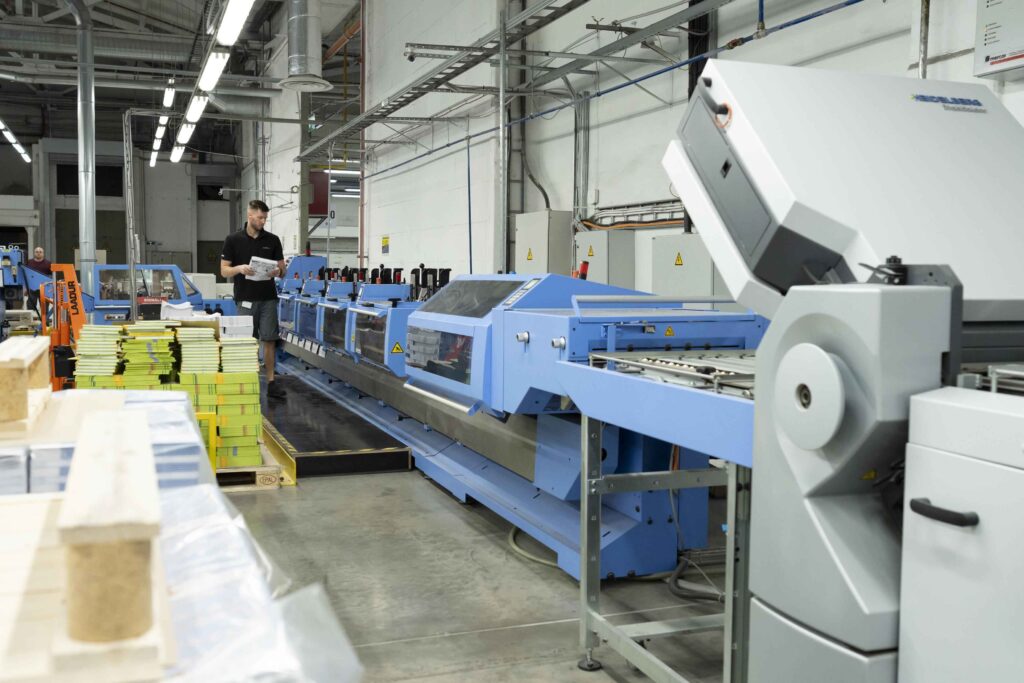
A printer does not manufacture “one book” at a time on an offset press. Pages are imposed onto larger sheets, printed, folded into signatures, gathered, and bound.
A 32-page picture book and a 320-page novel may both have a 1,000-copy print run, but the novel requires far more impressions, paper, folding, gathering, and binding work. The offset setup is spread across more printed pages, which can make its economics more attractive.
Digital equipment may process complete book blocks efficiently, but the click charge, ink coverage, paper format, duplex speed, and finishing route still affect the cost.
Standard trim sizes usually use parent sheets more efficiently. An unusual landscape format may produce substantial sheet waste or require a different press format. A few millimeters can change how many pages fit on a sheet.
Publishers should therefore compare:
This is why a complete custom book printing specification is more useful than asking, “What is your price for 1,000 books?” JetPrint’s project brief requires the trim size, page count, interior color, paper, binding, cover construction, finishing, quantity, proofing priorities, and delivery destination because these details are economically connected.
The old argument that offset always looks professional while digital always looks artificial is outdated. Production toner and inkjet systems have improved substantially, especially for monochrome interiors, trade paperbacks, manuals, workbooks, advance copies, and less color-sensitive publications.
But there are still visible and operational differences.
Toner is fused onto the paper surface. Production inkjet places droplets of ink onto a qualified or treated substrate. Offset ink interacts with the paper through a different transfer, absorption, and drying process.
These differences can affect:
Digital can look excellent. But a digital sample is not automatically an accurate offset press proof.
That distinction matters for illustrated children’s books, photography books, museum catalogs, art titles, branded corporate books, and any publication containing Pantone references or tightly controlled reprints.
A digitally printed bound sample may confirm page order, dimensions, approximate appearance, binding structure, cover alignment, and handling. It may not predict the final offset color on the selected production paper.
Publishers should state what each proof is meant to approve:
Before approving either route, review the file preparation issues covered in common artwork problems before book printing. RGB images, missing bleed, low-resolution artwork, incorrect spine dimensions, and unembedded fonts can damage both digital and offset production.
Offset is often the stronger option when the project requires:
Publishers producing premium hardcover book printing projects often choose offset because the interior, endpapers, case wrap, jacket, and finishing must be coordinated as one high-volume production system.
Digital is often commercially appropriate for:
For many paperback book printing projects, readers will not care which press technology was used. They will care about readable text, stable binding, correct trimming, good opacity, clean covers, and a reasonable retail price.
Offset printing cost per book can look unbeatable because the quotation rewards additional quantity. Print 2,000 instead of 1,000, and the unit price falls. Print 5,000, and it falls again.
That does not mean the extra books are free.
Unsold copies consume cash, warehouse space, insurance, handling labor, pallet positions, inventory reporting, and eventually disposal fees. Revised editions create another problem: one corrected paragraph can turn thousands of perfectly manufactured books into obsolete stock.
A 2022 study produced through Portland State University, the Independent Book Publishers Association, and PubWest described average book returns of approximately 30%, with an industry goal of reducing that figure toward 15% or less. The researchers recommended smaller print runs and using print-on-demand for proof copies and gap runs rather than treating POD as a replacement for every title. The publishing-distribution research examined publishers with typical print runs ranging from roughly 1,800 to 10,000 copies.
That 30% figure changes the arithmetic.
Suppose a publisher prints 2,000 copies at a total printing cost of $5,000:
The cheap $2.50 book was never really a $2.50 book.
The U.S. Environmental Protection Agency learned the same lesson at a much larger scale. A 2016 EPA Office of Inspector General audit found that nearly 8 million stored publication items had been recycled between June 2013 and March 2015. The same report noted that the EPA headquarters print plant’s print-on-demand operation kept its need for stored materials nominal. The EPA audit is not a commercial-publishing study, but it is an unusually clear demonstration of what bulk-print economics can hide.
Print-on-demand is a business model enabled by digital production. Short-run digital printing is a manufacturing method. They overlap, but they are not identical.
A publisher can order 300 digitally printed books and store them. That is short-run digital printing, not necessarily POD. Under a true POD model, a copy is produced after an order enters the system, often through an integrated distribution network.
POD reduces inventory exposure, but it can introduce other costs or restrictions:
Offset delivers control and lower unit production cost at volume. POD delivers availability without committing cash to a warehouse full of books.
The intelligent question is not “Which system should replace the other?” It is “Where should each system sit in the title’s lifecycle?”
A hybrid offset-and-digital model is often safer than making a permanent commitment to one method.
Use digital production for:
The objective is not to achieve the lowest unit price. It is to confirm that the content, positioning, price, and demand assumptions are real.
When orders, distributor commitments, subscriptions, school adoption, crowdfunding totals, or backlist history support a predictable run, compare offset quotations.
This is when to choose offset printing:
An offset reprint may require production scheduling, paper ordering, binding, packing, and freight. Digital gap runs can prevent a proven title from going out of stock while the larger reprint is being manufactured.
The 2022 Portland State publishing research specifically identified proof copies and gap runs as practical POD applications.
A title may no longer justify 2,000 offset copies, but it may still sell 10, 30, or 100 copies per month. Digital production can keep that backlist title available without forcing a publisher to choose between another large investment and declaring the book out of print.
This is where digital earns its higher unit cost. It converts inventory risk into production cost.
Choose digital printing when most of these statements are true:
Choose offset printing when most of these statements are true:
Before requesting quotations, prepare one controlled specification containing the trim size, page count, interior color, paper, binding, cover construction, finishing, quantity, proof requirements, packing, and destination. Comparing printers without identical specifications produces misleading numbers.
Offset printing is generally better for publishers with stable files, predictable demand, longer print runs, color-sensitive artwork, special papers, or complex finishing, while digital printing is generally better for short runs, proofs, test launches, versioned content, rapid reprints, and titles carrying significant inventory risk.
The final decision should compare the total cost of ownership, including setup, production, binding, freight, storage, returns, revision risk, and unsold stock. A lower unit price is valuable only when the publisher can sell enough copies to benefit from it.
Offset printing becomes cheaper when its higher plate and makeready costs are spread across enough copies to overcome digital printing’s higher variable cost, but the crossover quantity changes with page count, trim size, color configuration, paper, press format, binding, finishing, version count, and production schedule.
Some projects cross over below 500 copies; others remain competitive digitally beyond 1,000 or even several thousand impressions. Request both routes using exactly the same specification instead of relying on a universal number.
Digital printing quality is suitable for many commercially published novels, manuals, workbooks, advance copies, educational materials, backlist titles, and short-run paperbacks when the files, paper, press profile, binding, and quality-control requirements are properly matched to the production system.
Image-heavy art books, color-critical children’s titles, spot-color work, and projects requiring unusual papers may still favor offset. Publishers should inspect a relevant printed sample rather than judging the method from its name.
Print-on-demand should be used when avoiding inventory exposure, keeping slow-selling backlist titles available, testing demand, producing proof copies, filling temporary stock gaps, or supporting frequently updated content is more valuable than achieving the lowest possible manufacturing cost per copy.
POD is less attractive when a title has proven high-volume demand, requires nonstandard materials, carries complex finishing, or needs tighter batch-to-batch control than the distribution platform provides.
A digital proof can accurately confirm content, pagination, cropping, approximate color, dimensions, and general construction, but it cannot automatically reproduce the exact ink behavior, paper interaction, surface appearance, dot gain, or tonal response of the final offset press run.
For color-sensitive projects, define whether approval requires a contract color proof, production-stock wet proof, press sheet, or other agreed reference. Never approve “the sample” without stating what the sample is intended to prove.
A valid comparison requires the finished size, page count, quantity, interior color, paper specification, binding, cover construction, finishing, artwork status, number of versions, proofing requirements, packing method, and delivery destination, with every supplier quoting the same production scope.
Also ask each printer to identify the proposed printing method, proof type, paper assumptions, included finishing, spoilage allowance, packing, freight terms, and any specification substitutions.
A single title can use digital printing for prototypes, advance copies, launch tests, regional versions, gap inventory, and long-tail backlist supply, then use offset printing for the main production run once demand and specifications become stable enough to justify the setup investment.
Publishers should manage color expectations carefully because a digital batch and an offset batch may not appear identical. Each production route needs its own approved reference and documented acceptance criteria.
Do not ask a printer which method is “best” without sending the complete book specification. The answer will be little more than a guess.
Instead, prepare your trim size, page count, quantity, interior color, paper, binding, cover, finishing, version count, proofing needs, packing requirements, and destination. Then request a side-by-side production review showing where digital, offset, or a hybrid schedule creates the lowest total risk.
Use JetPrint’s custom book printing service to organize the project specification, review the available printing and production capabilities, or contact JetPrint with your files and target quantity.

Leave Your Comments