Start Your Book Printing Project
Share a few details about your book. JetPrint will review your specifications and help you identify the suitable printing, paper, binding, and finishing options for your project.
The gutter decides.
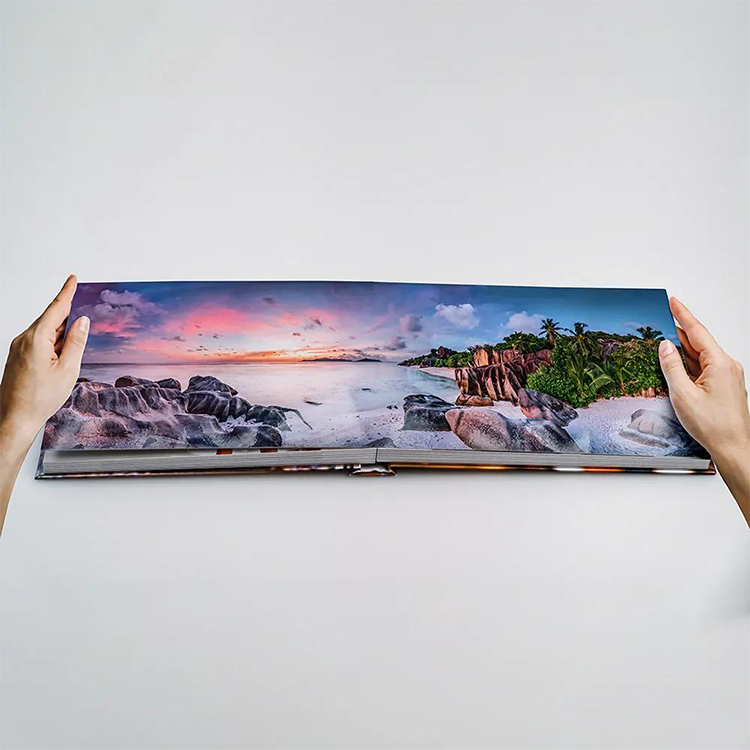
When an illustrated book depends on panoramic photography, architectural drawings, maps, children’s artwork, product diagrams, or visual sequences that cross two pages, the binding is no longer a finishing detail added after design; it becomes part of the image-delivery system.
So why do publishers still choose it last?
I take a blunt view: a beautiful two-page composition that disappears into a tight spine is not a successful spread. It is damaged content. The ink may be accurate, the paper expensive, and the cover beautifully finished, yet the reader still sees two incomplete pages instead of one deliberate image.
That is why lay-flat binding must be specified before final pagination, not after the files arrive at the printer.
The term “lay-flat book binding” is used loosely. It can describe several constructions that open differently, cost differently, and produce completely different page thicknesses.
One printer may use “lay-flat” to describe a Smyth-sewn book that opens comfortably with light pressure. Another may mean an Otabind structure whose text block moves independently from the cover spine. A photo-book supplier may mean rigid spreads mounted back-to-back, producing thick leaves and an almost uninterrupted center seam.
These are not interchangeable products.
The University of Utah’s Opening Artists’ Books glossary defines the historical Otabind structure as a hollow-backed softcover whose text block is consolidated with cold glue and gauze. It also notes that the method originated with Finland’s Otava Bookbinding Company and has since appeared in sewn, unsewn, and modified versions.
That history matters because it exposes an industry habit I dislike: using one attractive label for several unrelated constructions.
Before discussing price, ask the printer what physically moves when the book opens:
A sales representative who answers only, “Yes, it lays flat,” has not answered the production question.
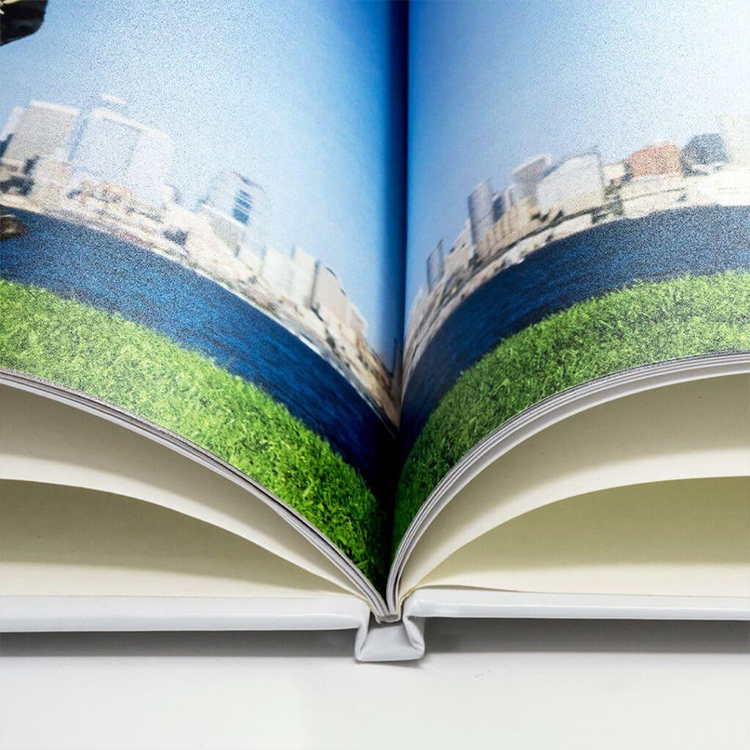
Text can tolerate a narrow gutter. Images often cannot.
A paragraph interrupted by a binding remains readable. A face, machine component, caption, map coordinate, or product edge lost in the gutter can change the meaning of the page.
The Library of Congress documented this problem while treating a set of Diderot’s Encyclopédie. Its conservation case study explains that an inflexible spine forces the leaves to flex instead; as the book becomes thicker, more of the gutter is swallowed by the page mass, visibly removing part of the image at the center. A hollow spine was used to improve text-block movement and gutter access.
That is not marketing language. It is a physical explanation of what happens when the spine resists opening.
The Library of Congress makes the same priority visible in its binding and digitization statement of work. For bound-book scanning, it specifies a cradle capable of holding a book open at 180 degrees, requires the pages to remain flat, and calls for capture at 300, 400, or 600 ppi, including the page edges and gutter.
The lesson for publishers is straightforward: access to the gutter affects whether visual information can be viewed, photographed, scanned, archived, and reproduced.
A recent retail comparison reached a similar conclusion from the buyer’s side. In July 2026, Tom’s Guide tested six photo-book services using comparable 20- to 24-page books at approximately 11 × 8.5 inches. Printique’s entry-level product used premium lay-flat construction with thick pages and received the strongest assessment for image and paper quality, although its tested 20-page, 8 × 8-inch hardcover started at $78.99.
That retail price is not a manufacturing quotation. It does, however, reveal the commercial position of true lay-flat photo books: they are sold as premium objects because the construction, materials, weight, and production sequence differ from an ordinary glued book.
There is no single best binding for illustrated books. There is only the best match for a specific page count, image plan, paper, run length, handling pattern, and selling price.
| Binding option | Opening performance | Page character | Best applications | Main risk |
|---|---|---|---|---|
| Otabind or hollow-back lay-flat | Opens close to flat because the text-block spine moves independently | Conventional flexible pages | Art books, illustrated guides, cookbooks, catalogs, premium paperbacks | Requires a bindery that understands the exact structure |
| Smyth-sewn case or soft binding | Opens widely and improves with use; results vary by construction | Conventional folded signatures | Children’s books, art books, reference books, durable editions | “Sewn” does not automatically mean every spread sits perfectly flat |
| Flush-mount lay-flat photo book | Produces the cleanest panoramic spreads and a minimal center interruption | Thick, rigid or semi-rigid leaves | Photography portfolios, wedding albums, luxury presentations | High weight, limited page capacity, greater production cost |
| Swiss binding or exposed-spine structure | Opens freely because the spine is detached from part of the cover | Flexible pages with visible structural character | Design books, architecture books, limited editions | Exposed spine may conflict with mainstream retail expectations |
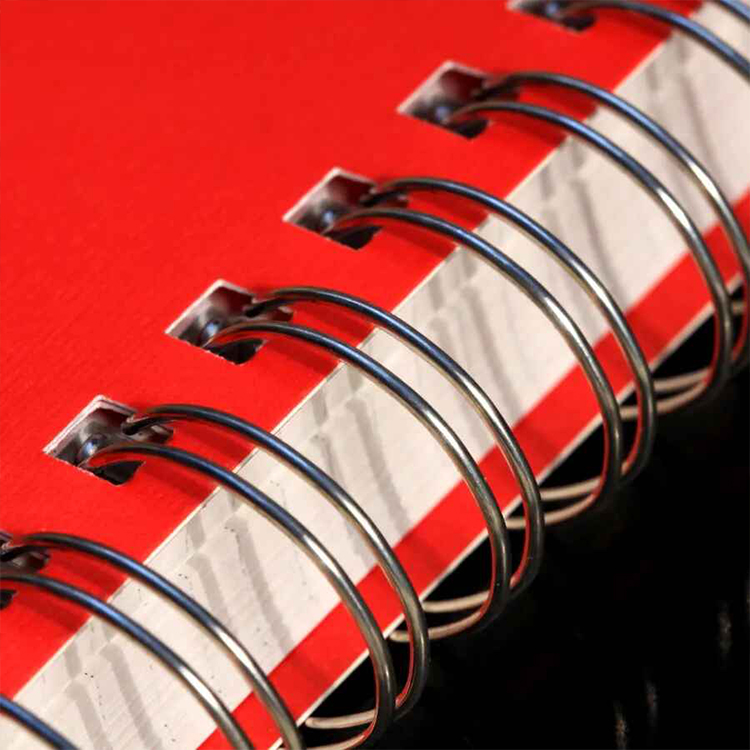
| Wire-O or spiral binding | Opens fully and can fold back on itself | Punched loose leaves | Manuals, workbooks, swatch books, technical references | Visible metal or plastic hardware interrupts the trade-book appearance |
Otabind binding separates the functional spine of the text block from the decorative spine of the cover. When the reader opens the book, the text block can flex outward rather than being trapped against a rigidly attached cover.
That movement is the point.
For publishers seeking normal-feeling paper rather than mounted album pages, Otabind can be one of the most convincing illustrated book binding options. It can support panoramic spreads while preserving the familiar weight, turning action, and shelf appearance of a paperback or flexible-cover book.
But there is a catch.
Otabind is not simply perfect binding with softer glue. Spine preparation, gauze, adhesive behavior, paper grain, page count, and cover construction all influence the result. A printer may produce an excellent hollow-back sample with one paper and a disappointing book with another.
My working rule is simple: never approve Otabind from photographs alone. Request a physical dummy using the intended trim size, approximate page count, and actual paper.
Smyth sewing joins folded signatures with thread through their folds. Because the sections can move relative to one another, a well-made sewn book normally opens better than a conventional milled perfect-bound book.
It is also mechanically reassuring. Pages are not relying entirely on a thin adhesive connection at the spine edge.
The Library of Congress gives sew-through-fold attachment priority over double-fan adhesive binding when intact signatures are available in its institutional specifications. That requirement addresses preservation rather than commercial picture-book production, but it confirms the structural value of retaining and sewing folded sections.
Still, the phrase “Smyth sewn” is not proof of a seamless spread.
A heavily rounded spine, stiff coated paper, wrong grain direction, thick sections, strong endpaper pull, or tightly built case can keep a sewn book from remaining fully open. It may open to 160 or 170 degrees under ordinary use while still resisting a true 180-degree position.
For many illustrated books, that is acceptable. For an image that must cross the gutter without distortion, it may not be.
When planning a sewn edition through a custom book printing service, ask for the intended signature scheme, paper grain direction, spine shape, lining method, endpaper construction, and a bound crossover test.
Flush-mount construction usually prints each spread as a complete unit and attaches spreads back-to-back. This creates thick leaves, hides the reverse side of each printed sheet, and allows the page to hinge at or near the center.
The visual result can be excellent.
A face can cross the center. A building can span both pages. A wide photograph can behave as one image rather than two neighboring images.
But this construction changes the entire product. A 30-spread book may feel much thicker than a 60-page conventional book. Shipping weight rises. Page turning becomes more album-like. Spine width increases quickly. Large page counts can become awkward or structurally unrealistic.
This is why a premium lay-flat photo book is ideal for selected images, not automatically for every illustrated title.
The hard truth? Publishers sometimes pay for flush-mount construction when their artwork never crosses the gutter. In that case, much of the added cost buys thickness rather than visible improvement.
Swiss binding normally attaches the text block to the rear cover while leaving the spine exposed or only partially enclosed. Because the spine is not trapped inside a conventional wraparound cover, the pages can open freely.
Designers love it for a reason. It makes the construction visible.
Architecture monographs, design portfolios, exhibition catalogs, and artist books can use the exposed spine as part of the visual language. Thread color, spine lining, adhesive application, and section structure become design elements rather than hidden manufacturing details.
But Swiss binding is not neutral. It looks intentional, technical, and sometimes unfinished to readers who expect a conventional hardcover or paperback.
That perception may be desirable. Or fatal.
Before selecting it, compare the structural concept with the audience, distribution channel, and retail environment. A museum-store buyer may appreciate the exposed construction; a school distributor may see it as vulnerable.
Wire-O binding opens flat. It can also fold completely backward.
No argument there.
For instructional manuals, educational workbooks, recipe books, presentation tools, music books, training materials, and frequently referenced diagrams, Wire-O may outperform every concealed-spine option. The pages stay where the reader puts them, and the book occupies less desk space when folded back.
Yet many publishers reject it because it does not look like a traditional book.
That is an aesthetic decision, not a performance decision.
I would rather use visible wire that works than hide a tight glued spine behind an expensive cover and pretend the result is reader-friendly. For production feasibility, punching limitations, cover options, and available finishing sequences should be reviewed against the printer’s actual book printing capabilities.
Start with the reader’s action, not the binding name.
Will the book be held in two hands, placed on a table, used beside machinery, opened by a child, displayed in a showroom, scanned later, or presented as a collectible object?
Those behaviors narrow the options quickly.
Otabind is a strong candidate when the book needs:
It is especially useful for art books, cookbooks, illustrated educational titles, exhibition catalogs, and visual reference books.
A sewn structure suits books expected to survive frequent use, repeated opening, or long-term ownership. It also offers more forgiving opening behavior than many adhesive-only bindings.
Use it for children’s picture books, premium hardcovers, art monographs, reference books, religious books, and illustrated titles sold as lasting editions.
But test the real construction. Thread alone does not determine opening performance.
Flush mounting makes sense when the center spread must appear almost uninterrupted and the title can support thicker leaves, lower page counts, greater weight, and a premium position.
Photography portfolios, wedding books, luxury property presentations, art reproductions, memorial books, and high-end brand books are obvious candidates.
For a manual used on a workbench, a cookbook used beside a stove, or an educational book completed with both hands, flat operation matters more than a printed spine.
Function wins.
Swiss binding is appropriate when the publisher wants the reader to notice how the book is made. It can turn a production solution into part of the editorial statement.
That makes it powerful, but not universal.
A lay-flat structure cannot rescue careless artwork.
The binding reduces gutter loss; it does not eliminate trimming variation, folding tolerances, section movement, mounting tolerances, or alignment differences between the left and right pages.
Design panoramic artwork across the complete spread before separating it into pages for output. This makes horizon lines, architectural edges, faces, and repeating patterns easier to inspect.
Keep an editable master spread even when the printer requests single pages in the final PDF.
Do not place small text, eyes, mouths, product labels, thin circles, or precision alignment marks directly on the fold until a bound prototype proves the construction.
As an initial working zone, keep irreplaceable details approximately 6–10 mm away from the center. This is not a universal production allowance. It is a risk-control starting point that should be adjusted after the physical dummy is reviewed.
A typical project may use 3 mm bleed, but the printer’s specification should override generic practice. Ask whether the production workflow requires PDF/X-4, PDF/X-1a, single pages, reader spreads, printer spreads, embedded ICC profiles, or converted CMYK files.
Never impose the signatures yourself unless the printer specifically requests imposed files.
For continuous-tone illustrations and photography, 300 ppi at final reproduction size is a sensible default unless the printer supplies another target. Enlarging a 300 ppi image to 200% reduces its effective resolution to 150 ppi.
The file may still look sharp on a monitor. Print will be less forgiving.
A crossover can fall within one folded signature or across two neighboring sections. The second condition may introduce more movement because two independently folded units meet at the center.
Ask the printer to identify signature breaks before the final artwork is locked. Depending on format, paper, and equipment, a book may be planned in 8-, 16-, or 32-page sections.
Paper grain should normally run parallel to the spine. Cross-grain paper resists opening, can produce waviness, and places greater stress on the fold and binding.
This small specification can decide whether a supposedly lay-flat book feels relaxed or fights the reader.
My unpopular opinion: a beautiful generic sample is weak evidence.
It proves that the printer made one good book using one trim size, one page count, one paper, one grain direction, one cover, and one spine configuration. It does not prove that your specification will behave the same way.
A useful dummy should reproduce:
Include difficult artwork in the test. Use a face across the gutter, a thin horizontal line, a dark solid image, a pale continuous background, and small objects close to the center.
Easy pages hide problems.
Before placing an order, review JetPrint’s production background and send a specification that names the required opening behavior rather than merely requesting “lay-flat.” The target should be measurable: required page count, paper, trim size, cover type, expected opening angle, and whether the book must remain open without hand pressure.
There is no universal lay-flat surcharge.
Cost changes with the binding method, order quantity, format, page count, paper, mounting process, sewing requirement, cover construction, equipment, drying time, handwork, spoilage allowance, packing weight, and whether the printer routinely runs the selected structure.
Otabind may add operations and require specialized setup. Smyth sewing adds folding, gathering, and sewing. Flush mounting uses more material and creates more production steps per spread. Swiss binding may require nonstandard cover assembly. Wire-O adds punching and hardware but can simplify other aspects of binding.
So comparing prices under the single heading “lay-flat binding” is misleading.
Ask every supplier to state the construction behind the price. Two quotations can use the same label while describing materially different books.
The cheapest option is not necessarily poor. The highest price is not necessarily justified. But an unexplained specification is always risky.
Lay-flat binding is a book-construction method that allows an open spread to rest close to 180 degrees with little hand pressure, reducing center-gutter loss by letting the text block, spine, cover, mounted leaves, or a combination of those parts hinge more freely than they do in conventional adhesive binding.
The term covers several constructions, including Otabind, Smyth-sewn books, flush-mount photo books, Swiss binding, Wire-O, and spiral binding. Publishers should therefore ask for the physical construction rather than relying on the label alone.
Otabind binding is a specific hollow-backed lay-flat structure, historically developed by the Otava Bookbinding Company, in which the flexible text-block spine is not rigidly glued to the cover spine, allowing multi-section books to open flatter while retaining the appearance of a conventional softcover publication.
Lay-flat is the broader category. Otabind is one method within it. A flush-mount photo book, sewn hardcover, Swiss-bound book, or Wire-O manual may also be described as lay-flat even though each uses a different structure.
The best binding for an illustrated book is the structure that matches its spread design, page count, paper, expected handling, run length, and retail position; Otabind suits flexible trade books, Smyth sewing suits durable editions, and flush-mount construction suits premium photographic spreads.
Wire-O is often better for hands-free reference use, while Swiss binding suits design-led editions with an exposed structural appearance. A physical prototype should settle the final choice.
Perfect binding can open reasonably well when the text block is thin, the paper is flexible, the grain runs parallel to the spine, and a suitable adhesive is used, but standard perfect binding usually does not remain at 180 degrees or protect panoramic crossovers as reliably as a purpose-built lay-flat structure.
PUR adhesive may improve flexibility and page retention compared with some conventional hot-melt systems, but adhesive selection alone does not convert an ordinary attached spine into Otabind or flush-mount construction.
Panoramic spreads should be designed as complete two-page compositions with bleed, crossover alignment, a protected gutter risk zone, and no irreplaceable facial details or small typography placed directly on the fold until an exact-size bound dummy confirms the true opening behavior.
The designer should also check signature boundaries, paper grain, image resolution, trimming allowances, and the printer’s preferred PDF standard before final export.
Lay-flat binding generally costs more than ordinary perfect binding because it may require specialized spine construction, sewing, gauze, extra adhesive operations, mounted sheets, thicker leaves, more handwork, slower production, or a printer with dedicated equipment, although the actual premium depends on the selected structure and order specifications.
The added expense is easier to justify when important artwork crosses the gutter, the book must remain open during use, or the binding supports a premium retail position.
A production sample for a lay-flat illustrated book should reproduce the final trim size, page count, paper weight, grain direction, printing process, cover build, endpapers, spine treatment, and representative panoramic artwork, because a generic sample cannot reveal the opening resistance or gutter behavior of your exact specification.
For large orders, request a printed and bound prototype rather than only a blank dummy. Inspect center alignment, page turning, spine recovery, adhesive marks, cover pull, and whether the book remains open naturally.
Do not wait until quotation approval to decide how the book should open.
Select the opening behavior first. Then test the paper, page count, grain direction, signature plan, cover, and most demanding panoramic spreads as one production system.
Prepare the trim size, total page count, paper preference, cover type, quantity, target market, and several representative spreads. Then use the JetPrint contact page to request a construction recommendation and an exact-specification sample plan.
A lay-flat book should not merely open wider.
It should protect the illustration.

Leave Your Comments