Start Your Book Printing Project
Share a few details about your book. JetPrint will review your specifications and help you identify the suitable printing, paper, binding, and finishing options for your project.
MOQ is negotiable.
But the workable book printing MOQ is shaped by press setup, paper purchasing, page imposition, binding preparation, finishing operations, packing requirements and freight economics, all of which continue costing money even when the buyer orders fewer copies.
So why do some printers advertise “no minimum,” while others refuse to quote fewer than 500 books?
Because they are not selling the same production model.
Print-on-demand platforms, digital print shops and offset book manufacturers solve different problems. A one-copy order may be technically possible, yet financially irrational for a 240-page sewn hardcover with foil stamping. Conversely, ordering 2,000 copies of an untested novel merely to obtain a lower unit price can turn a seemingly attractive quote into an expensive warehouse problem.
The hard truth is simple: the lowest MOQ is not automatically the lowest-risk order.
A minimum order quantity for book printing is the smallest production quantity a supplier is willing to manufacture under a particular specification, price structure and production route.
It is not an industry-wide legal standard. There is no universal rule saying that paperback books must start at 500 copies or that hardcovers must begin at 1,000.
The minimum can change when any of these specifications change:
JetPrint’s custom book printing service therefore asks buyers to provide the trim size, page count, quantity, color configuration, paper, binding, cover construction, finishing, file status and delivery destination before the commercial scope is finalized. A quantity cannot be assessed properly while the physical book remains undefined.
A printer advertising a fixed “100-copy MOQ” without asking what the book is may be describing a narrow digital product, not making a serious manufacturing assessment.
Buyers often confuse two different numbers.
The technical minimum is the lowest quantity that the equipment and workflow can physically produce.
The economic minimum is the quantity at which setup, materials, manufacturing and logistics produce an acceptable total cost.
A factory may technically make 50 offset-printed books. But if plates, press preparation, paper cutting, folding, binding setup and inspection still have to be completed, those 50 copies must absorb nearly all the fixed cost.
That is why “Can you print 50?” and “Does printing 50 make commercial sense?” are not the same question.
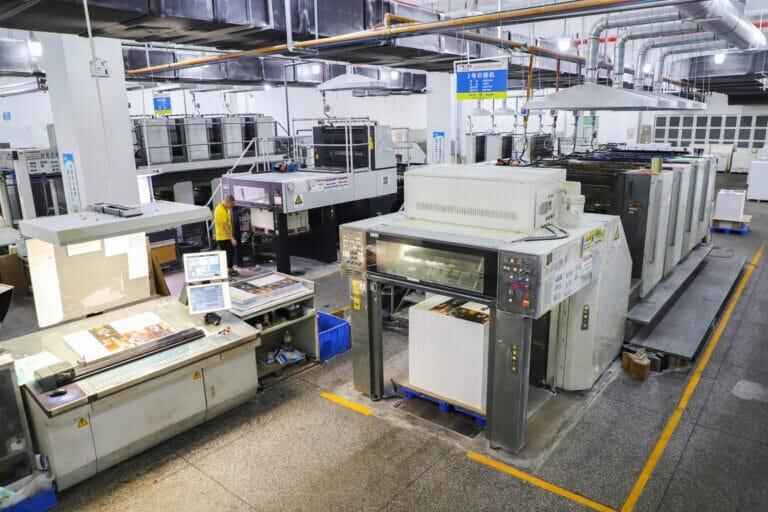
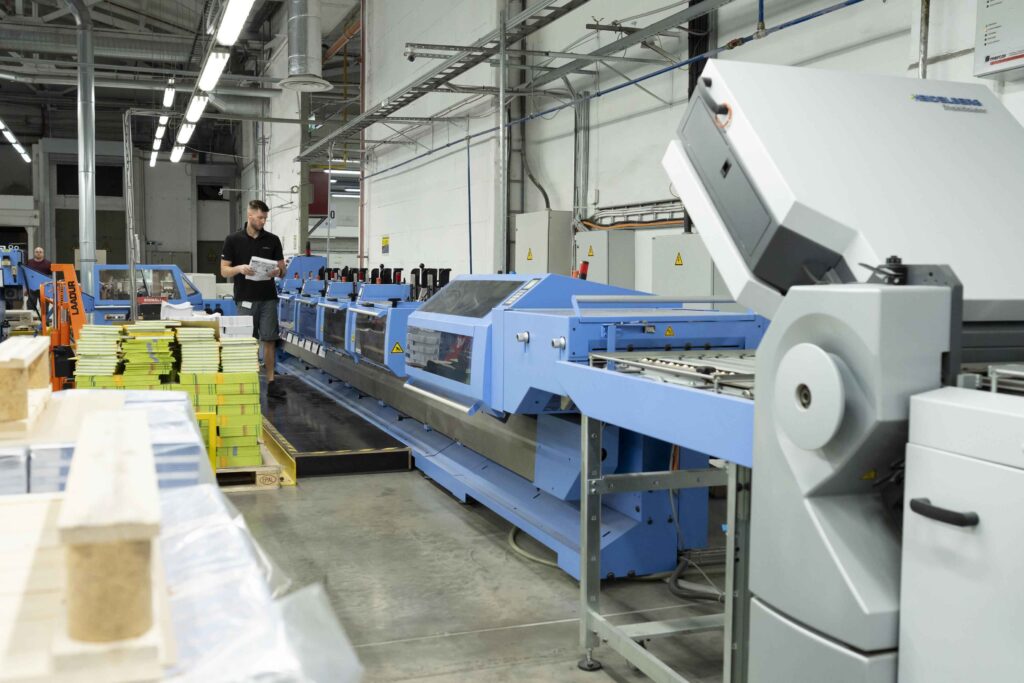
The press is only one part of book production. A finished publication may pass through file inspection, imposition, proofing, plate output, printing, folding, gathering, sewing, gluing, trimming, casing-in, lamination, foil stamping, inspection and packing.
Every added process creates either a setup cost, a material-purchase condition or a production batch requirement.
JetPrint’s book printing capabilities page makes this relationship explicit: quantity, format, paper, color coverage, version count, binding, finishing and approval requirements must be reviewed together before the production route is selected.
A 160-page book still requires the correct page order whether the buyer orders 100 or 10,000 copies.
Files must be checked. Pages must be imposed into printer spreads. Covers must be adjusted to the calculated spine width. Separate artwork may be required for foil, embossing or cutting.
In four-color offset production, a CMYK job commonly requires cyan, magenta, yellow and black image carriers for each printed side of every imposed form. The number of saleable books may fall, but the need to prepare the job does not disappear.
This is fixed-cost absorption.
Suppose a simplified production setup costs $1,200 and the variable manufacturing cost is $2.80 per copy:
The mathematics, not a salesperson’s mood, pushes the offset printing MOQ upward.
Paper is normally planned around sheet dimensions, grain direction, imposition, spoilage allowances and the number of pages obtained from each parent sheet.
An unusual trim size may produce poor sheet yield. A standard-looking book can therefore use more paper than expected simply because several centimetres of each sheet become unusable offcut.
Changing from 80 gsm paper to 120 gsm paper also affects more than material price. It may change:
This is why paper, page count and binding must be settled before approving the final cover. JetPrint also identifies incorrect bleed, provisional spine dimensions and artwork-version problems among the common artwork issues before book printing.
A paperback may require folding, gathering, milling, adhesive application, cover feeding, three-side trimming and curing.
A hardcover can add board cutting, case making, endpaper preparation, book-block sewing, casing-in, pressing and joint formation. Foil stamping adds a die, positioning work, heat and pressure adjustment, and make-ready sheets.
That is why a hardcover book printing project often has a different economic minimum from a comparable paperback book printing project.
The difference is not merely a thicker cover. It is a longer manufacturing chain.
The printer is not always the party imposing the real minimum.
Special paper, dyed book cloth, decorative foil, greyboard, ribbon, headbands, elastic closures, release liners or custom inserts may be purchased from outside suppliers. Those suppliers can have their own minimum sheet, roll, metre or package quantities.
A request for 100 books might require enough custom material for 500. The buyer then pays for unused material, accepts a higher MOQ or changes the specification.
Digital and offset printing use different cost structures.
Digital production generally avoids conventional plate making and supports rapid file changes. That reduces fixed setup cost and makes it suitable for proofs, test editions, personalized content and low quantity book printing.
Offset production usually carries more preparation but becomes more competitive as the fixed cost is spread across a larger number of copies. It is commonly evaluated for longer runs, demanding paper choices, repeat editions and projects requiring a coordinated manufacturing workflow.
Print-on-demand illustrates the extreme low-MOQ end. Lulu states that it accepts orders from a single copy to hundreds or thousands, while its bulk discounts begin at 100 copies. Amazon KDP similarly separates proofing from commercial inventory and permits authors to order up to five printed proof copies at a time.
Those services prove that a one-copy book is technically possible. They do not prove that one-copy production offers the same unit economics, paper selection, binding choices, finishing control or approval workflow as a manufacturing run.
| Production Route | Typical Strength | Main Cost Pattern | Practical MOQ Question | Common Risk |
|---|---|---|---|---|
| Print on demand | One-off sales and zero inventory | Very low setup, high per-copy cost | Can one copy be produced profitably? | Limited specifications and margins |
| Short-run digital printing | Proofs, pilot editions and small launches | Lower setup, moderate-to-high unit cost | Does the project fit the available digital format? | Unit cost remains high as quantity grows |
| Sheet-fed offset printing | Medium and longer runs | Higher setup, lower marginal cost | At what quantity does offset beat digital? | Ordering too many to chase a lower unit price |
| Specialty book manufacturing | Sewn books, board books and complex finishes | Multiple setup and material costs | Can processes and materials be consolidated? | Hidden minimums from binding or material suppliers |
There is no fixed crossover point.
A black-and-white paperback, a full-color children’s book and a clothbound art book can reach their digital-to-offset crossover at completely different quantities. A printer must compare the actual specification, not merely the number of copies.
For additional context, the U.S. Bureau of Labor Statistics printing producer-price index reported 185.162 in June 2026, with December 2003 set to 100. The index is not a book quotation, but it demonstrates why old pricing assumptions should not be treated as permanent manufacturing facts. Current paper, labor, energy and production conditions still matter.
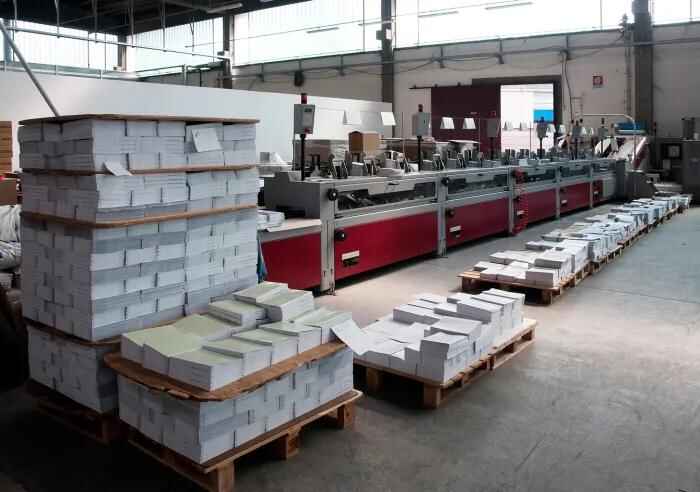
This is where inexperienced buyers get trapped.
A quote for 2,000 copies may show a much lower price per book than a quote for 500. But unit manufacturing price measures only the books leaving the factory. It does not measure how many copies will be sold, distributed or used before the edition becomes obsolete.
The more honest formula is:
Effective cost per saleable copy = total manufacturing cost + proofing + freight + duties + storage + handling + damaged stock + obsolete inventory, divided by copies actually sold or used
Consider the following hypothetical model. These figures are illustrative and are not JetPrint quotations.
| Order Quantity | Manufacturing Cost per Copy | Manufacturing Total | Copies Eventually Used | Effective Manufacturing Cost per Used Copy |
|---|---|---|---|---|
| 300 | $6.20 | $1,860 | 300 | $6.20 |
| 500 | $5.10 | $2,550 | 450 | $5.67 |
| 1,000 | $3.80 | $3,800 | 600 | $6.33 |
| 2,000 | $3.05 | $6,100 | 700 | $8.71 |
The 2,000-copy run has the lowest quoted manufacturing price. It also has the highest effective cost when only 700 books are used.
Cheap books become expensive when they remain in cartons.
Publishers should account for:
The U.S. Environmental Protection Agency estimated that paper and paperboard represented 67.4 million tons, or 23.1%, of U.S. municipal solid waste generation in 2018. Approximately 46 million tons were recycled, but 17.2 million tons still entered landfills. Overproduction is therefore not merely a cash-flow mistake; it can become a material-waste problem.
International buyers should compare landed cost at several quantities rather than reviewing the ex-factory unit price alone.
A larger order can improve container utilization and reduce freight per copy. But a slightly larger batch may also cross a weight, pallet or shipment threshold that changes the transportation method.
The cheapest factory quantity may not be the cheapest delivered quantity.
Ask the printer to show:
Without these figures, the quote is incomplete.
I use a simple rule: test demand first, then optimize production.
A new author, education company or brand should not select quantity solely from the lowest unit price. The buyer should start with the number of copies that can realistically be sold, distributed or consumed during a defined period.
Do not ask for one quantity.
Request several commercially useful tiers, such as:
The exact tiers should reflect the project. Comparing quantity breaks reveals where the unit price falls sharply and where further savings become minor.
A reduction from $7.00 to $4.50 matters. A reduction from $3.18 to $3.09 may not justify doubling inventory.
A proof is an approval tool, not necessarily a miniature production run.
One proof may verify content and pagination. Another may check paper, binding, foil position or printed color. A digitally printed proof may not reproduce every feature of the final offset process.
Amazon KDP’s workflow, for example, permits up to five proof copies before publication-related author-copy ordering. That distinction is useful: proof quantity and commercial inventory quantity solve different problems.
A lower custom book printing minimum order may become possible when the buyer:
But simplification has limits. Removing thread sewing from a frequently handled reference book merely to lower MOQ may create a weak product.
Lower quantity should not mean unsuitable construction.
Publishers often ask whether 10 titles at 100 copies each can satisfy a 1,000-copy MOQ.
Sometimes yes. Often no.
Shared paper, trim size, color configuration and binding may allow some production steps to be grouped. But every title still has separate files, covers, plates or digital data, setup, page sequence and inspection requirements.
Never assume that ten SKUs equal one uninterrupted 1,000-copy run.
The fastest way to receive a vague MOQ is to send a vague inquiry.
A quotation-ready brief should include:
A complete brief allows the manufacturer to compare digital and offset production, identify material constraints and propose realistic quantity tiers instead of guessing.
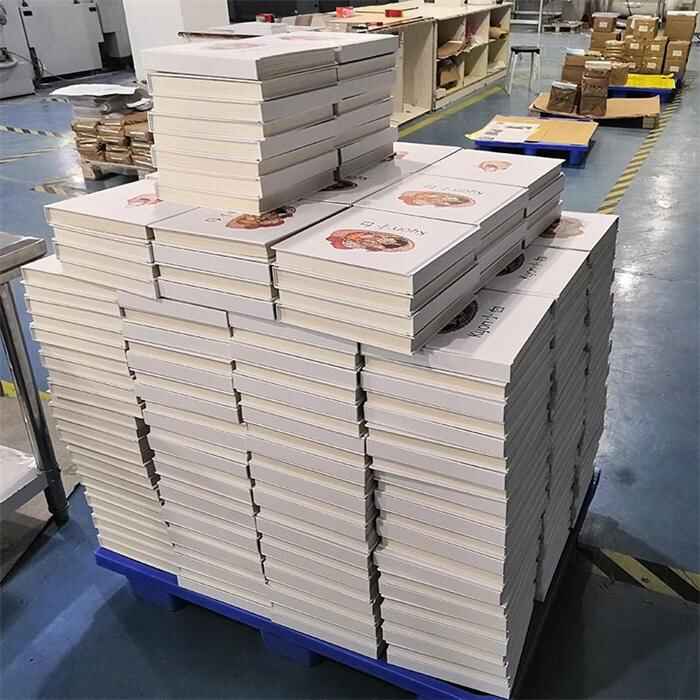
Book printing MOQ is the smallest number of copies a printer will accept for a specific book specification, production method and commercial arrangement, after accounting for setup, materials, printing, binding, finishing, packing and delivery requirements rather than applying one fixed minimum to every type of publication.
The MOQ may change when the page count, paper, binding, trim size, finishing or number of titles changes.
The minimum can range from one print-on-demand copy to several hundred or more manufacturing copies, depending on whether the project uses digital or offset printing, the selected binding and materials, the complexity of its finishing operations, and the printer’s equipment, workflow and supplier purchasing conditions.
A printer must review the complete specification before confirming a reliable quantity.
Offset printing usually carries a higher economic minimum because plate production, ink preparation, press make-ready, paper spoilage, color adjustment and downstream binding setup create fixed costs that must be divided across the run, although the variable cost per additional copy generally becomes more competitive as the production quantity increases.
The exact digital-to-offset crossover must be calculated for the individual title.
Several titles can sometimes be grouped when they share the same trim size, paper, color configuration, binding and finishing, but each title still requires separate files, cover preparation, version control and inspection, so factories may apply a total project quantity plus a smaller minimum quantity for each individual title or SKU.
Ask the printer to state both limits clearly in the quotation.
The lowest MOQ is best only when it matches the project’s demand, quality requirements and distribution plan, because a tiny run may carry an unacceptably high unit cost while a large discounted run can create storage expenses, obsolete inventory, tied-up cash and disposal losses that exceed the original manufacturing saving.
Compare total landed cost and expected usage, not MOQ alone.
A buyer may reduce the practical minimum by choosing digital printing, using an efficient trim size, selecting readily available paper, simplifying finishes, consolidating compatible specifications, removing special packing and submitting production-ready files, although every change should be checked against the book’s required durability, appearance, use and destination market.
Request several quantity tiers before changing the product itself.
Hardcover book printing often has a higher economic minimum because case making, board cutting, endpapers, sewing, casing-in, pressing and decorative cover work introduce additional materials and setup stages, while a standard perfect-bound paperback normally follows a shorter production route with fewer structural components and lower preparation costs.
However, digital hardcover production may still support smaller runs for suitable formats.
Do not ask a printer, “What is your MOQ?” and expect a useful answer.
Send the book type, trim size, page count, interior color, paper, binding, cover construction, finishing, preferred quantity and delivery destination. Then request pricing at two or three nearby quantity levels.
JetPrint reviews each inquiry against the project’s real specifications rather than treating MOQ as a universal number. Use the JetPrint contact form to submit your printing brief and compare the most suitable production quantities for your book.

Leave Your Comments