Start Your Book Printing Project
Share a few details about your book. JetPrint will review your specifications and help you identify the suitable printing, paper, binding, and finishing options for your project.

Samples prove capability.
Yet a showroom book manufactured for another publisher can hide almost every variable that will determine the outcome of your own project, including paper opacity, ICC data, image coverage, spine calculations, binding tension, foil position, page imposition, and the selected production route.
So why do buyers still approve commercial production from a sample that was never made to their specification?
I use a blunt rule: an existing sample tells me what a printer has done before, while a custom prototype tells me what may happen to the project in front of me. Those are not equivalent questions.
A professional printing sample strategy normally uses both. The buyer first examines existing print samples to screen the supplier, then requests project-specific proofs or prototypes only for the risks that matter. JetPrint follows a similar risk-based approach in its book printing capabilities, separating approval of content, color, materials, structure, and finishing rather than treating every printed object as the same kind of proof.
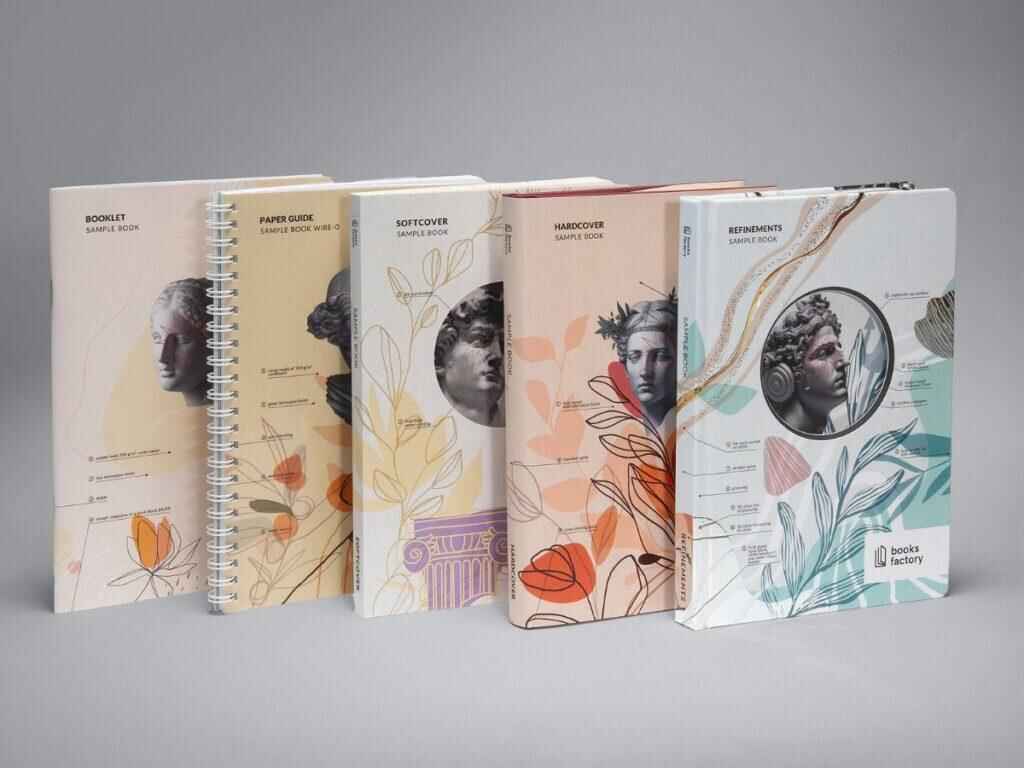
An existing printing sample is a completed product manufactured for an earlier order. It may be supplied individually or included in a printing sample pack containing several book formats, papers, bindings, and surface treatments.
These samples are fast to obtain because no new artwork, plates, binding setup, or project engineering is required. They are useful during supplier qualification, particularly when a buyer is comparing multiple factories.
But here is the hard truth: most sample packs are curated sales tools.
Factories naturally select books with clean registration, strong finishing, attractive artwork, and well-resolved construction. That does not make the samples dishonest. It simply means they should be treated as evidence of possible workmanship, not as a random audit of average production.
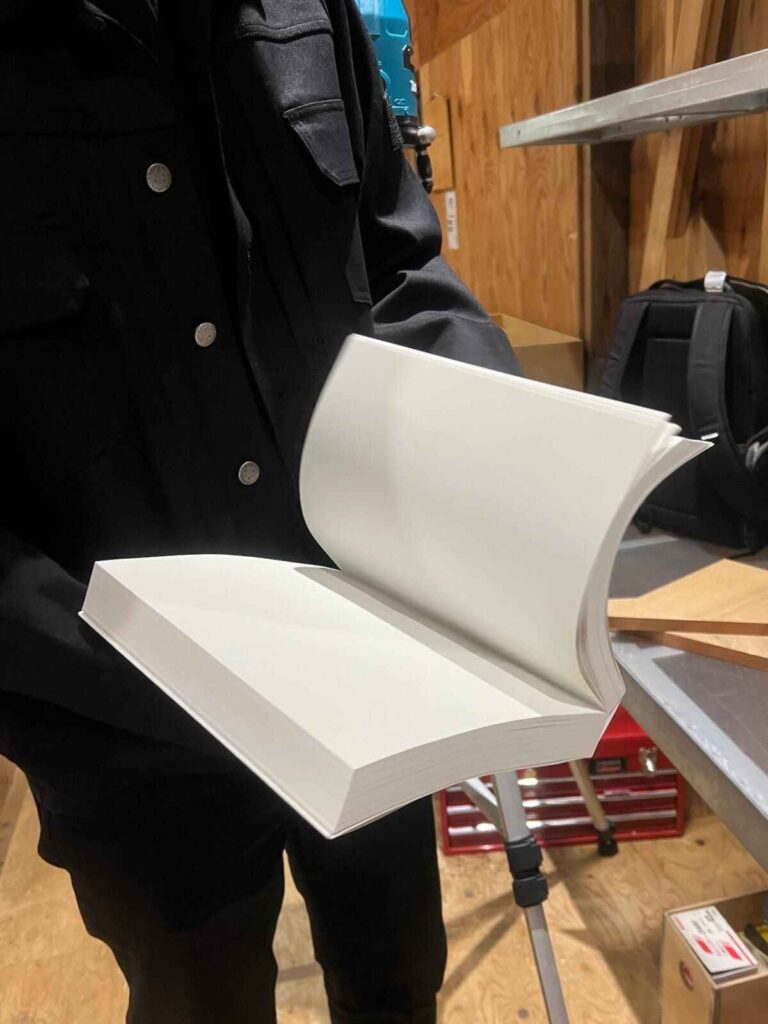
A well-selected printing sample pack can help you inspect:
Existing samples are especially useful when you need to verify whether a supplier has experience with the broad format you are planning. A case-bound illustrated title, a perfect-bound novel, a board book, and a wire-bound journal expose very different manufacturing skills.
For example, a buyer planning a rigid-cover publication can inspect existing hardcover book printing samples for case squareness, hinge formation, wrap alignment, endpaper attachment, spine shape, and corner construction.
An existing sample cannot automatically confirm:
Consider two books that both use perfect binding. One contains 80 gsm uncoated text paper and mostly black text. The other contains 157 gsm coated paper with full-bleed CMYK photography. Their spine behavior, glue interaction, page-block stiffness, image appearance, and opening characteristics may differ sharply.
The binding name is the same. The product is not.
And an offset printing sample from a previous order does not prove that your digital printing sample will reproduce color identically—or vice versa. Different inks, toners, screening methods, substrates, calibration targets, optical brightening agents, and press conditions can change the result.
A custom printing prototype is produced specifically for your project using your files, dimensions, materials, or construction requirements. Depending on the approval question, it may be a PDF proof, a calibrated color proof, a blank structural dummy, a digitally printed book, or a production-method sample.
This distinction matters because “send me a sample” is not a technical instruction.
Which sample?
A buyer reviewing pagination does not need the same object as a buyer approving CIE L*a*b* color values. A publisher checking a 240-page spine does not need the same object as a designer checking whether a 0.3 mm foil line will register beside an embossed title.
JetPrint’s custom book printing process asks buyers to identify proofing priorities around content, color, paper, binding, cover construction, and finishing. That is a better starting point than ordering the most expensive prototype by default.
A soft proof is usually a PDF used to inspect:
It is not a physical sample, and it should not be treated as a dependable paper, color, binding, or surface-finish reference.
The U.S. Government Publishing Office’s proof instructions similarly state that electronic soft proofs are primarily for content and positioning, not color evaluation.
A digital printing sample uses the buyer’s artwork and can help confirm scale, page order, readability, image placement, and approximate appearance. It can also expose obvious file problems before an offset run.
But approximate means approximate.
A digitally printed prototype should not silently become the color target for offset production unless the proofing system, output condition, calibration, substrate, and acceptance criteria have been defined. Toner on one stock is not the same physical system as offset ink on another stock.
A contract proof is designed to simulate a defined printing condition under measurable controls. It is not merely an attractive inkjet print.
Fogra’s ISO 12647-7 contract-proof procedure uses the Fogra MediaWedge CMYK V3 and records details including the file name, proofing system, substrate, simulated printing condition, production date, and measurement condition—M0, M1, or M2. It evaluates color accuracy, color gamut, gray balance, uniformity, tone reproduction, register, and resolving power.
That is traceable evidence.
A desktop print marked “color proof” without a profile, control strip, measurement record, or stated printing condition is a visual reference at best.
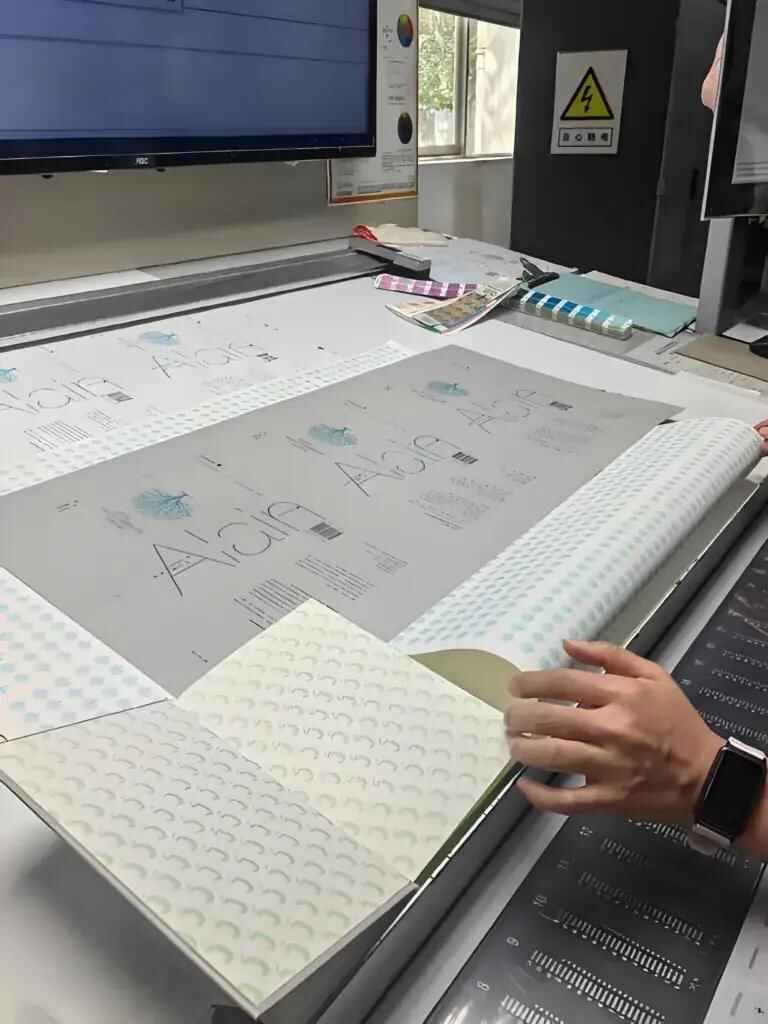
A blank dummy is assembled without final printed artwork. It may use the proposed trim size, page count, paper thickness, binding, board, cover material, endpapers, inserts, or other components.
This is often the smartest prototype for testing:
A blank dummy cannot approve image color, but it may answer structural questions more accurately than a digitally printed sample made with substitute paper.
A pre-production printing sample is intended to reproduce the specified project using production-relevant materials and methods. Its scope must still be defined: some prototypes use final materials but a different printing process, while others reproduce only selected signatures, covers, or finishing components.
The GPO makes this distinction unusually clear. Its instructions state that prior-to-production samples must be constructed according to the contract using the paper, ink, equipment, and production methods planned for the finished product.
That is a far stronger reference than an unrelated sample book.
| Approval Question | Existing Sample | Custom Prototype | Recommended Approach |
|---|---|---|---|
| Can the printer manufacture this general binding style? | Strong evidence | Usually unnecessary during early screening | Inspect several comparable existing samples |
| Is my page sequence correct? | No evidence | Strong evidence | Use a soft proof or digital content proof |
| Will my selected paper provide enough opacity? | Limited unless the exact stock is used | Stronger when the proposed stock is used | Test representative printed pages |
| Will my images match the intended offset condition? | Weak unless formally identified as the reference | Strong with a calibrated contract proof | Define ICC condition and measurable reference |
| Is the spine width correct? | No evidence for your page block | Strong evidence from a blank or printed dummy | Use final page count and proposed paper |
| Will foil or embossing align with my artwork? | Shows general workmanship only | Strong project-specific evidence | Prototype the cover or finish area |
| Will the finished book open as expected? | Limited comparison | Stronger with matching construction | Build a structural dummy |
| Can the object serve as a QC benchmark? | Only if its role is written into the agreement | Yes, when identified and approved clearly | Record exactly what the sample controls |
| Is a complete prototype always necessary? | No | No | Test only the unresolved production risks |
The most expensive sample is not automatically the best one.
For a conventional black-text paperback, a complete bound prototype may add little after pagination, trim size, paper, cover dimensions, and binding have been confirmed. For an illustrated board book with unusual page construction, rounded corners, multiple finishes, or tight artwork-to-cut alignment, a physical prototype may be much more informative.
Spend the sample budget where uncertainty lives.
The word “proof” is used loosely across the printing industry. A low-resolution PDF, an inkjet sheet, a digitally bound book, and an offset press sheet may all arrive under the same label.
They do not carry the same evidentiary weight.
The U.S. Government Publishing Office distinguishes among content proofs, inkjet proofs, high-resolution proofs, prior-to-production samples, and electronic soft proofs.
Its guidance says content proofs show position and construction but cannot be used for press color matching. Inkjet proofs may provide a close rather than exact color match. High-resolution proofs can support press color matching but do not demonstrate finished construction.
The GPO’s proof-review process also checks proof type, line screen, trapping, register, layout, content, and color references. Press-sheet inspections then assess print quality, proof matching, registration, stock, finishing, folding, sewing, gluing, and case binding.
This is the lesson buyers should steal: approval must be divided by function.
“Make it brighter” is not a color specification.
“Match the approved ISO 12647-7 proof under M1 viewing conditions” is closer to one.
For branded colors, a reference might include a Pantone identifier, a measured CIE L*a*b* value, an approved physical swatch, or a defined contract proof. For process-color imagery, the project may require an ICC profile, a stated CMYK output condition, and a calibrated viewing environment.
A screen screenshot sent through email or WhatsApp is not a stable color reference. Display brightness, browser rendering, operating-system color management, image compression, and monitor calibration can all change what the reviewer sees.
For transactions governed by U.S. sales law, Uniform Commercial Code §2-313 states that a sample or model made part of the basis of the bargain can create an express warranty that the goods will conform to it.
There is another side. UCC §2-317 says exact or technical specifications displace an inconsistent sample, model, or general description when warranties conflict.
That is not legal advice, and commercial laws differ by jurisdiction. But the operational lesson is obvious: never attach a sample to a purchase order without explaining its status.
I would reject the instruction “production must match the sample.”
Match what?
The paper shade? The gloss level? The image color? The spine shape? The foil position? The binding? The dimensions? Every visible feature?
A better approval note identifies the hierarchy:
Request samples that are technically relevant, not merely attractive.
A buyer planning a sewn hardcover should not be distracted by a perfect-bound catalog with spectacular photography. Ask for comparable binding, paper behavior, page count, cover construction, and finishing complexity.
Inspect more than one object where possible. One flawless book proves that the factory produced one flawless book. Repeatedly clean trimming, binding, registration, and finishing across several products provide stronger evidence.
Existing samples should be considered alongside file review, specification discipline, equipment suitability, communication quality, and inspection planning. The guide on how to choose a book printing company in China explains why supplier assessment should not be reduced to the lowest quote or the most impressive sample.
Before ordering a custom printing prototype, write down what could realistically fail.
Common risk categories include:
Many of these risks originate in the production files rather than on the press. Reviewing common artwork problems before book printing can help separate file defects from material or manufacturing questions before sample production begins.
Do not prototype an entire book when selected components will answer the unresolved questions.
Examples:
This approach controls sample cost without pretending that all proof types are interchangeable.
Every prototype should carry an identification record.
At minimum, record:
Do not approve a corrected version by writing “same as before except the changes.”
Issue a new file revision. Name it clearly. Confirm which earlier reference has been replaced.
Version control is boring.
And that is exactly why it prevents expensive arguments.
Existing printing samples may be sufficient when:
At this stage, ask the supplier to identify each sample accurately. A useful label should state the binding, paper type, printing process, cover structure, and visible finishes.
Without that information, the sample becomes an attractive object with little technical value.
Request a custom printing prototype when:
The goal is not to eliminate every possible variation. Printing remains a manufacturing process involving paper, ink, moisture, pressure, folding, cutting, adhesive, and mechanical tolerances.
The goal is to replace vague expectations with observable approval criteria.
Existing printing samples are finished jobs made for other customers, while a custom prototype is produced from your files and specifications to test project-specific variables such as trim size, paper, color, binding, cover construction, finishing position, page sequence, and opening behavior before the commercial run is approved.
Existing samples qualify general capability. Custom prototypes investigate the risks of your particular book.
Existing print samples are enough for early supplier screening because they reveal general workmanship, binding consistency, trimming, print sharpness, and finishing execution, but they are not enough to approve your own title when your artwork, paper, page count, dimensions, color references, or construction differ from the sample.
Use them with a written capability review, technical specification, file assessment, and project-specific approval plan.
A digital printing sample can confirm content, pagination, scale, cropping, and approximate appearance, but it should not automatically be treated as an exact predictor of offset color because toner or inkjet output, calibration, substrate, screening, ink behavior, and press conditions may differ from the final offset production route.
For color-sensitive work, define whether the sample is a content proof, visual target, validation print, or calibrated contract proof.
A custom book printing sample should be checked against a written specification covering file revision, trim size, page count, paper, color configuration, binding, cover dimensions, spine width, surface finishes, insert placement, opening behavior, and any agreed color or material references, with every correction recorded before approval.
Do not approve from memory. Compare the prototype line by line with the specification and approved files.
Pay for a pre-production printing sample when a mistake would be expensive or difficult to reverse, especially for color-sensitive illustrations, unfamiliar paper, unusual binding, board construction, foil or embossing registration, die-cut elements, multi-component books, new suppliers, or projects where the approved object will serve as the manufacturing reference.
When risks are limited, prototype only the relevant pages, cover, finish area, or blank structure instead of the complete publication.
An approved custom sample can become a production quality reference when the purchase order, specification, approval record, and sample identification clearly state what it controls, because content, color, material, construction, and finishing may require separate references rather than one vague instruction to make the production run look like the sample.
Store an approved master securely, identify it by date and revision, and state how conflicts between the sample, files, and written specification will be resolved.
Do not begin by asking, “Can you send samples?”
Begin with three better questions:
What must this sample prove?
Which production risk does it test?
Will the result become an approval reference or merely an example?
Use existing samples to qualify workmanship. Use a custom prototype to test your own files, materials, color, structure, or finishing. Then document what has been approved before commercial production starts.
To prepare a project-specific sample plan, review JetPrint’s custom printing and proofing capabilities and contact JetPrint with your trim size, page count, paper preference, binding, artwork status, finishing requirements, quantity, delivery destination, and the exact questions the sample needs to answer.

Leave Your Comments