Start Your Book Printing Project
Share a few details about your book. JetPrint will review your specifications and help you identify the suitable printing, paper, binding, and finishing options for your project.


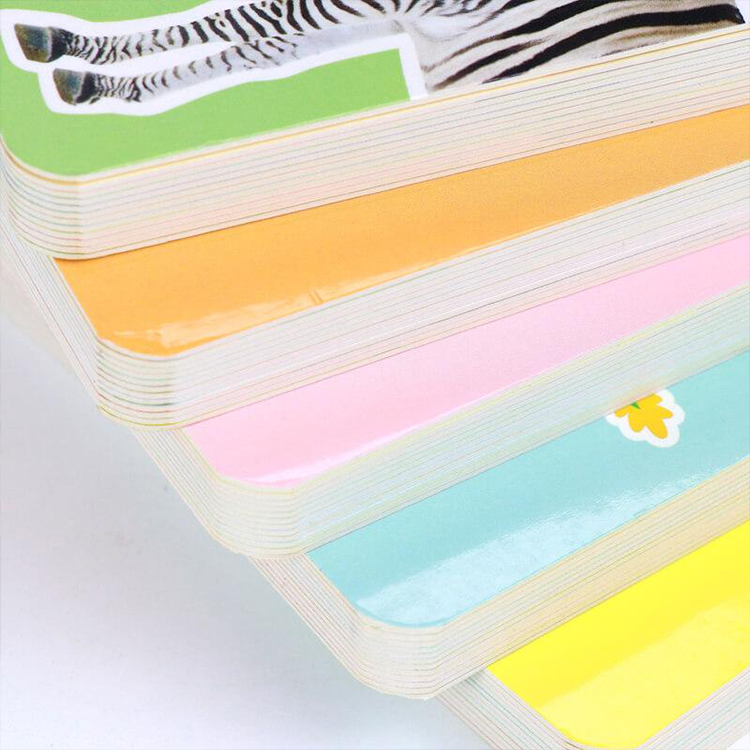
Thickness changes everything.
A board book that looks sturdy on a screen can become clumsy in a toddler’s hands, while a thinner construction that appears economical in a quotation can perform perfectly when its board density, grain direction, adhesive coverage, trim size, and page count are properly matched.
So why do so many specifications reduce the decision to “40pt or 60pt”?
The hard truth is that board book page thickness is a finished-product specification, not merely a paper choice. The number must describe what is being measured, under what conditions, and at which production stage. Otherwise, two suppliers can both quote “40pt” while proposing pages that feel visibly different.
In North American printing language, one point equals 0.001 inch. A nominal 40pt page is therefore 0.040 inch, or approximately 1.016 mm, while a nominal 60pt page is 0.060 inch, or approximately 1.524 mm.
Commercial board book printers commonly present these two values as standard options, but they are market conventions rather than a universal promise that every finished page will measure identically. BoardBookPrinting’s production guide and PufferPrint’s paper-stock reference both describe 40pt as roughly 1 mm.
Measurement matters.
ISO 534:2011 defines methods for measuring single-sheet thickness and bulking thickness, while TAPPI/ANSI T 411 covers the caliper of paper, paperboard, and combined board.
These standards exist because thickness measurements are affected by material structure, measurement pressure, sampling method, and conditioning. A buyer should never assume that a casual ruler measurement and a controlled caliper reading are equivalent.
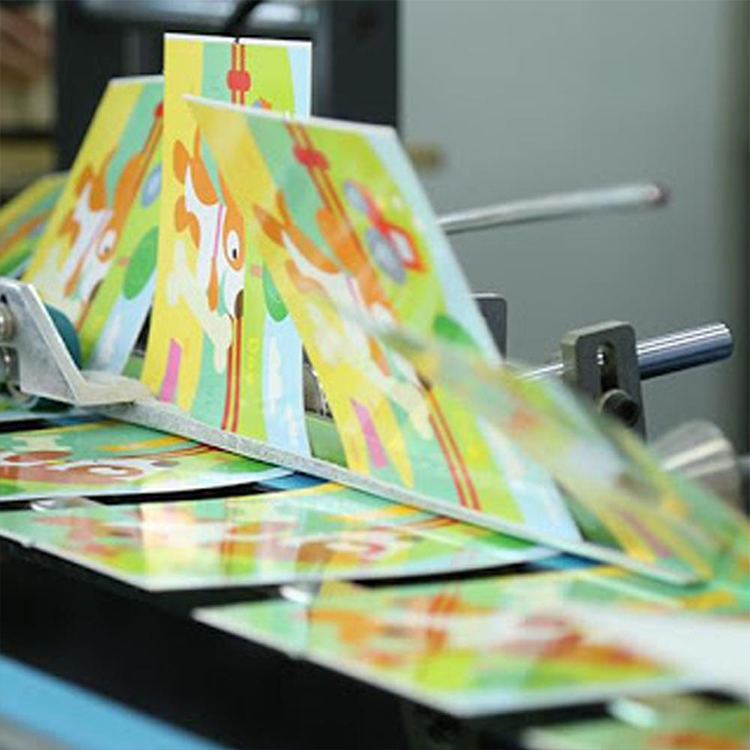
A finished board book leaf can include:
One factory may quote the core caliper. Another may quote the completed leaf after mounting. A third may use a familiar “40pt” label for a construction that is close to, but not exactly, 40 thousandths of an inch.
That ambiguity creates expensive arguments after production.
For any custom book printing project, the purchase specification should state whether the target thickness applies to the raw board, the laminated sheet before assembly, or the finished page after printing, gluing, finishing, and conditioning.
A book for babies and young toddlers must tolerate grabbing, bending, mouthing, dropping, and repeated page turning.
Thicker pages can improve rigidity and make individual leaves easier to separate, but excessive thickness can make a small-format book feel blocky. It can also increase resistance near the gutter when the book is opened.
This is where blanket advice fails.
“Use the thickest board available” sounds safe, yet it ignores hand size, trim format, page count, corner radius, and total book weight. A board book page construction must work as a complete object, not simply win a thickness contest.
A 60pt leaf behaves differently in a compact 5 × 5-inch book than in a wide 10 × 10-inch format.
As the unsupported page area grows, rigidity and sag become more noticeable. Larger pages may justify a stiffer or thicker construction, while very small pages may become unnecessarily heavy when the same specification is copied without adjustment.
Board stiffness is not created by caliper alone.
Iggesund’s technical guidance explains that moisture content influences the elastic modulus and therefore paperboard stiffness. Smoothness, density, fiber structure, and manufacturing methods can also change performance.
Two boards with the same measured thickness can feel noticeably different in the hand. Iggesund’s paperboard stiffness guidance makes that relationship clear.
Board books are assembled around two-page spreads rather than conventional thin-paper signatures.
A 12-page interior contains six reading spreads. Every additional physical leaf increases the thickness of the book block, the demand placed on the hinge, the package volume, and the shipping weight.
Pint Size Productions’ board book format guide uses the same relationship: total pages divided by two equals the number of spreads. Industry construction guides also describe board books as being assembled one printed spread at a time.
Here is the buying implication: page thickness cannot be approved independently from page count.
A 24-page book using 60pt leaves is not merely a “more durable” version of a 12-page 40pt book. It is a different mechanical object, with a wider block, greater opening resistance, a different cover profile, and potentially different packing economics.
“Board” is not one material.
Greyboard, recycled board, solid bleached board, and other multi-ply constructions can reach similar calipers through different fiber blends and densities.
Higher density does not automatically mean better performance. It can produce more weight, lower bulk, or different bending behavior without giving the reader a better experience.
This is one reason I distrust specifications that list only GSM.
Grammage measures mass per unit area. Caliper measures thickness. The two properties are related, but they are not interchangeable. ISO 534 specifically separates thickness measurement from density calculations.
Consider two nominally similar sheets:
A purchasing team that specifies only GSM leaves too much room for interpretation.
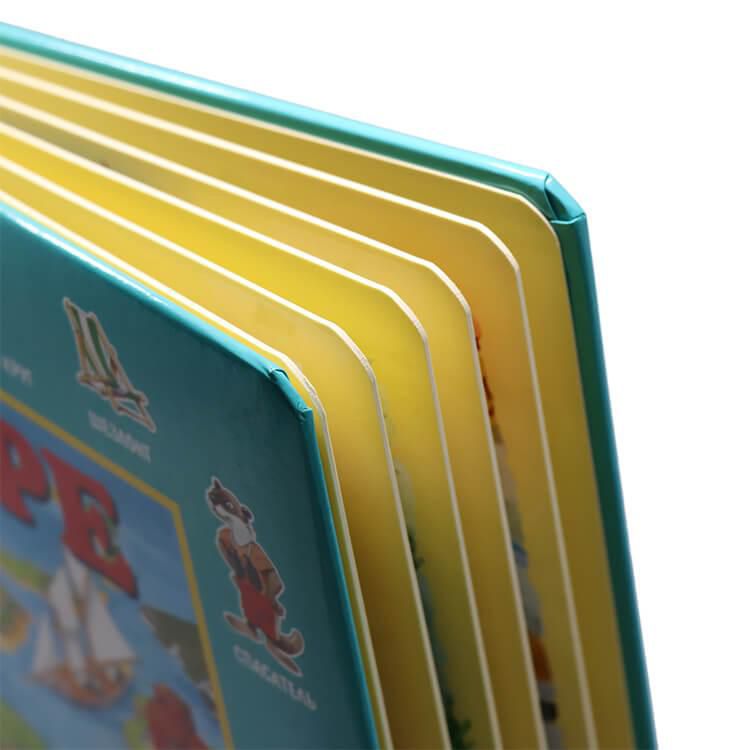
The visible board book page is often a layered structure.
Printed sheets are folded, mounted, or glued in sequence, and the adhesive film contributes a small but real amount to the finished build. Film lamination can also change tactile feel, surface friction, edge behavior, scuff resistance, and perceived stiffness even when the nominal board caliper remains unchanged.
But thicker film is not a substitute for better board.
And heavy adhesive application is not evidence of strength. Uneven adhesive coverage can encourage curl, bubbling, edge lift, or inconsistent page thickness.
The selected finish should therefore be evaluated as part of the complete printing and finishing process, not approved as an isolated material swatch.
Paperboard is hygroscopic. It gains and loses moisture as surrounding humidity changes, affecting dimensions, flatness, stiffness, and converting behavior.
Iggesund’s technical material notes that dimensional stability concerns resistance to moisture-driven changes. It also explains that excessively dry board can become brittle, while excessively moist board can become tougher and more difficult to cut cleanly.
A professional specification therefore needs a tolerance, not a fantasy number.
Writing “1.00 mm exactly” without an agreed measurement method, sample conditioning procedure, and acceptable range invites rejection disputes.
The better questions are:
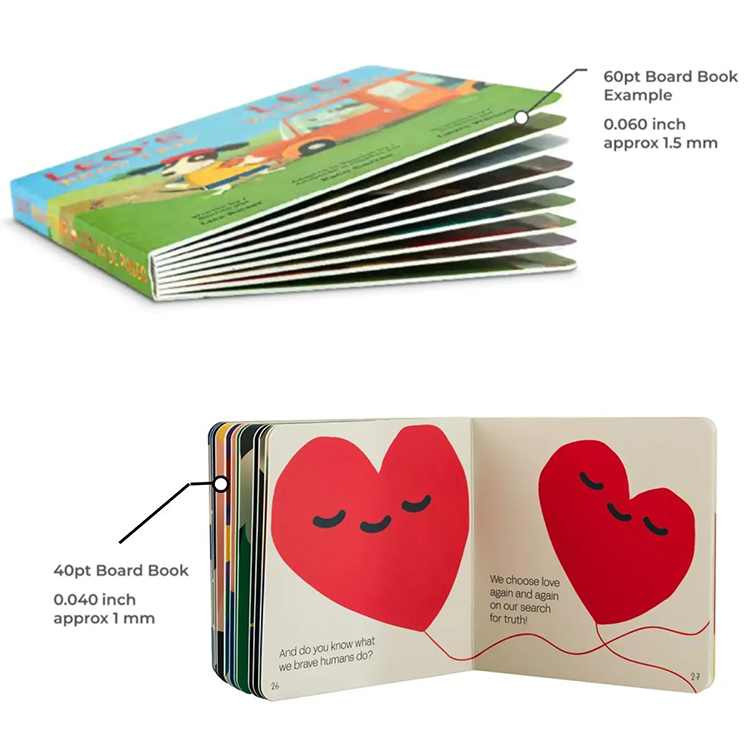
The comparison below reflects common commercial positioning, not a universal engineering law. Actual performance depends on board grade, density, format, finishing method, binding, and supplier construction.
| Decision Factor | 40pt Board Book Pages | 60pt Board Book Pages |
|---|---|---|
| Nominal thickness | 0.040 in / 1.016 mm | 0.060 in / 1.524 mm |
| Hand feel | Firm but relatively lighter | More rigid and substantial |
| Page turning | Often comfortable in compact formats | Leaves are easier to separate but may feel stiff |
| Total book bulk | Lower for the same page count | Approximately 50% more nominal leaf caliper |
| Common application | Standard board books and moderate page counts | Premium-feel books, larger pages, or demanding handling |
| Spine effect | Smaller finished book block | Wider finished book block |
| Material use | Lower | Higher |
| Main risk | Can feel flexible if the board is low-density or the format is large | Can feel overbuilt if the book is small or has many pages |
The arithmetic is simple: 60pt is nominally 50% thicker than 40pt.
The purchasing decision is not.
A poorly engineered 60pt page can warp, resist opening, or create an awkwardly heavy book. A well-made 40pt page can perform reliably through repeated use.
The factory first needs to understand:
Those inputs determine whether the project needs standard rigidity, extra durability, lighter handling, or sufficient structural space for mechanisms such as flaps, sliders, wheels, or sound modules.
The factory should model the physical leaf and the completed book block.
That means checking the nominal core caliper, mounted print layers, adhesive, lamination, page count, cover build, hinge allowance, and expected compression after assembly.
A spreadsheet can estimate the result.
It cannot replace a dummy.
The white dummy exposes structural problems that artwork hides:
I consider this one of the most underused approval tools in children’s publishing.
Buyers will sometimes debate color proofs for days and then approve the physical structure from a PDF. That is backwards.
The final sample should use the proposed board, printed sheet, adhesive, finish, corner radius, and binding method.
A sample made with substitute materials may help verify dimensions, but it cannot prove final stiffness, curl resistance, opening behavior, page separation, or edge quality.
JetPrint’s company and production overview can establish the supplier context, but the purchase order still needs project-specific tolerances and signed samples. A factory profile is not a substitute for a measurable acceptance standard.
The approved board book printing specifications should identify:
This is not bureaucracy.
It is how a buyer prevents “same specification” from becoming “different result.”
A thick page is not automatically a safe page.
The U.S. Consumer Product Safety Commission states that the third-party testing exclusion for “ordinary books” does not include books designed or intended for children three years old or younger, books with inherent play value, or toys packaged with books.
Because board books are commonly aimed at babies and toddlers, publishers should not assume that the ordinary-book exclusion automatically covers their product. The CPSC children’s books FAQ explains this distinction directly.
If a product is classified as a toy, ASTM F963 can become relevant under 16 C.F.R. Part 1250.
The CPSC states that Section 106 of the Consumer Product Safety Improvement Act of 2008 made ASTM F963 mandatory for children’s toys. For toys manufactured after April 20, 2024, the CPSC currently identifies ASTM F963-23 as the applicable version.
But not every board book is a toy.
Classification depends on the design, intended use, age grading, interactive features, and how the product is marketed. A conventional reading book and a book containing detachable pieces, electronic modules, magnets, sliders, or play mechanisms may not receive the same regulatory treatment.
CPSC toy-safety guidance should be reviewed before testing is commissioned. Its current guidance covers issues such as accessible edges, small objects, hazardous points, toy substrates, and use-and-abuse testing.
The practical lesson is blunt: do not ask a printer only whether the board is “safe.”
Ask:
That is incomplete because GSM describes weight per square meter, not finished page thickness, stiffness, density, or layered construction.
A factory could supply two 350 GSM materials with meaningfully different calipers and handling properties.
A competitor sample is useful as a tactile reference, but destructive analysis may be required to identify its layers.
The competitor may also use a proprietary, discontinued, locally sourced, or unavailable board grade. A reference sample should define the target experience, not replace a written construction specification.
Premium is not a unit of measurement.
A better board, cleaner mounting, controlled moisture, accurate die-cutting, suitable grain direction, and consistent adhesive application can matter more than adding nominal caliper.
By then, page count, spread design, gutter content, cover width, dielines, and packing assumptions may already depend on the chosen construction.
Board book board thickness should be decided before final cover dimensions and production files are locked.
Close enough is acceptable only when the differences are documented.
When the prototype uses another board, another lamination, substitute adhesive, or hand assembly, the buyer must know which performance characteristics remain unproven.
Board book pages are commonly specified at about 40pt, equal to 0.040 inch or 1.016 mm, or 60pt, equal to 0.060 inch or 1.524 mm, but the finished measurement depends on whether the quoted value includes the board core, printed sheets, adhesive, coating, and lamination.
Buyers should request an agreed finished-page caliper and tolerance rather than relying only on a commercial label.
Forty-point pages are generally better for lighter, compact books with moderate page counts, while 60pt pages are generally better when greater rigidity, easier leaf separation, a more substantial feel, or support for a larger format is required; neither option is universally superior without considering the complete construction.
A physical dummy is the most reliable way to compare the two options.
Board book paper thickness should not be defined by GSM alone because GSM measures material mass per square meter, whereas caliper measures physical thickness; boards with similar grammage can have different density, bulk, stiffness, moisture response, and finished thickness after printed sheets, adhesive, and surface films are added.
Specify both the material grade and the finished caliper whenever possible.
Page count affects the best board book thickness because each added physical leaf increases the book block, spine width, opening resistance, weight, packaging volume, and material use, so a thickness that works well for a 10- or 12-page book may become awkward when applied to a much longer format.
Evaluate page count, caliper, cover construction, and hinge behavior together.
The best thickness for a baby board book is a tested finished construction that provides easy page separation, rounded and comfortable edges, sufficient rigidity, secure lamination, controlled weight, and compliance with applicable children’s-product rules; 40pt and 60pt are common starting points, not automatic safety grades.
Age range, trim size, page count, and intended play features should drive the final choice.
Lamination increases finished board book page thickness by adding a film and adhesive layer to the printed surface, although the change may be small compared with the paperboard core; it can also alter stiffness, friction, edge feel, curl behavior, gloss, scuff resistance, and how easily adjacent pages separate.
The laminated construction should be measured and approved, not inferred from the raw board.
Two nominally 40pt board books can feel different because board density, fiber structure, moisture, grain direction, printed-sheet weight, adhesive coverage, lamination, page size, and binding geometry all affect rigidity and tactile response even when a caliper reading is similar or falls within the same commercial category.
This is why a named thickness must be paired with an approved material construction and physical sample.
Board book printing specifications should include trim size, page count, finished page caliper and tolerance, board grade, printed-sheet stock, adhesive system, coating or lamination, cover construction, corner radius, binding method, target age group, applicable compliance requirements, measurement method, sampling plan, packaging needs, and an approved physical reference sample.
These details allow factories to quote comparable constructions rather than merely comparable labels.
Do not approve board book page thickness from a dropdown menu.
Send the trim size, page count, reader age, target market, finish, special features, and a reference sample when available. Then request a white dummy, a production-representative sample, and a written finished-caliper tolerance before mass production.
For a project-specific review, use the JetPrint contact page and ask for the proposed board book construction to be stated layer by layer.
That single request will reveal whether the quotation contains a real manufacturing specification or merely a familiar number attached to a price.

Leave Your Comments