








The math still works. According to UN COMTRADE data, the United States imported roughly $2.37 billion worth of printed books, newspapers, and pictures from China in 2024—and that figure held up through a year of tariff chaos, a Supreme Court case, and freight rates that behaved like a heart monitor. Publishers keep coming back for a reason. A four-color casebound children’s title that costs $4.80 per unit from a Midwest plant can land at $1.60–$2.20 from a Guangdong factory, sea freight included.
But here’s what nobody tells first-time buyers: the price gap is not where the risk lives. The risk lives in the specification. And after years of watching purchase orders go sideways, I can tell you exactly how it happens.
Why “Book Printing in China” Still Wins on Cost—and Where It Doesn’t
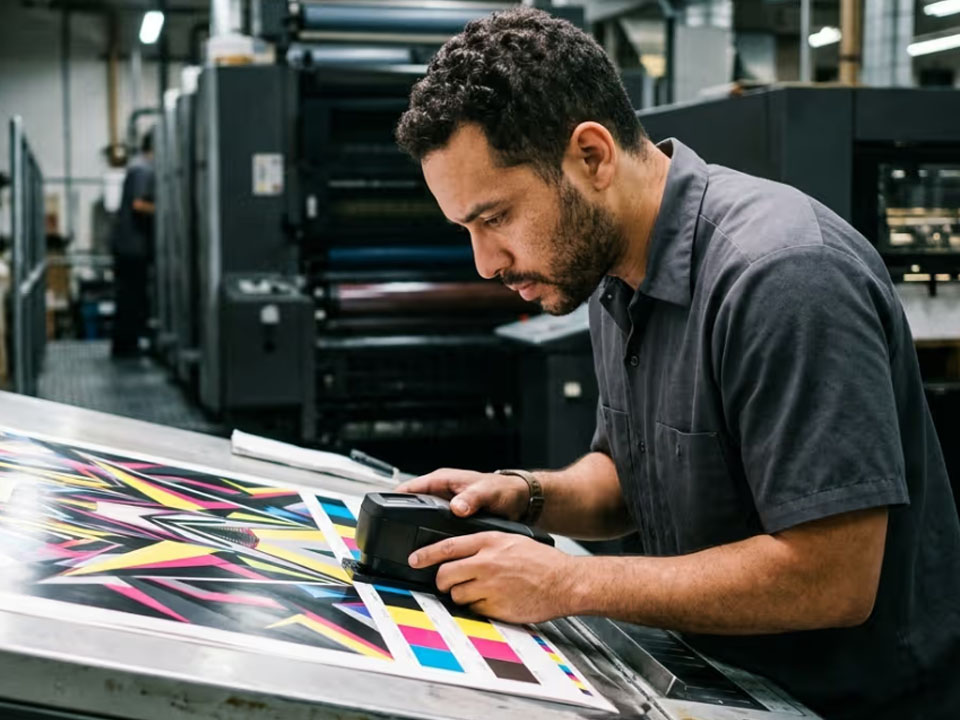
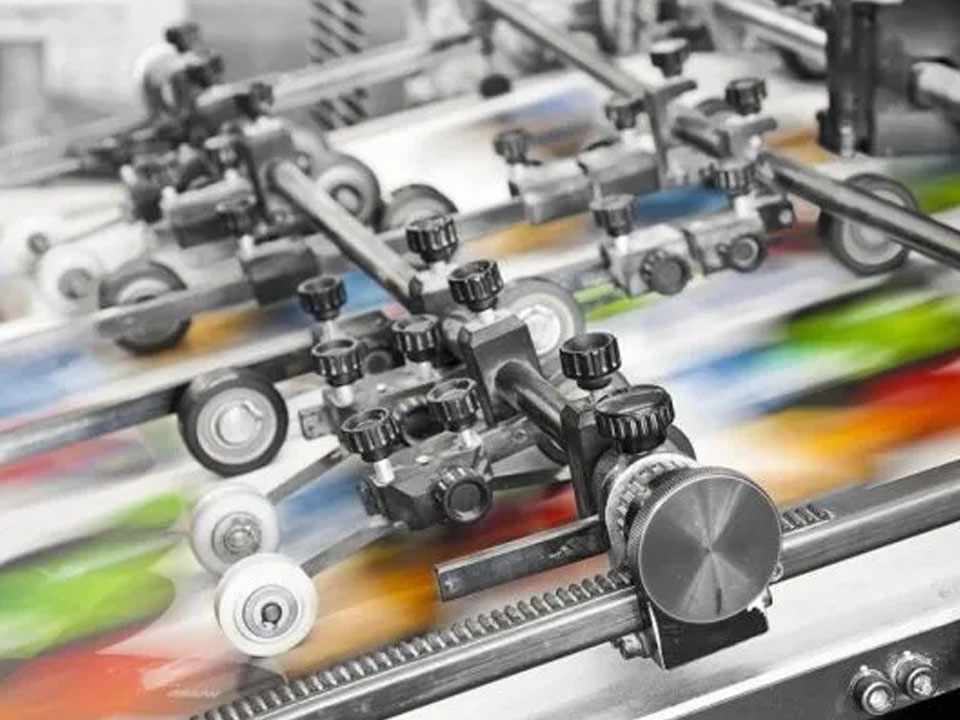
Shenzhen, Guangzhou, and Dongguan concentrate more offset book printing capacity than any comparable region on earth. A serious Chinese book printing manufacturer runs Heidelberg Speedmaster XL 106 or KBA Rapida presses, Kolbus or Muller Martini casing-in lines, and in-house foil, embossing, and spot-UV stations under one roof. That vertical integration is the actual cost advantage. It’s not just labor.
So when does China lose? Three scenarios. Runs under about 500 copies, where setup costs and freight eat the savings. Tight reprint cycles, where a 30–45 day sea transit kills you. And titles with legally sensitive content, since every book printing factory in China must clear content review before export. Maps showing disputed borders, certain political and religious material—these can stall or void a job entirely. Ask before you quote, not after.
For everything else—illustrated trade titles, board books, children’s activity book printing, cookbooks, coffee-table books with three hits of white ink on black stock—the capability-per-dollar equation remains lopsided in China’s favor.
The Sample That Lied: A Cautionary Tale Every Print Buyer Needs
Recently, while reviewing publisher discussions about printing in China, I came across a situation that every print buyer should understand. A buyer approved a digitally printed sample. It looked clean. Color-accurate, nicely bound, convincing. So the buyer placed the full offset order without defining the exact paper grade, color tolerance, press conditions, or inspection standard—and when the production books arrived, the images looked flatter, the paper felt cheaper, and the binding was less consistent than the sample they had signed off on.
The factory’s defense? The sample had been produced digitally and was only intended to confirm layout and general construction, not to guarantee final offset color. Technically true. Digital toner and offset ink render color differently; a digital mockup on house stock proves nothing about how a 128gsm matte art paper will hold a shadow under a four-color press. By then the shipment had already crossed the ocean. Reprinting meant missing the launch date and paying freight twice.
Was the factory dishonest? Not exactly. The buyer had selected the supplier largely by comparing unit prices, but the real failure was approving an undefined proofing and quality-control process. Industry discussions repeatedly warn about this exact gap: digital samples can differ materially from offset production, and vague specifications give any printer—Chinese or otherwise—room to substitute lower-cost paper, ink, glue, or finishing methods without technically breaching the contract.
The fix costs almost nothing. Demand a wet proof or press proof on the actual production stock for color-critical work, specify measurable color targets (ΔE tolerance against ISO 12647-2 or your supplied Pantone references), and write the inspection standard—typically AQL 2.5 under ISO 2859-1, verified by a third party like SGS or QIMA for $300–$400 per man-day—directly into the purchase order.
My Unpopular Opinion: Fear the Vague Quote, Not the Cheap One
Here is an unpopular opinion in book printing: the lowest quotation is not usually the biggest risk—the vague quotation is. Buyers love to blame a factory for thinner paper, ordinary glue, drifting colors, or cheaper lamination. Fair enough, sometimes. But pull up the purchase order and you’ll often find that none of those items were ever defined in measurable terms. “Hardcover book, full color, good-quality paper” is not a professional specification. It’s an invitation.
A real comparison between any two quotes should lock down, at minimum: the paper mill or an equivalent grade, grammage, bulk, and opacity; the binding structure and adhesive type (EVA versus PUR matters enormously for lay-flat titles—see the differences broken down in this guide to book printing by binding method); lamination type; Pantone or color targets with tolerances; packing method; inspection standard; defect tolerance; and shipping terms.
And here’s the behavioral tell I trust most. I would rather choose a slightly more expensive printer that asks twenty technical questions than a cheaper printer that accepts the job immediately. Think about what instant acceptance actually means. In manufacturing, a supplier who never challenges an incomplete specification is not being easy to work with—they are reserving the right to decide the quality later, at their margin’s convenience, on the other side of an ocean.
Vague Spec vs. Professional Spec: What Factories Actually Read
The table below shows how the same book gets described two ways. One version protects you. One doesn’t.
| Element | Vague Spec (Risky) | Professional Spec (Enforceable) |
|---|---|---|
| Text paper | “Good quality art paper” | 128gsm matte coated art, ≥92% opacity, mill: UPM or approved equivalent |
| Color | “Match the PDF” | ISO 12647-2 targets; ΔE ≤3 on supplied Pantone 186C / 2925C; wet proof approval required |
| Binding | “Hardcover, glued” | Smyth-sewn signatures, PUR adhesive, 3mm greyboard case, head/tail bands |
| Proofing | “Send a sample” | Digital proof for layout + offset wet proof on production stock for color sign-off |
| Inspection | (not mentioned) | Third-party pre-shipment inspection, AQL 2.5 (major) / 4.0 (minor), ISO 2859-1 |
| Defects | (not mentioned) | ≤1.5% total defect allowance; scuffed cases, glue squeeze-out >1mm = major defects |
| Shipping | “Ship to our warehouse” | FOB Shenzhen, Incoterms 2020; carton spec 5-ply, ≤14kg per carton, moisture barriers |
Notice something? The professional column costs you an afternoon of writing. The vague column can cost you a print run.
Tariffs, Shipping, and the 2026 Rulebook
The trade-policy whiplash of 2025 scared plenty of publishers, so let’s separate headline from invoice. Printed books were largely shielded throughout. The American Booksellers Association’s tariff tracker documents the swings—Chinese-goods tariffs peaked at 145% in April 2025 before settling to a 30% baseline—but books qualified as “informational materials” and dodged the reciprocal tariffs that hammered other categories.
Then came February 20, 2026, when the Supreme Court ruled 6–3 that the IEEPA-based tariff framework was unconstitutional, and the White House responded within hours by invoking Section 122 of the Trade Act of 1974 to impose a temporary surcharge on most imports. Books stayed exempt. What most non-children’s books from China still pay is the longstanding 7.5% Section 301 tariff dating to the 2018–2019 trade actions, while children’s picture and coloring books under HTS 4903 remain fully duty-free. Budget for that 7.5% if you’re publishing for adults. If you print picture books, tariffs are currently a rounding error.
One change that does bite small publishers: the ABA notes that the de minimis exemption for shipments under $800 was suspended effective August 29, 2025, so those “small parcel” advance-copy shipments now clear customs formally with duties applied. Plan your advance copies accordingly—air-freight 50 units, not 5 units ten times.
Transit reality check: 30–45 days port-to-door for sea freight to the US West Coast, 5–8 days for air at roughly 4–6x the cost. Back-schedule your launch date from there, and add a two-week buffer, because the one time you don’t is the time a typhoon closes Yantian for four days.
A Vetting Process That Actually Filters Factories
Forget the Alibaba gold-badge theater. Here’s the sequence I recommend, and it fits in three weeks.
Week 1: Paper Screening
Request business licenses, export licenses, and certifications—FSC chain-of-custody if you sell into Europe, and CPSIA/ASTM F963 test capability if you print anything for children. Ask which presses and binding lines they run, by model name. A factory that answers “we have very good machines” has just failed the interview. A publishing business book printing partner that works with trade publishers regularly will name equipment, mill relationships, and their standard AQL without being prompted.
Week 2: The Question Audit
Send your full specification and count the questions that come back. Twenty questions is a green flag. Zero questions is a red one. This is also when you catch capability gaps—a factory brilliant at paperbacks may subcontract your slipcase, and subcontracting is where quality control goes to die unless it’s declared and inspected.
Week 3: Proof, Price, and Terms
Get quotes on identical locked specs from three factories. Order a physical dummy on production stock. Negotiate payment terms of 30% deposit / 70% against the inspection report—never 100% upfront—and confirm the wet-proof stage in writing for anything color-critical, including custom book printing projects with foil, embossing, or unusual formats where the sample-to-production gap is widest.
Do this, and the lowest qualified bid becomes a genuinely safe choice. Skip it, and you’re just buying a lottery ticket denominated in units of 5,000.
FAQs
How much does book printing in China cost compared to the US?
Book printing in China typically costs 40–70% less than equivalent US production, with a full-color hardcover children’s book running $1.60–$2.20 per unit landed versus $4.00–$5.00 domestically, though savings shrink below roughly 500 copies once setup and freight are included. The advantage comes from vertically integrated factories in Guangdong that combine offset printing, binding, and finishing under one roof. For short runs or urgent reprints, domestic digital printing usually wins.
Are books printed in China subject to US tariffs in 2026?
Most printed books from China are exempt from the 2025–2026 emergency tariffs because they qualify as “informational materials,” and children’s books under HTS 4903 enter the US completely duty-free, while most adult trade books pay only the 7.5% Section 301 tariff in place since the 2018–2019 trade actions. After the Supreme Court’s February 20, 2026 ruling struck down the IEEPA tariffs, the replacement Section 122 surcharge also excluded books. Journals, notebooks, and stationery are treated differently and face higher combined rates.
How long does offset book printing in China take, including shipping?
Offset book printing in China takes roughly 25–35 days of production for a standard hardcover after proof approval, plus 30–45 days of sea freight to a US port, meaning buyers should plan 70–90 days total from final files to warehouse delivery. Air freight cuts transit to 5–8 days but costs four to six times more. Complex finishing—foil, embossing, board books, slipcases—adds one to two weeks of production time.
What should I check before choosing a China book printing company?
Before choosing a China book printing company, verify its export license, press and bindery equipment by model, FSC and CPSIA/ASTM F963 certifications, and willingness to accept a written specification with measurable color tolerances, a wet-proof stage, and third-party AQL 2.5 inspection. Then compare quotes only on identical locked specifications. A factory that asks detailed technical questions about your paper, adhesive, and packing is signaling competence; one that accepts a vague brief instantly is signaling that quality decisions will be made later, without you.
Is a digital sample from a Chinese printer reliable for approving offset production?
No—a digital sample from a Chinese printer confirms layout, trim size, and general construction, but it cannot guarantee offset color, ink density, or the feel of production paper, because digital toner and offset ink render color differently. For any color-critical title, require a wet proof or press proof on the actual production stock and define an acceptable ΔE tolerance in the purchase order. Treating a digital dummy as a color contract is the single most common cause of disputed shipments.
Your Next Steps
You now know more than the buyer who lost a launch date to a pretty digital sample. So act on it. Write your specification down to the grammage and the glue. Demand a wet proof. Put AQL 2.5 in the purchase order, and favor the factory that interrogates your brief over the one that flatters it.
If you’re ready to compare real numbers against a real specification, send us your trim size, page count, paper preferences, binding style, and quantity—and we’ll return a fully itemized quotation with mill grades, color tolerances, and inspection standards spelled out in writing. That’s how professional book printing in China is supposed to work: no surprises on the water, no arguments at the dock. Request your detailed quote today, and bring your twenty questions. We’d be worried if you didn’t have them.