Lancez votre projet d'impression de livres
Donnez-nous quelques détails sur votre livre. JetPrint examinera vos spécifications et vous aidera à choisir les options d'impression, de papier, de reliure et de finition les mieux adaptées à votre projet.
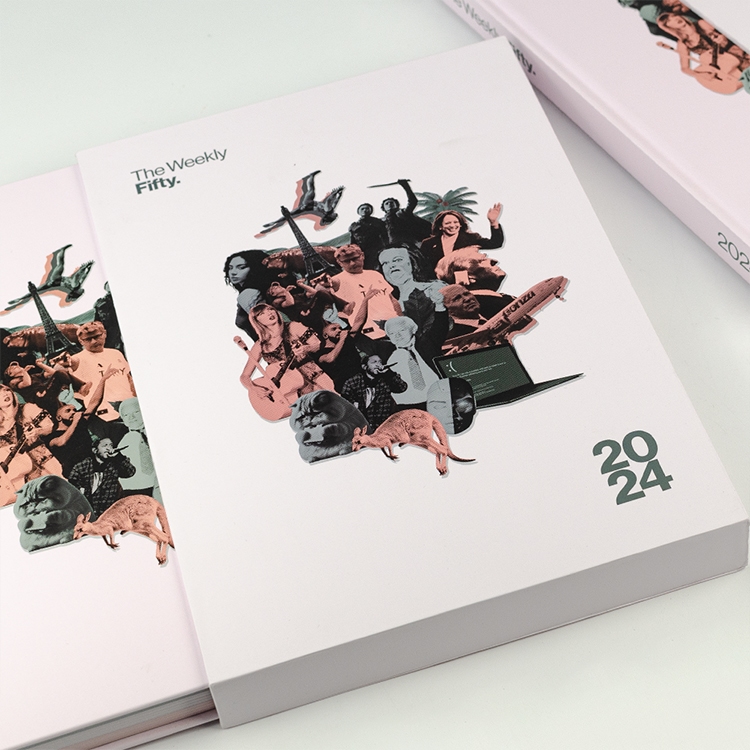
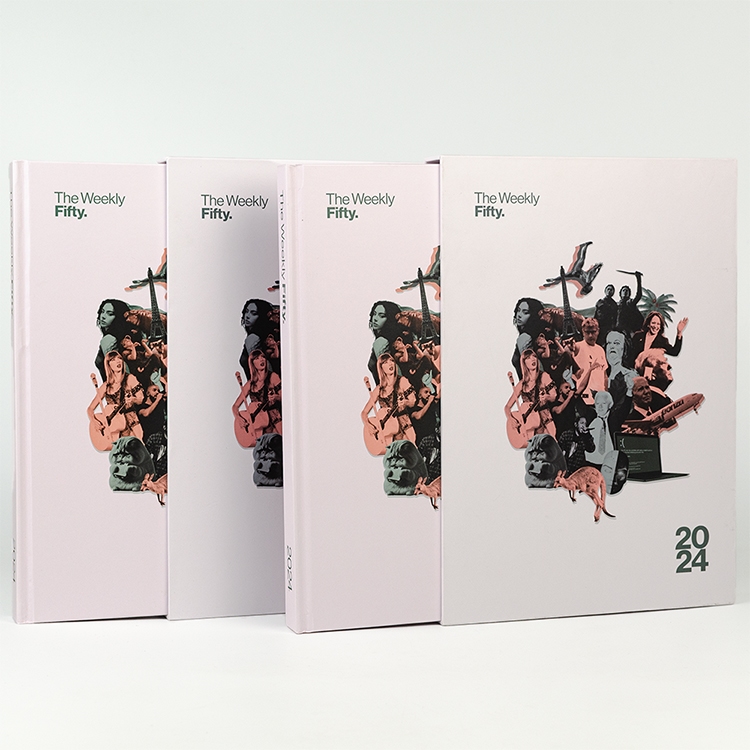
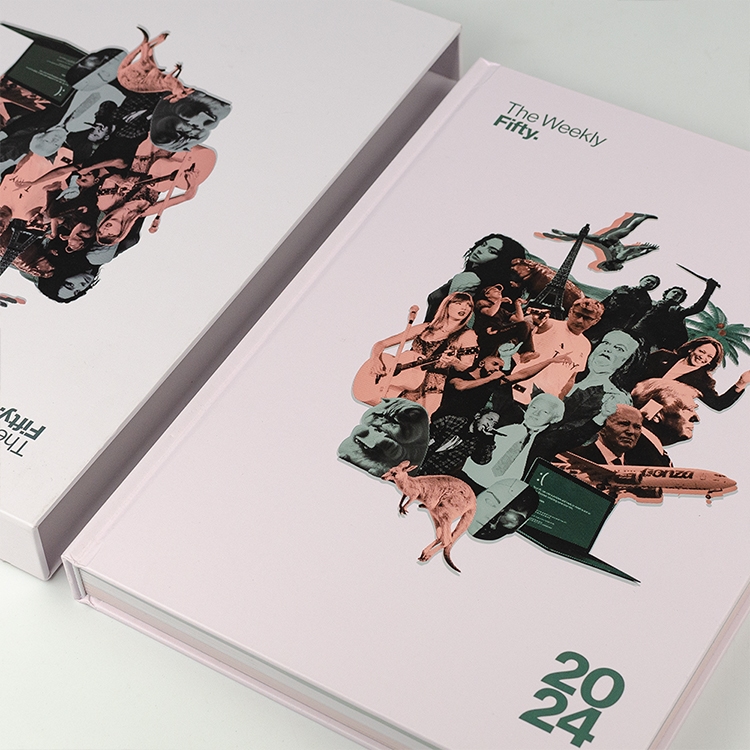
A standard board book uses thick board pages and normally treats the outer cover as part of the same board-book construction, while a hardcover board book adds a separate rigid case around the thick board page block.
That sounds like a small difference.
It isn’t.
The cover changes.
Once a separate hard case, hinge area, cover wrap, case alignment, attachment method, and additional finishing operations enter the production sequence, we are no longer discussing two versions that differ only in appearance; we are discussing two structures with different costs, manufacturing risks, shelf presence, weight, and failure points.
So why do buyers keep comparing them as though “hardcover” simply means “better”?
My answer is simple: choose the format around the reader and the commercial purpose, not around the word premium.
For a toddler learning colors from a compact 12-spread book, a standard board book may be exactly right. For a museum edition, gift product, branded educational title, or illustrated keepsake that needs stronger retail presence, the hardcover board book starts making more sense.
That distinction should be settled before artwork is finalized and before quotations are compared.

Start with the interior.
Both formats can use thick board leaves designed to be easier for small hands to separate and turn than conventional thin book paper. That is the defining functional characteristic of a board book.
JetPrint’s board book printing options are organized around variables including finished size, page count, board construction, corner style, color reproduction, surface treatment, and binding structure.
The difference appears outside that page block.
A standard board book, sometimes called a self-cover board book, generally uses the same basic thick-board construction from the front of the book through to the back.
There is no separate conventional hard case surrounding the page block.
This creates several practical advantages:
Consider something like an alphabet book.
JetPrint’s rounded alphabet learning board book example uses thick board leaves, rounded corners, full-color illustrations, and a compact square format aimed at alphabet and vocabulary learning.
That is where standard board-book logic becomes compelling: the physical product supports the content without adding a separate premium case that may not contribute much to the reading task.
A hardcover board book keeps the thick board interior but surrounds it with a separate rigid case cover.
Do not confuse this with an ordinary hardcover children’s picture book.
A conventional hardcover children’s book normally has a rigid case plus relatively thin paper pages. A hardcover board book has a rigid case and thick board leaves.
JetPrint’s own landscape hardcover board book example specifies a rigid printed case, thick board leaves, rounded corners, full-color illustrated spreads, and a landscape orientation.
That additional case can provide:
But it also adds manufacturing steps.
And manufacturing steps cost money.
Here is the comparison I would want in front of me before requesting a production quote.
| Facteur | Standard Board Book | Livre cartonné à couverture rigide |
|---|---|---|
| Interior pages | Thick board leaves | Thick board leaves |
| Outer cover | Integrated/self-cover style | Separate rigid case |
| Overall rigidity | Élevé | Very high at exterior case |
| Weight | Usually lower | Généralement plus élevé |
| Manufacturing complexity | Inférieur | Plus élevé |
| Case alignment | Not applicable in conventional sense | Must be controlled |
| Hinge construction | Simpler | Additional case/hinge relationship |
| Cover-wrap options | More limited | More extensive |
| Retail impression | Functional, child-focused | Premium, gift-oriented |
| Typical positioning | Early learning, everyday reading | Premium children’s titles, gifts, museums, branded editions |
| Rounded corners | Common | Can also be specified |
| Interactive features | Possible | Possible |
| Unit-cost pressure | Generally lower | Generally higher |
| Freight pressure | Lower relative to equivalent hardcover version | Higher because of additional material and weight |
| Best buying logic | Function first | Presentation plus function |
There is a point buyers routinely miss here.
More material does not automatically mean a better book.
A rigid case can protect and elevate a publication, but it also introduces case-making tolerances, board warping risks, hinge behavior, wrap registration, adhesive relationships, and additional finishing variables.
That is why I would never approve a hardcover board book merely because a supplier sent me a beautiful conventional hardcover sample.
Those are different products.
JetPrint makes the same point in its guide to existing printing samples versus custom prototypes: an existing sample can demonstrate past workmanship, but it cannot prove how your exact paper, dimensions, artwork, page count, binding combination, finish, or production route will behave.
For board books, that warning matters even more.
Here is one of the harder truths in children’s publishing:
“Hardcover” is partly a positioning term.
Buyers hear it and imagine maximum durability. Retail teams hear it and imagine premium pricing. Designers hear it and start adding foil.
Manufacturing does not work that way.
A book fails at its weakest interface.
That interface might be the case hinge. It might be the laminated surface. It might be the attachment between the case and board block. It might be a die-cut element. It might be an interactive component that should never have been added in the first place.
A well-engineered standard board book can outperform a poorly engineered hard case board book in real use.
And a hardcover board book can be the better product when the case is structurally justified.
The important word is engineered.
Board books often rely on wide-opening spreads because the format is image-led. A farm scene, alphabet spread, panoramic illustration, or paired before-and-after image can lose impact if the center area becomes difficult to view.
That is why binding structure needs to be considered alongside the artwork rather than after it.
For illustration-heavy projects, JetPrint’s guide to lay-flat binding options for illustrated books is worth reviewing before the cover and spreads are locked.
A designer who treats the gutter as an invisible line on a PDF is eventually going to meet a physical book.
The book usually wins.
Children do not handle books like archivists.
They drag them. Stack them. Drop them. Push them across tables. Turn pages with damp fingers. Sometimes they decide a corner looks edible.
Surface treatment therefore has an operational purpose.
Gloss lamination can produce stronger apparent saturation and a slicker surface, while matte changes glare and tactile feel. Neither should be selected from a tiny screen rendering.
The broader production differences are covered in JetPrint’s matte vs gloss lamination guide.
But my rule is simpler: for children’s books, surface choice should survive the intended handling pattern before it wins a beauty contest.
For a conventional reading product intended for babies or toddlers, I generally prefer beginning the specification discussion with the standard board book and then asking whether the hardcover case solves an identifiable problem.
That reverses the way many buyers shop.
Instead of asking, “Can we afford hardcover?” ask:
“Why does this title need hardcover?”
Possible answers include:
Those are legitimate reasons.
“Hardcover sounds more expensive” is not.
For straightforward children’s board book printing, especially early-learning titles with limited spreads, large illustrations, rounded corners, and repeated handling, simpler construction often deserves more respect than it gets.
This is where aesthetic comparisons stop being enough.
For the U.S. market, the Consumer Product Safety Commission states that accessible components of children’s products are generally subject to a 100 parts per million (ppm) total lead limit. CPSC also explains that the testing exemption available for certain “ordinary books” does not extend in the same way to books designed or intended for children age three or younger. CPSC guidance on children’s books
Read that again.
A toddler board book is not something I would treat as merely “ink on cardboard.”
Additional materials change the risk profile.
On May 13, 2004, the U.S. CPSC and DK Publishing announced the recall of approximately 214,000 children’s board books with sound makers because the sound-making component could be removed and create a choking hazard. CPSC’s DK Publishing board-book recall
The board pages were not the headline problem.
The added component was.
That difference matters because interactive books frequently introduce plastics, fabrics, sound modules, magnets, flaps, mirrors, rings, or other materials that no longer behave like a plain printed board book.
In September 2003, CPSC and Simon & Schuster announced a recall involving 26,000 Dora the Explorer children’s board books after a plastic balloon replica attached to the book could detach and pose a choking hazard. CPSC’s Simon & Schuster recall notice
Again, the lesson is not “board books are dangerous.”
That would be nonsense.
The lesson is that every non-paper component creates another engineering and compliance question.
The issue is hardly historical.
On February 26, 2026, CPSC announced a recall of about 19,700 TheKiddoSpace handwriting practice kits because pen nibs contained lead above the federal limit. The kits had been sold online from February 2024 through February 2025 for approximately $25 to $50. CPSC’s 2026 TheKiddoSpace recall
Different product. Same procurement lesson.
You cannot inspect regulatory compliance from a photograph.
Plain printed cardboard and a touch-and-feel activity product should not automatically travel through the same compliance checklist.
For children’s toys and qualifying child-care articles, CPSC identifies a 0.1% concentration limit — 1,000 ppm — for regulated phthalates such as DEHP, DBP, BBP, DINP, DIBP, DPENP, DHEXP, and DCHP in accessible plasticized components. CPSC phthalates business guidance
That becomes relevant when the publication moves beyond paper and ink.
Consider JetPrint’s touch-and-feel board activity book example. It combines a rigid case, thick board pages, die-cut areas, and tactile components.
That format can be commercially attractive.
But now the specification is more than:
“210 × 210 mm, 16 pages, CMYK.”
A serious buyer starts asking what every accessible material is, where it comes from, how it is attached, whether it can detach during foreseeable use, which regulations apply in the destination market, what testing is required, and what documentation must accompany production.
Not glamorous.
Very important.
Buyers often ask me which one is cheaper.
The answer is obviously the standard board book, all else being comparable, because the hardcover version introduces an additional case structure and the operations needed to manufacture and attach it.
But that answer is almost useless without understanding the cost stack.
A hardcover board book may add costs through:
Now multiply those differences across 1,000, 5,000, or 20,000 copies.
Small construction decisions become commercial decisions very quickly.
This is also why comparing quotations by total price alone is dangerous. One supplier may quote a standard board book, another a true rigid-case board book, and both may use the word “hardcover” casually in an email.
The cheaper quote may not be cheaper.
It may be a different product.
I would not request pricing with a message that says:
“Please quote 5,000 hardcover children’s books.”
That is not a specification.
It is an invitation to receive five incomparable quotations.
For either standard or hardcover board book printing, define at least:
State the closed trim size in millimeters or inches.
Par exemple :
180 × 180 mm closed size
Not “medium square.”
Board-book page counting can cause confusion between designers, publishers, and factories because some teams count printed faces while others discuss leaves or spreads.
Put the structure into a page diagram.
Ambiguity here is expensive.
Do not write only “thick pages.”
Specify the intended construction with the printer and approve a physical dummy when the page feel materially affects the product.
State explicitly:
Standard/self-cover board book
ou
Rigid-case hardcover board book
Never assume the supplier interprets “hardcover board book” exactly as you do.
Rounded corners are common for board books, but the required radius and whether the case and interior pages follow the same profile should be confirmed.
For full-color illustrated books, files are commonly prepared around CMYK production, but final color expectations should be connected to the printer’s proofing and press workflow rather than guessed from an RGB monitor.
Clarify whether lamination or another treatment applies to:
List every flap, die cut, texture, mirror, sound unit, plastic part, magnetic element, attachment, or specialty material individually.
If it can be touched, pulled, bitten, peeled, or removed, it deserves attention.
There is no universal best format.
For high-volume early-learning books, standard board construction often wins because it directs the budget toward the thick pages, printing, surface protection, and repeat-use function.
For premium retail products, a hardcover board book can justify its higher structural complexity through stronger visual presentation and a more substantial physical object.
For interactive titles, neither cover structure should be selected until the added elements are resolved.
For panoramic illustrated books, opening behavior may outweigh exterior cover prestige.
For gift and keepsake projects, the hard case can become part of the product’s emotional and retail value.
And for very young readers?
I would spend money on the elements the child actually interacts with before spending it on features aimed primarily at impressing the adult buyer.
Controversial? Maybe.
But children turn pages, not purchase orders.
If you are still undecided between a standard board book vs hardcover board book, use this sequence:
Do it in the opposite order and you can easily optimize the wrong thing.
A $0.10 saving is not a saving if it forces a redesign.
And a beautiful hardcover is not premium if the page block, hinge, lamination, or interactive component fails.
A standard board book uses thick board leaves for both its page block and integrated outer construction, while a hardcover board book adds a separate rigid case around a thick-board interior; that additional case changes the book’s appearance, weight, manufacturing sequence, hinge structure, finishing options, and normally its production cost.
The important distinction is the cas, not the interior concept. Both formats remain board books because the reader handles thick board leaves rather than conventional thin paper pages.
A hardcover board book is better when premium presentation, rigid shelf presence, gift positioning, specialty cover materials, or coordinated retail packaging materially benefit the publication, while a standard board book is often the better choice when simplicity, lower weight, frequent toddler handling, and manufacturing efficiency matter more than a separate hard case.
I would therefore avoid treating hardcover as an automatic upgrade. It is an alternative construction with a different purpose.
A standard board book is often the most practical starting format for babies and toddlers because thick board pages, compact dimensions, rounded corners, and relatively simple construction directly support repeated page turning and handling without automatically adding the weight, cost, and additional hinge or case components associated with a separate hardcover structure.
The final decision still depends on the book’s intended market and any interactive elements.
A hardcover board book has a more rigid exterior case, but that does not automatically make the complete book more durable because finished performance also depends on page construction, case attachment, hinge design, adhesives, lamination, corner construction, interactive components, manufacturing tolerances, and how the child repeatedly handles the finished publication.
This is exactly why physical prototypes matter. “Harder cover” and “longer service life” are not interchangeable specifications.
A board book can be designed for children under three, but U.S. compliance depends on its complete materials and construction rather than the product name alone, and CPSC guidance specifically notes that the ordinary-book testing exemption does not simply cover books designed or intended for children age three or younger.
Interactive components deserve particular attention because historical CPSC recalls involving board books have included detachable plastic and sound-making components that created choking hazards.
A hardcover board book combines a rigid exterior case with thick board interior leaves, whereas a conventional hardcover children’s book combines a rigid case with comparatively thin paper pages, making the two formats different in page stiffness, page-block construction, opening behavior, weight, appropriate page counts, production process, and intended reader interaction.
If a supplier quotation simply says “hardcover children’s book,” ask what the interior pages are made from before comparing price.
A project-specific prototype is strongly recommended when board thickness, case construction, hinge behavior, rounded corners, die cuts, tactile components, unusual dimensions, opening characteristics, or premium finishing materially affect the book, because a previous sample from another project cannot demonstrate how your exact combination of materials and manufacturing variables will perform.
For a straightforward repeat specification, a prototype may be less important. For a new hardcover board book structure, I would treat it as cheap insurance.
Le standard board book vs hardcover board book decision is not really about which format is more impressive.
It is about what the book has to do.
If you need an efficient, thick-page format for early learning and repeated handling, start with a standard board book.
If you need thick board pages inside a more substantial rigid case for a premium retail, gift, museum, educational, or branded publication, investigate a hardcover board book.
But do not send a factory three words — “hardcover board book” — and expect a reliable comparison.
Define the size, page structure, board construction, cover, corners, printing, lamination, interactive components, quantity, and destination market first.
Then request the quote.
JetPrint’s capacités d'impression de livres cover prepress, specification planning, printing, binding, finishing, approval checkpoints, and finished-book inspection across board books and hardcover formats.
Have a board book project ready for production? Send JetPrint your finished size, page count, quantity, cover structure, board requirements, artwork, finishing requirements, and destination market. Request both structural recommendations and a quotation based on the same confirmed specification before choosing between standard board book and hardcover board book printing.

Laissez vos commentaires